
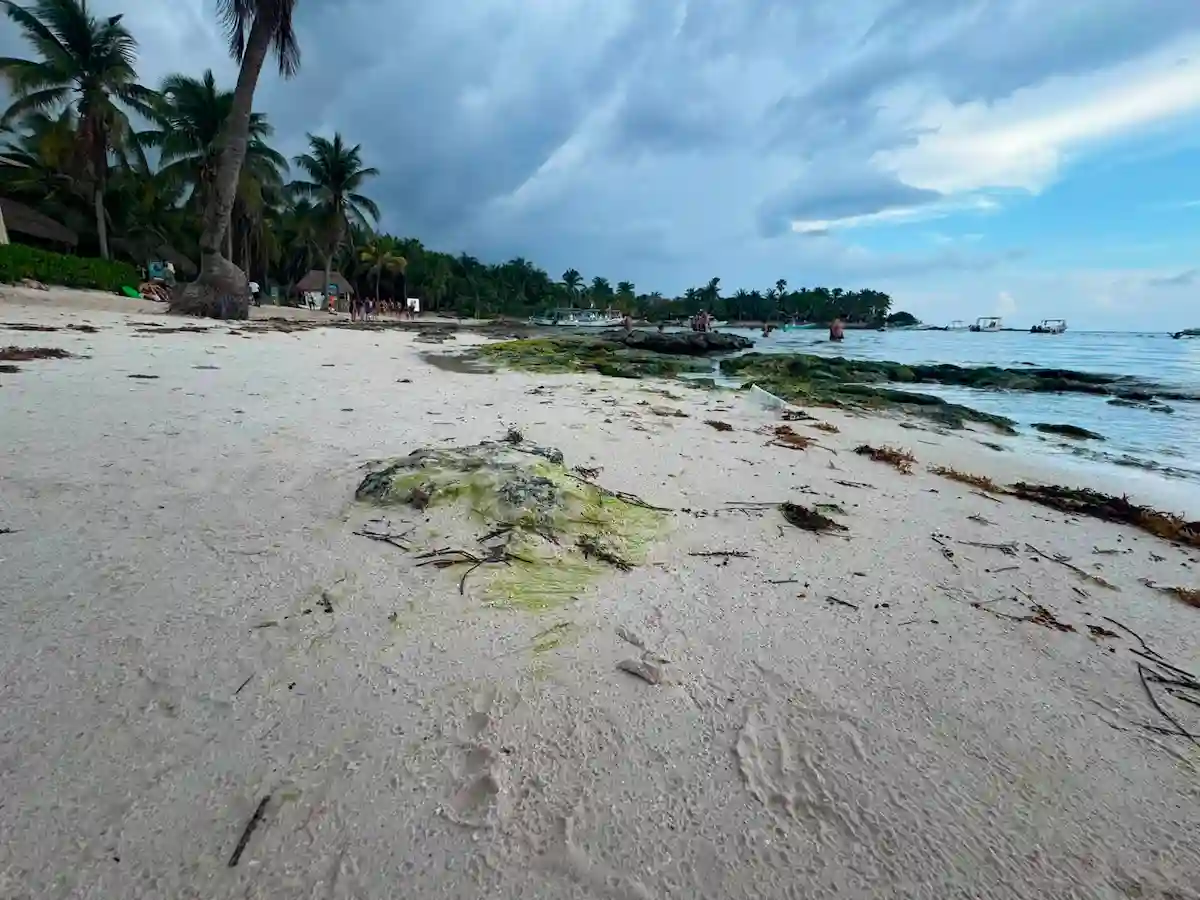
Tulum, Quintana Roo — The constant removal of sargassum from Akumal Bay has kept much of the shoreline in good shape for visitors, but tourism workers warn that the ongoing cleanup is also contributing to sand loss and a hardening of the beach, a change they say is already evident in parts of the coastal destination.
Manuel Jiménez, a worker in the tourism sector, said cooperatives, hoteliers, workers and authorities have coordinated during the peak seaweed season to remove sargassum and prevent buildup. However, he said that over time they have noticed a reduction in sand and changes in beach conditions, which could affect not only tourism but also the nesting grounds used by sea turtles.
“The beach is already eroding, and during turtle nesting season fewer turtles come out because the sand is hard, so they migrate to other shores where the sand is a bit softer,” Jiménez said. He said the loss of sand is increasingly visible and that both natural factors and cleanup work need to be considered to address the problem.
Wilberth Alcocer, a tour guide, agreed that the loss of sand is now a concern for the community. He said sargassum removal shifts are carried out under the supervision of agencies such as the National Commission of Natural Protected Areas (Conanp) and the Federal Maritime-Terrestrial Zone Authority (Zofemat), with local workers taking part.
“The sand has been going away; the issue of sand has already hit the community hard,” Alcocer said. He added that keeping the bay clean is essential during what he described as a historically slow tourist season, since turtles and sea conditions remain the main attractions for visitors.
The situation poses a challenge: keeping beaches free of large sargassum accumulations without accelerating the deterioration of the coastline. For tourism workers, stopping the cleanup is not a viable option because of the impact it would have on tourism, so they say it is necessary to find methods that reduce sand extraction during these tasks. The concern grows with the possibility that erosion and compaction could alter the nesting conditions for turtles, a species that drives much of Akumal’s tourist appeal.
More Environment
- Screwworm Cases Detected in Two Dogs and a Horse in Tulum
- Playa del Carmen Recognized as International Bull Shark Zone
- Five Zones in Playa del Carmen Lose Urban Jungle to Construction Boom
- Hurricane Isaias Strengthens to Category 3 as Heavy Rain Hits Quintana Roo
- Hurricane Isaías to Bring Rain and Heat to Cancún and Playa del Carmen This Weekend