Mexico City — Mexico’s annual consumer inflation accelerated to 3.45% in September, the second consecutive monthly pickup, as services and fresh produce continued to push prices higher, the national statistics agency INEGI reported.
The reading rose 0.19 percentage points from 3.26% in August. Core inflation, which excludes volatile items such as fuel and fresh food, eased to 3.75% from 3.88%, while non-core inflation jumped to 2.45% from 1.13%, an increase of 1.32 percentage points.
On a monthly basis, the National Consumer Price Index (INPC) climbed 0.42% in September, up from 0.20% in August.
Even with two months of acceleration, inflation remains inside the Bank of Mexico’s 3% target, which allows a variability range of 2% to 4%.
Banxico Expected to Hold Rates
“In this context, Banxico recently adjusted its forward guidance toward a data-dependent approach. In line with this more cautious stance, we expect it to keep the benchmark rate unchanged at 6.50% at its next decision,” Monex said.
Banco Bx+ said the inflation outlook remains challenging and predicted the rate will keep climbing through the end of the year. It argued that environment, combined with the U.S. Federal Reserve’s monetary stance, narrows Banxico’s room to act.
Services Keep Up the Pressure
Within the core component, services inflation came in at 4.27% annually, a moderation of 0.06 percentage points from 4.33% in August.
Although several services posted notable declines during September — particularly professional services and telecommunications packages — services inflation held above 4% because the indicator reflects the combined behavior of a broad range of activities.
Heavyweight categories such as housing, education, restaurants and other services maintained enough pressure to keep the sector a leading source of sticky inflation. Goods, meanwhile, registered annual inflation of 3.21%.
Farm Prices and El Niño Risk
Within the non-core component, agricultural prices rose 0.79% annually, while energy and government-authorized tariffs were up 3.81%.
Bx+ warned that farm prices could be hit by the El Niño weather phenomenon.
“We therefore expect inflation to accelerate somewhat more between now and the end of 2026, although it should remain below 4%,” the bank said.
The bank added that non-core inflation could extend its rebound because of the volatility still seen in various raw materials and in logistics costs linked to geopolitical conflicts.
Among agricultural goods, fruit and vegetables posted annual inflation of 8.78%, according to INEGI. Livestock product prices, by contrast, fell 4.46% compared with September of last year.
Tomatoes Lead Monthly Gains
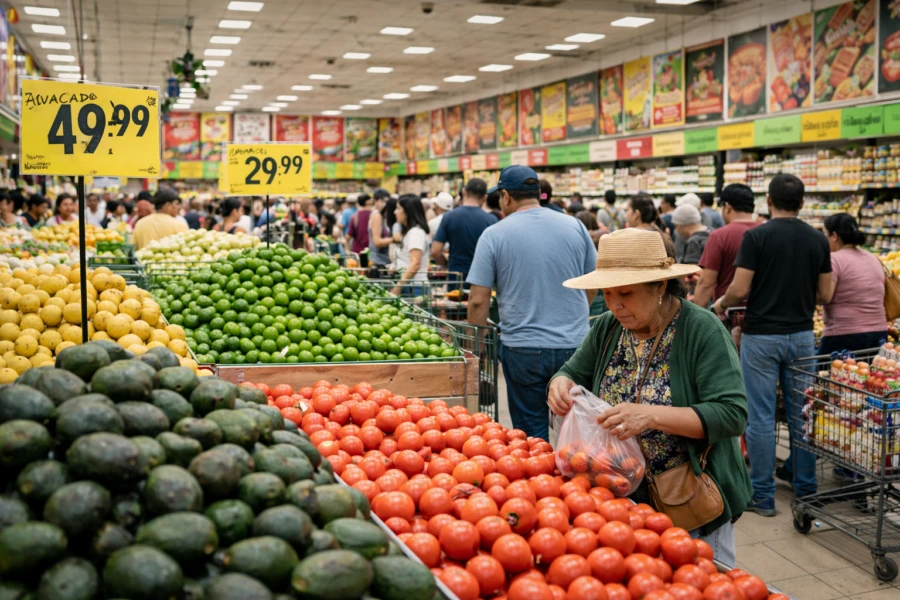
Tomatoes were the single biggest contributor to monthly inflation in September. Onions, LP household gas, owner-occupied housing, chicken and certain food and education services also pushed consumer prices higher.
Working in the opposite direction, potatoes and other tubers, professional services, and internet, telephone and pay-TV packages helped temper inflation during the month. Prices for avocados, automobiles and some personal care products also declined.
More Economy
- Mexico’s Auto Exports Slump 12% as US Tariffs Take Toll
- Tren Maya Freight Project Targets 4.7 Million Tons by 2030
- Mexicana de Aviación Adds 24 Winter Flights to Tulum as Rivals Pull Out
- Cancún Business Council Launches Push to Diversify Quintana Roo’s Economy Beyond Tourism
- Tulum Construction Recovery Not Expected Until Late 2026, Architects Say