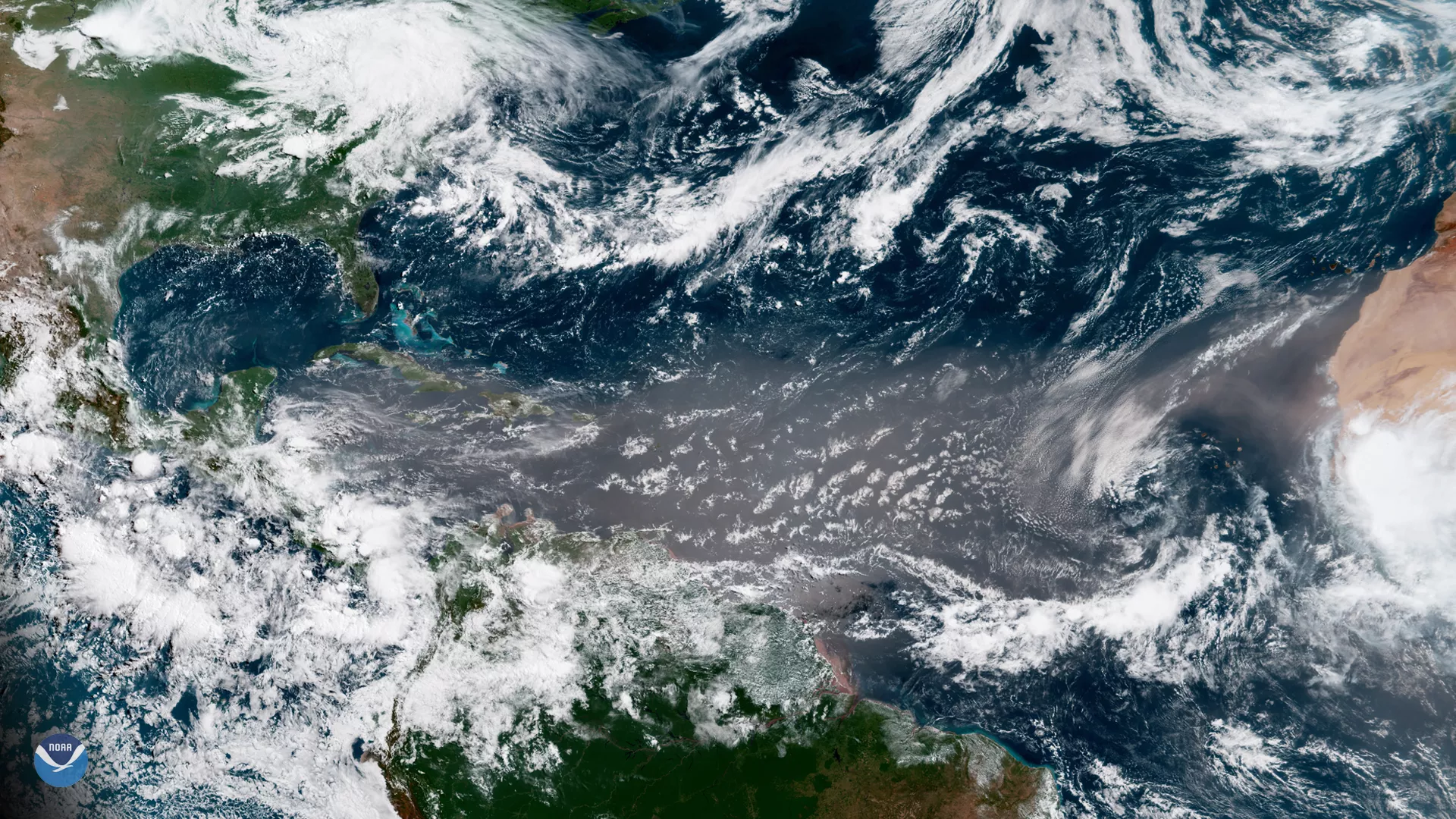
José María Morelos, Quintana Roo — Saharan dust will continue to affect the Yucatan Peninsula in the coming months, civil protection authorities said, urging residents to take precautions as temperatures rise and the summer heat spell known as the canícula begins.
Luis Carrillo Batún, director of the municipal Civil Protection department, said the first episode of the season occurred from June 27 to 30, affecting much of Quintana Roo.
“It will be recurrent during the remaining months; the canícula is coming and this type of phenomenon will be more present,” Carrillo said, warning that more dust events are expected during the hot season.
The official explained that the dust raises temperatures and increases airborne particle concentrations, posing greater risks for people with asthma, allergies, and other respiratory conditions.
He recommended avoiding outdoor activities during the hottest hours, staying hydrated, and reducing dust entry into homes.
“People with respiratory illnesses need to be most careful; it’s important not to expose themselves to the highest temperatures and to keep doors and windows closed to reduce dust entry,” he said.
Civil Protection will continue monitoring the phenomenon and issue preventive alerts when new episodes are forecast, Carrillo added.
More Environment
- Playa del Carmen Unveils Recycled-Plastic Lifeguard Tower at Playa 72
- Chankanaab Park Eyed as Site for Cozumel’s First Dolphin Sanctuary
- Tulum Launches Credentialing Program for Parque del Jaguar Tourism Workers
- Cancún to Host National Climate Change Colloquium in October
- Riviera Maya Hotels Offer Free Nights When Sargassum Blocks the Beach
More Quintana Roo
- Quintana Roo Warns Against Unchecked Hotel Growth as It Courts Brazil and Colombia
- Four Years After Decriminalization, Quintana Roo Feminists Say Abortion Access Still Falls Short
- Quintana Roo Congress Approves Single-Nationality Rule for Top Elected Offices
- Mexico’s Senate Approves ‘Anti-Meme’ Law With Five-Year Prison Terms
- Quintana Roo Ranks Third Nationally in Corruption of Minors With 182 Cases