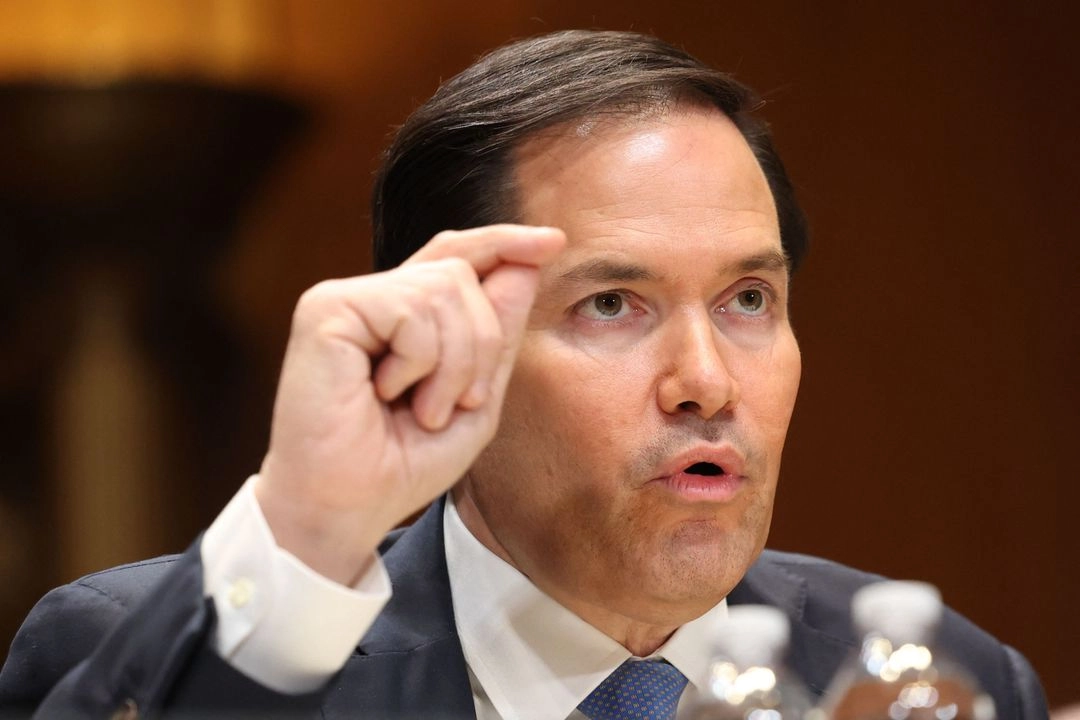
Mexico City — U.S. Secretary of State Marco Rubio acknowledged that Mexico has stepped up its actions against drug cartels more than ever before, but said the results remain insufficient given the power criminal organizations still hold.
Speaking in Quito, Ecuador, after arriving from Colombia as part of a Latin America tour, Rubio said the main challenge in drug trafficking lies in Mexico, describing the country as “the head of the snake.”
The U.S. official said the Mexican government “has done more than had ever been done” to pursue criminal groups, but immediately qualified that those efforts “are not enough.”
Rubio attributed the difficulty of fighting the cartels to Mexico’s size and to the economic and operational power the organizations have accumulated.
He also said large swaths of Mexican territory, from the U.S. perspective, are not fully under state control and are instead dominated by groups Washington considers narco-terrorists.
Rubio said the situation poses a direct threat to the Mexican state and noted that violence linked to criminal groups also targets politicians, judges and journalists.
“These groups represent an enormous threat right on our border,” he said.
Rubio also warned about the cartels’ financial and technological capacity, particularly their use of drones for activities tied to smuggling drugs and people into the United States.
He insisted that Washington intends to maintain cooperation with Mexican authorities to fight criminal organizations, while leaving open the possibility that the United States may have to confront the threat “one way or another” if bilateral collaboration proves insufficient.
Rubio’s stance comes as Mexico and the United States have strengthened their security and anti-drug cooperation. The government of President Claudia Sheinbaum has reported numerous operations, arrests, seizures of weapons and drugs, and the destruction of clandestine laboratories.
In early September alone, federal forces reported disabling three clandestine labs in Sinaloa, where authorities seized roughly 16.8 tons of methamphetamine in various stages of production, along with precursors and other chemicals.
The Mexican administration has also deepened coordination with U.S. agencies, including the DEA, on intelligence and security operations. Sheinbaum has insisted, however, that any cooperation with the United States must be carried out under the principle of respect for Mexican sovereignty.
Rubio’s remarks amount to renewed pressure on Mexico to deliver stronger results against the cartels, particularly as Washington has made combating fentanyl, synthetic drugs and criminal organizations a top item on its bilateral agenda.
The U.S. government has said its strategy is not limited to drug seizures but seeks to hit the finances, corruption networks and facilitators that allow criminal groups to operate.
More Politics
- INE Chief Guadalupe Taddei Resigns Amid Contract and Travel Scandals
- Graffiti Artists Erase Cancún’s ‘Wall of Corrupt Politicians’ as Activists Prepared to Restore It
- Quintana Roo Green Leader Hands Over 80K-Member Party
- Sheinbaum Says Mexico Won’t Take the Bait: ‘We Will Not Fall for Any Provocation’ From the US
- Why Mexico’s Treason Charge Over a U.S. Raid Matters