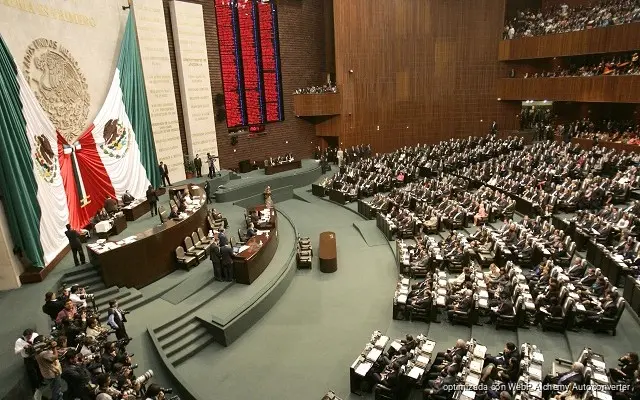
Mexico City — Lawmakers on the Chamber of Deputies’ Constitutional Points Committee approved a constitutional amendment that would bar Mexicans holding a second nationality from running for president or governor, capping a contentious session disrupted by opposition protests.
The ruling-party majority — Morena and its allies — carried the measure with 26 votes in favor, five against and five abstentions.
The amendment would require governors and the head of government of Mexico City to be Mexican citizens by birth who neither hold nor acquire another nationality. Anyone elected to those offices could not later acquire or apply for a second nationality, nor invoke a nationality other than Mexican before a foreign authority.
Its transitory articles state that the changes would apply from the 2028 electoral process and would not affect officials already in office when the measure takes effect.
Heated Session
The committee session began at 5 p.m., but lawmakers spent the first hour debating a suspension motion that was ultimately rejected, along with an agreement barring members from presenting reservations and limiting speaking times.
PAN deputy Federico Döring Casar opened the objections by asking to alter the agenda so an open parliament could be held before the ruling was issued. He argued that roughly 4 million Mexicans living abroad may hold dual nationality, and questioned how the committee could change their rights without granting them a hearing.
“To those 4 million Mexicans, this committee is denying an open parliament and denying them a hearing. They have the right to vote and to be voted for,” he said.
PAN deputies Paulina Rubio and Noemí Luna walked out of the discussion in protest amid jeers from Morena members. Luna, vice-coordinator of the PAN caucus, criticized the majority’s haste in ruling on a reform that directly affects Mexican migrants.
Rubio accused Morena of invoking the migrant community when touting the size of remittances but turning its back on migrants when decisions affect their rights. She also pushed back on automatically linking dual nationality to an alleged lack of loyalty toward Mexico, noting that people holding only Mexican citizenship have drawn scrutiny over sovereignty and national security concerns.
“It is shameful that they worry about a migrant being able to serve two nations and do not worry that those with a single nationality can serve the interests of organized crime,” she said.
After Morena and its allies refused to open the process to public debate by Mexicans abroad and moved to fast-track the ruling, the five PAN deputies on the committee left the session.
“Acción Nacional cannot stay here trying to validate your imposition. While an hour of debate here weighs heavily on you, there are millions of migrants who spent years obtaining that nationality. So we are withdrawing from the discussion,” Rubio said.
PRI deputy César Alejandro Domínguez said he would vote against the measure, arguing it restricts political rights and was drafted without any diagnostic.
“What they are doing is reaching the absurd point of suspecting people who hold dual nationality or have ties abroad in order to restrict political rights,” he said.
The approved ruling will receive its first reading at Wednesday’s session, and the full Chamber of Deputies is not expected to debate it until the week beginning Sept. 21.
More Politics
- INE Chief Guadalupe Taddei Resigns Amid Contract and Travel Scandals
- Graffiti Artists Erase Cancún’s ‘Wall of Corrupt Politicians’ as Activists Prepared to Restore It
- Quintana Roo Green Leader Hands Over 80K-Member Party
- Sheinbaum Says Mexico Won’t Take the Bait: ‘We Will Not Fall for Any Provocation’ From the US
- Why Mexico’s Treason Charge Over a U.S. Raid Matters