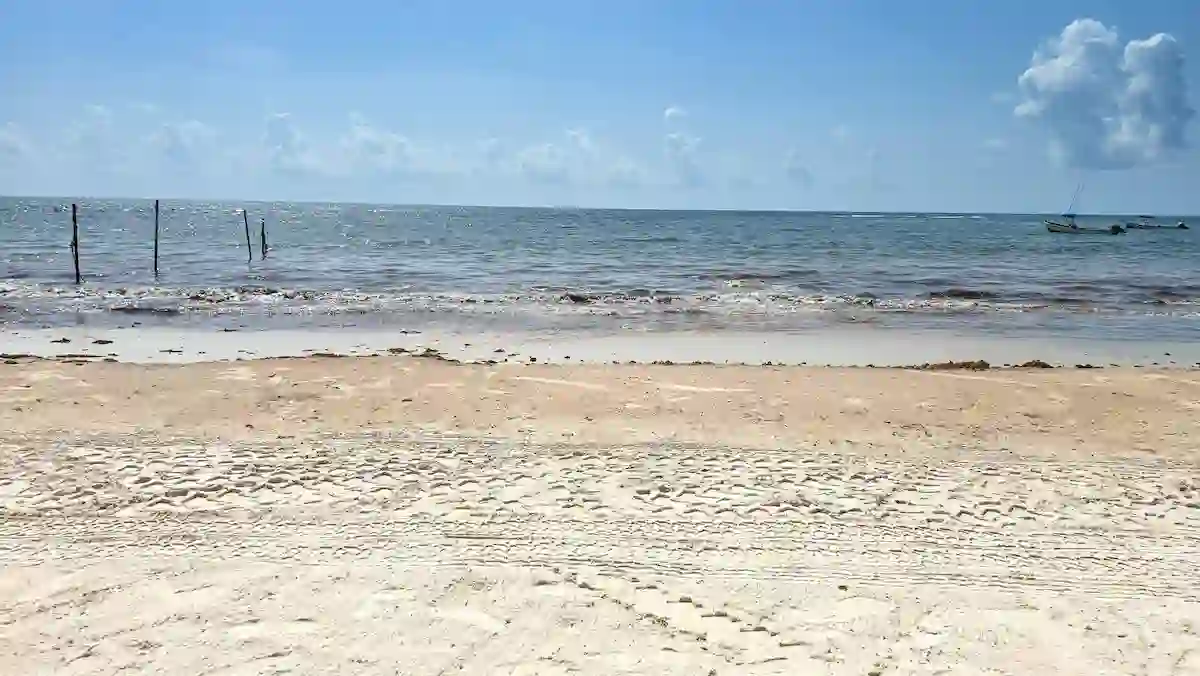
Cancún, Quintana Roo — Senator Mayuli Martínez Simón announced she will reintroduce a reform to Mexico’s Federal Fees Law that would direct 15 percent of revenue from the Non-Resident tax (DNR) to a comprehensive sargassum response strategy.
The proposal would set aside an estimated 2 billion pesos each year for prevention, containment, and cleanup of the seaweed. Martínez said the funds would allow authorities to move beyond beach cleanup and focus on intercepting sargassum offshore, including purchasing specialized vessels and installing barriers in strategic high-sea areas.
Martínez, a senator from Quintana Roo, said the recurring arrival of sargassum has become an environmental and economic challenge for the state’s coastal municipalities. The seaweed damages the image of tourist destinations and forces local authorities to spend heavily on collection, transport, and disposal.
She noted that Quintana Roo receives around 45 percent of Mexico’s international tourists, arguing that some of the revenue generated by that activity should return to the state to address a problem that directly affects its main resort areas.
“We’re talking about a huge pool of many billions of pesos,” Martínez said. “My initiative is that 15 percent be allocated to the sargassum issue.”
The measure would change the current distribution of DNR revenue to specifically include sargassum control, creating a defined funding pool for long-term planning instead of relying on variable annual budget allocations. Martínez said the goal is to shift from a reactive cleanup model to one based on prevention and containment, anticipating peak sargassum periods and reducing the amount of biomass that reaches the shore.
The initiative will be presented again to the Senate, where Martínez hopes to push a discussion on strengthening financing for one of the Mexican Caribbean’s most pressing environmental challenges and its impact on the region’s tourism economy.
More Politics
- Judge Halts Trump Border Barrier in Big Bend National Park
- Quintana Roo Remains Far from Electronic Voting, INE Official Says
- Quintana Roo Governor Urges Youth to Help Draft New Rights Law
- INE Opens 2026-2027 Federal Electoral Process in Quintana Roo, Vows to Tackle Voter Apathy
- Mexico Edging Closer to New US Trade Deals, Ebrard Says
More Quintana Roo
- Sargassum Influx Triggers Two Types of Wildlife Die-Offs in Quintana Roo
- Experts Highlight Social Memory as Key to Disaster Prevention in Quintana Roo
- Quintana Roo to Launch World’s First Formal Sargassum Fishery With 840 Fishermen
- Quintana Roo High School System Aims to Install Cameras at All 44 Campuses
- Biometric CURP in Quintana Roo: Where to Apply, What to Bring and Whether It’s Mandatory