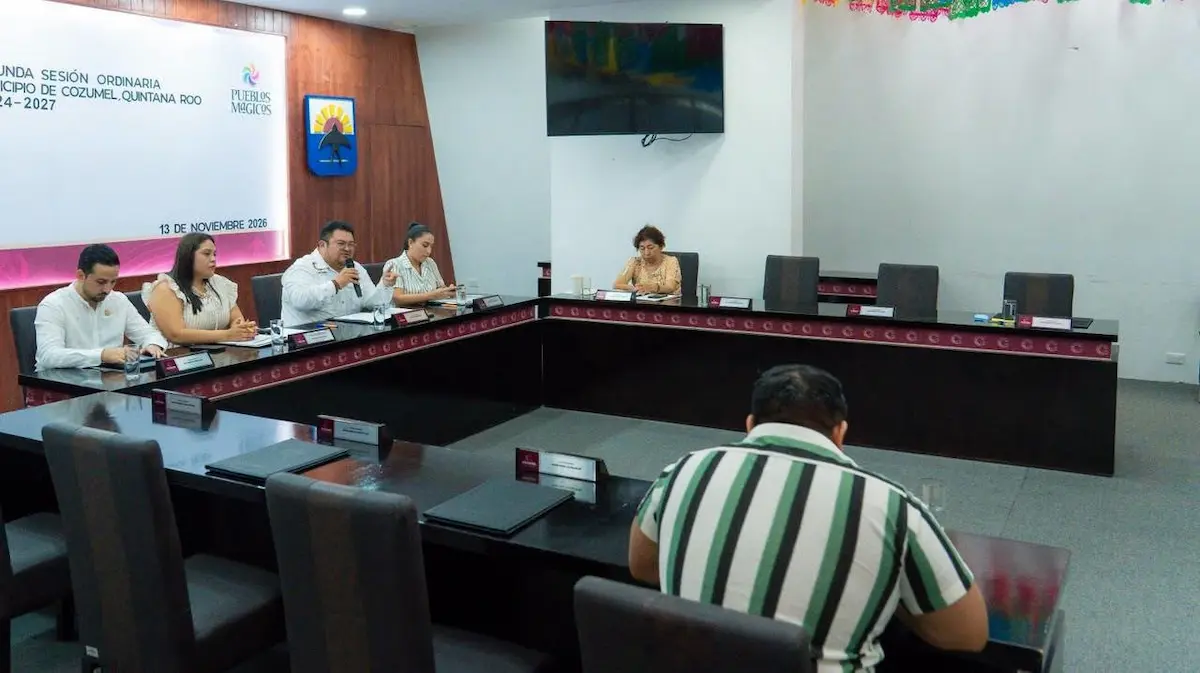
San Miguel de Cozumel, Quintana Roo — A Cozumel council session called to debate the municipality’s 2027 revenue law was suspended Friday after six council members failed to appear, leaving the Cabildo without a quorum and Mayor José Luis Chacón Méndez’s proposed tax increases unvoted.
The absences came one day after local business organizations formally rejected the fiscal changes. The measure was not defeated: its discussion remains pending, and the mayor must now decide whether to revise it in response to objections or bring it back for a vote.
What the proposal would change
The initiative would raise the property transfer tax (ISABI) from 3 percent to 4 percent — a 33.3 percent relative increase. It would also cut the divisor factor in the property tax formula from 12 to 6, a change critics say could sharply raise what owners pay.
Roberto Marín, a Citizens’ Movement council member, said the document contains 39 increases to municipal fees and seven new charges, including adjustments to civil protection permits, commercial signage, environmental paperwork and the use of public spaces.
Another contested provision would widen the permitted uses of the environmental sanitation fee to fund general public works, mobility, street lighting, culture, sports and economic development, well beyond the environmental and public safety purposes it currently covers.
Why the session lost its quorum
Missing from the session were Azalia Gurigutia, Raquel Paredes and María Fernanda Vargas of Morena, Ana Arana Martín of the Green Party, Pedro Joaquín Delbouis of the PRI and Roberto Marín of Citizens’ Movement.
Opposition members gave differing accounts of their role. Delbouis said he and Marín deliberately acted to stop Morena council members, the mayor and the municipal legal officer from approving the increases, and that the Morena bloc’s own absences created the opening.
“It was the council members from the Morena bloc who gave us the opportunity to cancel the session.”
Delbouis, who rejected the mayor’s accusations that the absent members shirked their duties, said the tourism slump has hit Cozumel families hard.
What Chacón and business groups say
Chacón insisted there will be no tax increases in 2027 and defended the absence of the council members from his own party, saying they had reasons not to attend. He criticized the opposition for walking away from the session even though it had taken part in another Cabildo meeting minutes earlier.
Marín countered that he has received no revised draft and that the initiative is unchanged. He said members are being asked to vote “blind” while a supposed revision is staged on Facebook.
The Consejo Coordinador Empresarial, Coparmex, the hotel association, Amexme and AMPI warned that the measures could deter investment, disrupt the real estate market and squeeze shops, hotels and service providers. They called for a working group and technical studies justifying each adjustment.
What happens next
The suspension is not a definitive rejection, only a postponement. Chacón must decide whether to amend the proposal to address the objections raised by business groups and council members, or to put it to a vote again.
The standoff laid bare divisions inside the governing bloc at a delicate moment for the mayor, who wants to remain at the head of the municipal government after 2027 and faces a dispute over the candidacy of the Morena alliance with Green Party figure Renán Sánchez Tajonar.
Chacón also spent part of the week on infrastructure, reviewing plans with the CFE (Federal Electricity Commission) for Cozumel’s 30-kilometer submarine power cable.
More Government
- IMSS Quintana Roo Promotes Men’s Health Checkups in November
- Mexican Navy Brings Free Medical Care to 2,619 People in Rural Southern Quintana Roo
- Cancún Police Knock on Doors, Reaching 3,537 Families in 61 Neighborhoods
- Mara Lezama Delivers 4.25 Million Pesos for 40 Cultural Projects in Quintana Roo
- Texas Ranchers Sell Off Herds and Shift Operations to Mexico as Feed Costs Soar
More Cozumel
- Cozumel Welcomes 41.5% of Mexico’s Cruise Passengers as Industry Grows 15%
- Cozumel’s FPMC Presents ‘Las Piedras Parlantes,’ Eduardo Aguilar Zarandona’s Book on the Olmec World
- Playa del Carmen Withholds CFE Permits for Cozumel Power Line Pending Environmental Ruling
- Rafael Nadal and Meliá Open First Zel Hotel in Mexico on Cozumel
- CFE Submarine Cable to Boost Power Supply in Playa del Carmen and Cozumel