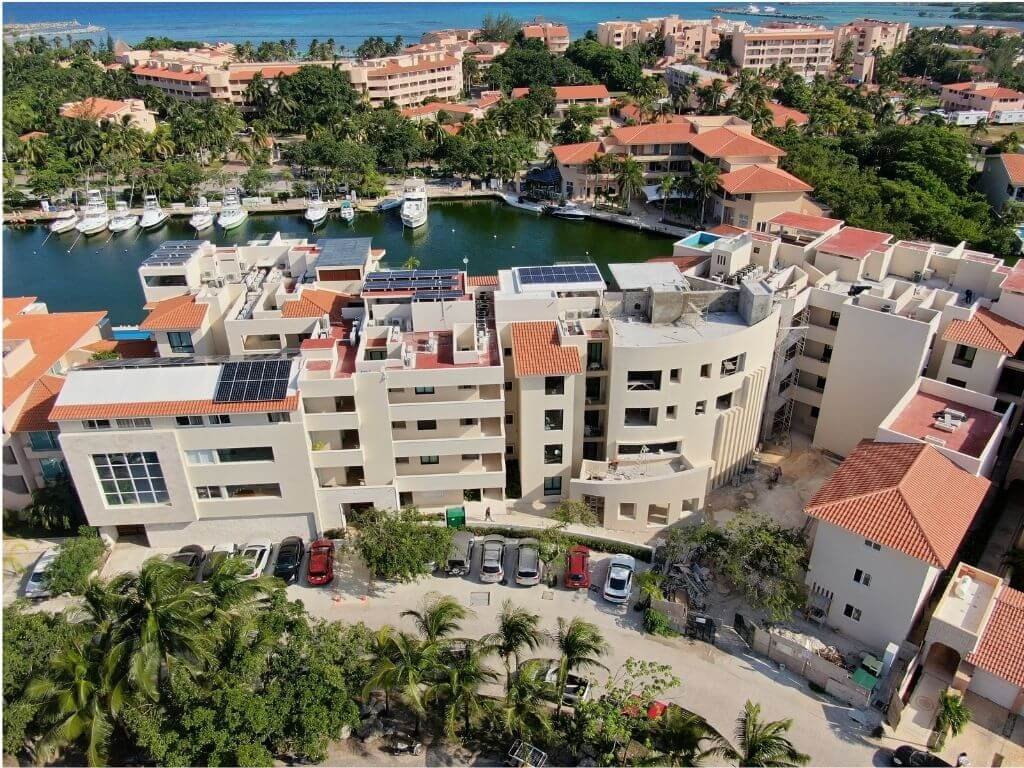
Cancún, Quintana Roo — Municipalities will take the lead in regulating residential lodging offered through digital platforms, according to state tourism officials who are pushing a new regulatory framework to close gaps left by federal and state rules.
Andrés Aguilar, deputy secretary of the State Tourism Secretariat (Sedetur), said the effort is being carried out alongside the Quintana Roo State Tourism Registry (Retur-Q), which tracks all tourism service providers operating legally in the region. A program is now being developed to bring order to hosts who rent out homes through digital platforms, in coordination with municipalities.
Aguilar explained that federal tax obligations have largely been met, and at the state level, operating licenses and state registration are already required. But he acknowledged that the final layer of regulation is missing at the municipal level. To address that, the Tourism Advisory Council has proposed creating a single set of criteria that municipalities can adopt. A working group called the Regulatory Framework Strengthening Table has been set up, bringing together municipalities, hotel associations and other council members.
The program focuses on digital platforms, which Aguilar described as a complex phenomenon requiring not just cooperation from federal, state and municipal authorities, but also from the platforms themselves. The working group is prioritizing safety measures, tax compliance and municipal responsibilities. One key component will be territorial: establishing “where yes and where no, and where yes, to what extent,” he said.
To support this, officials are analyzing more than 18 variables that will help municipalities decide how to incorporate lodging activity into their urban development plans. Aguilar stressed that the state has no authority over land use, so the final decision lies with each municipality. He added that the goal is not to create exclusionary zones, but rather to identify areas where conditions exist to host tourists safely and with adequate services. Those zones could change over time as hosts meet the requirements.
Benito Juárez, the municipality that includes Cancún, is the first to sign on. The conversation is already underway with IMPLAN, the municipal institute responsible for updating Cancún’s Urban Development Program. Four working sessions have been held so far, and officials expect to finish reviewing the modules in September, ahead of the program’s update scheduled for October.
Aguilar also said the Retur-Q registry has surpassed 3,500 registered tourism service providers, up from 3,200 at the end of last year. The registry includes vacation rental operators, although he did not provide an exact number of registered units. According to Sedetur, at least 22,000 units are known to be regularly rented out through digital platforms in the state.
More Government
- Judge Halts Trump Border Barrier in Big Bend National Park
- US Coast Guard Seizes Cargo Ship Accused of Smuggling Fuel to Cuba
- Mexico Extends Deadline for Electronic Customs Value Declaration to October 31
- Nacional Monte de Piedad to Reopen Chetumal Branches on October 7
- Quintana Roo Remains Far from Electronic Voting, INE Official Says
More Quintana Roo
- Sargassum Influx Triggers Two Types of Wildlife Die-Offs in Quintana Roo
- Experts Highlight Social Memory as Key to Disaster Prevention in Quintana Roo
- Quintana Roo to Launch World’s First Formal Sargassum Fishery With 840 Fishermen
- INE Opens 2026-2027 Federal Electoral Process in Quintana Roo, Vows to Tackle Voter Apathy
- Quintana Roo High School System Aims to Install Cameras at All 44 Campuses