Chetumal, Quintana Roo — Commercial harvesting of the chivita snail in Bacalar Lagoon must be regulated to prevent uncontrolled extraction and reduce the risks facing the species, biologist María Luisa Villarreal Sonora said.
Villarreal, a researcher and environmental adviser, said authorities need to establish mechanisms to organize the sale of the mollusk, arguing that extraction and marketing should follow sustainability criteria and measures that guarantee the species’ survival within the lagoon ecosystem.
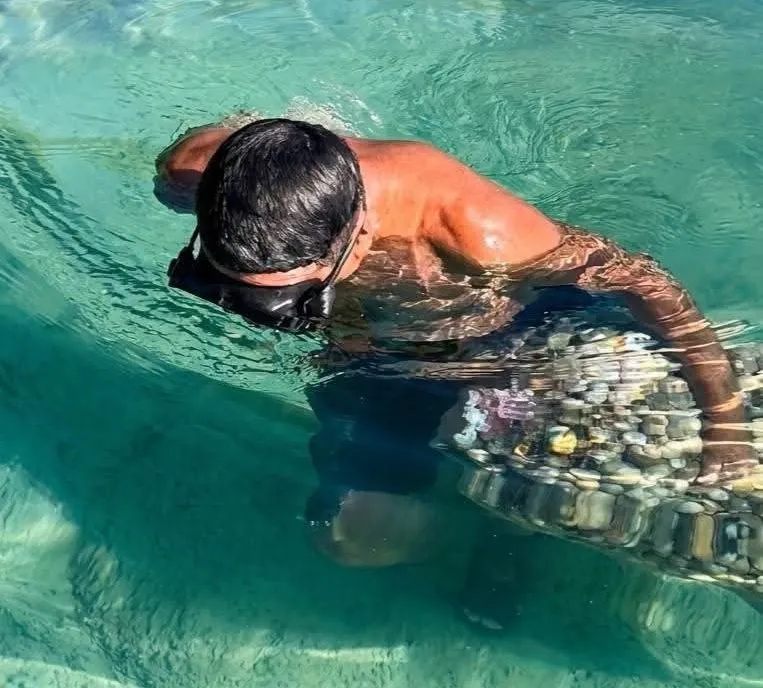
Her comments came after a video circulated widely on social media showing a man carrying hundreds of chivita snails in a sack, igniting debate over how the mollusk is harvested and sold.
Aquaculture Farms Proposed as Alternative
Villarreal said one option would be to promote aquaculture projects through farms dedicated to breeding and raising the chivita snail.
“With this, a legal source of supply could be created for merchants and consumers, without depending exclusively on specimens taken directly from the lagoon,” she said.
She argued that such production units would move the industry toward a more orderly model in which commercial activity continues without jeopardizing the species’ presence in its natural habitat.
Regulation Would Help Curb Illegal Trade
Villarreal warned that products taken from wildlife require monitoring and regulation, since weak controls make it easier to extract specimens irregularly and sell animals whose origin cannot be verified.
Farms could become a tool against illegal trade, she said, provided they hold the proper permits, have traceability systems in place and are overseen by environmental authorities.
The proposal would also open the door for fishermen, Bacalar residents and small producers to take part in new economic alternatives through captive breeding or controlled cultivation systems that allow the mollusk to be sold commercially without adding pressure on wild populations.
Villarreal stressed that decisions on the use of the chivita snail should be backed by technical and scientific studies covering the species’ current condition, reproduction, growth cycles and the capacity of its populations to recover.
She also called for environmental authorities, researchers and the sectors involved in the trade to work together to set clear rules on the extraction, transport, distribution and sale of the mollusk.
More Environment
- Sian Ka’an Ranked Among Most Flood-Exposed Coasts as NASA Maps Project Sea-Level Rise
- IUCN Declares Mesoamerican Reef Critically Endangered
- UIMQROO Researcher Proposes Genetic Study of Dengue, Zika and Chikunguña to Aid Vaccine Research
- Playa del Carmen Keeps Macondo Playacar Permits on Hold After Judge Dismisses Environmentalists’ Injunction
- Cancún Operators Propose Sinking Abandoned Planes to Build Artificial Reef Park