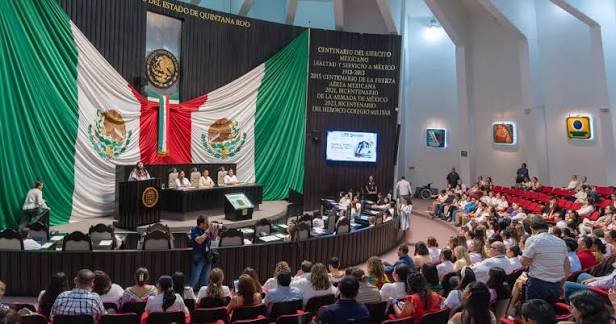
Chetumal, Quintana Roo — Lawmakers in Quintana Roo have introduced a measure that would bar public officials from using social programs and government handouts to promote themselves politically, tightening the rules governing state electoral law.
The initiative, which would add Article 400 Bis to the state’s Law of Electoral Institutions and Procedures, was filed on June 2, 2026, by deputies María José Osorio Rosas, Hugo Alday Nieto, Ricardo Velazco Rodríguez and Jorge Armando Cabrera Tinajero. It is now before the Anti-Corruption, Citizen Participation and Autonomous Bodies Committee, along with the Legislative Points and Parliamentary Technique Committee.
Under the proposal, publicizing programs, goods, services and government support would count as a violation if the materials carry names, images, voices, colors, logos or other elements that amount to personalized promotion or improper political positioning. Communication about the programs would have to run through the official institutional channels of public agencies and serve informative, educational or social-guidance purposes.
Rooted in the State Constitution
The measure draws on the Constitution of Quintana Roo, which requires public servants to spend public funds impartially and government advertising to remain institutional in character. Article 166 Bis of the state charter states that government propaganda must pursue informational, educational or social-guidance goals and must not include names, images, voices or symbols that imply personalized promotion of a public servant.
In June 2026, the Electoral Institute of Quintana Roo (IEQROO) issued a favorable technical and legal opinion, finding the initiative compatible with the constitutional principles of equity, neutrality and impartiality and aimed at preventing the political and electoral use of government communication. The institute stressed, however, that its opinion is advisory and not binding on the Legislature.
The proposal has fueled debate over where to draw the line between informing residents about public programs and using that publicity to build up an official’s image. Its backers say benefits financed with public money should be presented as institutional actions, so that their delivery is not tied directly to a single official or to political and electoral interests.
The addition of Article 400 Bis remains in the legislative process and does not yet impose any enforceable obligation. The next step is review by the legislative committees, followed by whatever procedure is required before the full Congress.
More Politics
- INE Launches 2027 Elections in Quintana Roo Without Candidate Background Checks
- Quintana Roo Education and Training Chiefs Resign to Seek Morena’s Chetumal Nod
- Judge Halts Trump Border Barrier in Big Bend National Park
- Quintana Roo Remains Far from Electronic Voting, INE Official Says
- Quintana Roo Governor Urges Youth to Help Draft New Rights Law
More Quintana Roo
- Quintana Roo Schools Shut Oct 30 Creating a Four Day Weekend
- Quintana Roo Moves to Power Public Buildings With Clean Energy
- Heavy Rains Flood Streets and Homes Across Quintana Roo, Cutting Power and Commerce
- Hurricane Season 2026: What Quintana Roo Faces Before It Ends Nov. 30
- Mexican Navy Prepares 2027 Sargassum Strategy With 17 New Vessels