
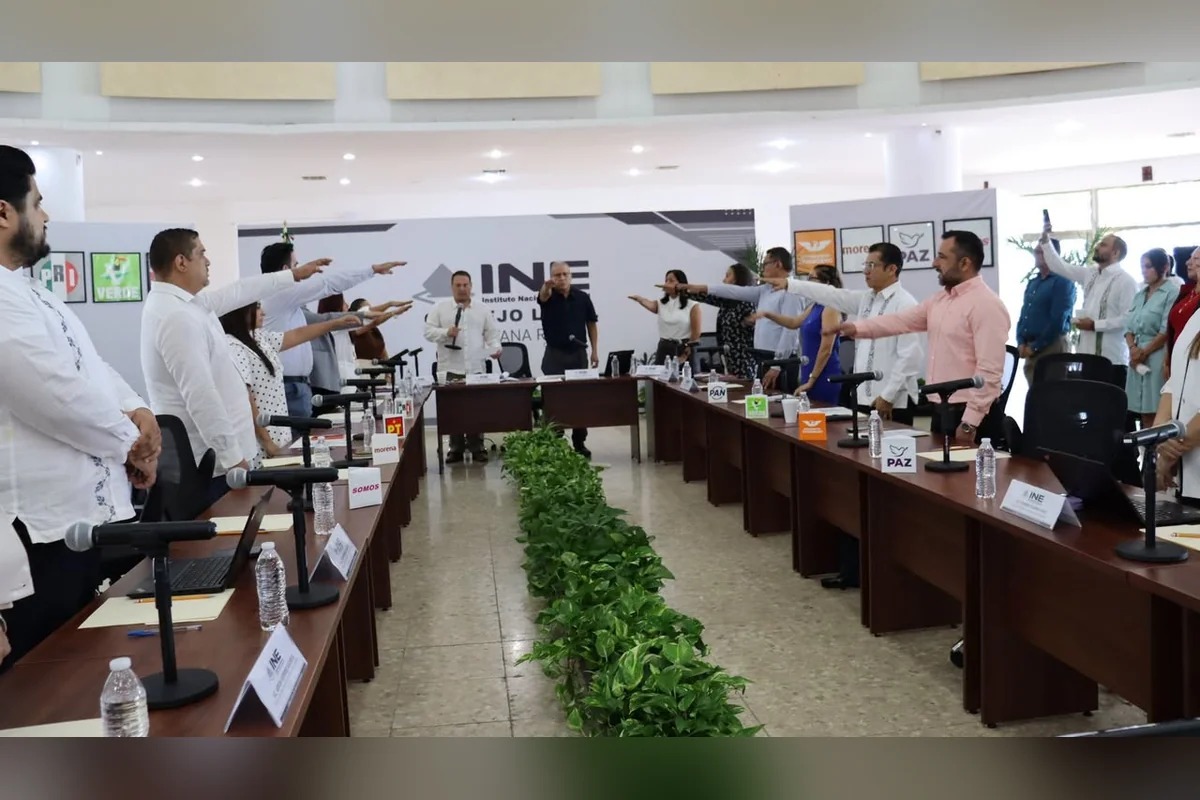
Chetumal, Quintana Roo — The National Electoral Institute (INE) has launched the 2026-2027 federal electoral process in Quintana Roo, but the state’s local board acknowledged it still has no clear protocols for detecting risky candidates or those with criminal records, as required by the electoral reform approved in May 2026.
Sergio Ruiz Catellot, president of the INE’s Local Executive Board in Quintana Roo, said the agency has historically taken part in security roundtables during election cycles to prevent risks on voting day. However, the INE’s General Council in Mexico City, headed by Guadalupe Taddei, has not yet handed down the mechanisms and guidelines needed to carry out the checks.
“We are not investigative authorities; those agencies will have to provide that information, and we will work from there,” Ruiz Catellot said. “The working route has not been established yet — the agreement setting out the mechanisms has not come down from the central offices. We don’t know whether we will act as administrators and the information will be analyzed in Mexico City, or whether Mexico City will request the information and send it down to us. We are aware of the responsibility, and it is being determined how this will operate.”
He said the procedures will likely be tailored to the characteristics of each state. Although the electoral process formally began on Sept. 30 in Quintana Roo — and on Sept. 10 at the national level — the mechanisms could be defined before candidates register.
Six Months to Build the Filters
“March would be the deadline for creating these filters, in line with the reform,” Ruiz Catellot said. On May 30, the INE created the Commission for Verification of Integrity in Candidacies, to be chaired by counselor Arturo Chávez and coordinated by the INE’s Executive Secretariat.
During the installation session of the Local Council, Octavio Marcelino Herrera Campos was sworn in as board secretary. Yamile Asunción Marín Uc, María Susana Sandoval García, María Evelia Carvajal Gallegos, María Teresa de Jesús Pérez Guzmán, Paola Karimy Chéquer Ramírez and Mario Manzanero Salazar were also sworn in as full electoral counselors, heading the six tickets.
State and Federal Races on the Ballot
The combined state and federal election in Quintana Roo will put 165 elected positions in play: one governorship, 15 single-member congressional seats, 10 proportional-representation seats, 11 municipal presidencies, 11 municipal trusteeships and 117 city council seats.
Ruiz Catellot said the state’s most recent figures show an electoral roll of 1,588,805 people and a nominal list of 1,568,626 voters. Officials expect to set up about 2,624 polling stations for election day on June 6.
In the coming weeks, INE staff will visit the homes of more than 204,000 people selected in the first lottery to invite them to serve on polling station boards. The effort will involve 113 electoral supervisors and 672 electoral assistant trainers working across the state.
Electronic ballot boxes are already available in Quintana Roo but will not be used in the 2027 elections.
“The call to citizens is to receive them with confidence, because their work helps strengthen democracy,” Ruiz Catellot said.
More Government
- Former Tulum Treasurer Sentenced to Nearly 4 Years for Unlicensed Firearms
- Quintana Roo Education and Training Chiefs Resign to Seek Morena’s Chetumal Nod
- Rain-Filled Trenches Trap Drivers on Cancún’s Avenida Colegios
- Mexican Navy Prepares 2027 Sargassum Strategy With 17 New Vessels
- Judge Halts Trump Border Barrier in Big Bend National Park
More Quintana Roo
- Heavy Rains Flood Streets and Homes Across Quintana Roo, Cutting Power and Commerce
- Hurricane Season 2026: What Quintana Roo Faces Before It Ends Nov. 30
- Quintana Roo Remains Far from Electronic Voting, INE Official Says
- Sargassum Influx Triggers Two Types of Wildlife Die-Offs in Quintana Roo
- Experts Highlight Social Memory as Key to Disaster Prevention in Quintana Roo