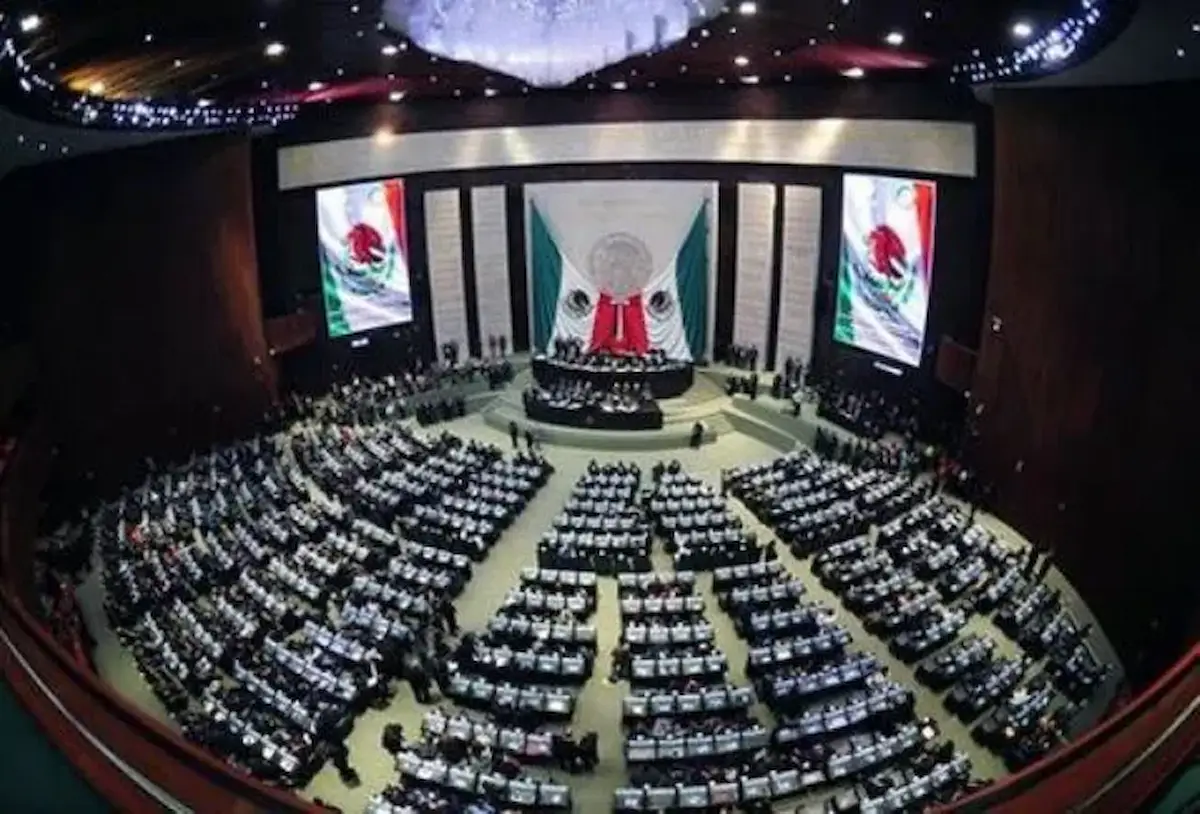
Mexico City — For the first time in 97 years, the Institutional Revolutionary Party (PRI) will not hold the presidency of the Chamber of Deputies during an entire legislative term. The party, which dominated Mexican politics for most of the 20th century, has been reduced to the fifth-largest force in the lower house after a poor electoral performance.
The presidency of the Chamber of Deputies will instead go to the Green Ecologist Party of Mexico (PVEM), the PRI’s former historical ally. The shift reflects the PRI’s steep decline in federal representation, which is mirrored in 31 of 32 state congresses, where the party’s presence is now minimal.
Although the PRI officially claims more than one million members, it faces severe difficulties mobilizing voters across the country.
From Hegemony to Decline
The PRI dominated federal and state legislatures from 1929 until 1979, when the introduction of proportional representation deputies allowed greater opposition participation. It lost its absolute majority in the Chamber of Deputies for the first time in 1997, but continued to hold the chamber’s presidency at least one year per legislative term under the rotating system established after the dissolution of the Gran Comisión.
In the current LXVI Legislature, however, the PRI’s diminished numbers prevent it from claiming the post. From 1940 to 1997, the party held the presidency of the Chamber’s governing board 273 times consecutively. Even after reforms, it presided 13 more times this century, with deputy Marcela Guerra being the last PRI member to lead the chamber.
State-Level Collapse
The party’s decline is most evident at the state level. The PRI now holds only 89 legislative seats nationwide — 35 elected by majority and 54 by proportional representation. In 14 states, its caucus consists of a single legislator.
The PRI governs only two states: Coahuila and Durango. In Durango’s congress, Morena holds an 11-7 majority over the PRI. Coahuila remains the party’s last stronghold, where it won all 16 majority districts in the most recent local election, giving it total legislative control in that state alone.
More Politics
- US Teens Buy Guns Legally and Sell Them to Mexican Cartels, NYT Reports
- Quintana Roo Lawmakers Move to Curb Political Use of Social Programs
- INE Launches 2027 Elections in Quintana Roo Without Candidate Background Checks
- Quintana Roo Education and Training Chiefs Resign to Seek Morena’s Chetumal Nod
- Judge Halts Trump Border Barrier in Big Bend National Park