
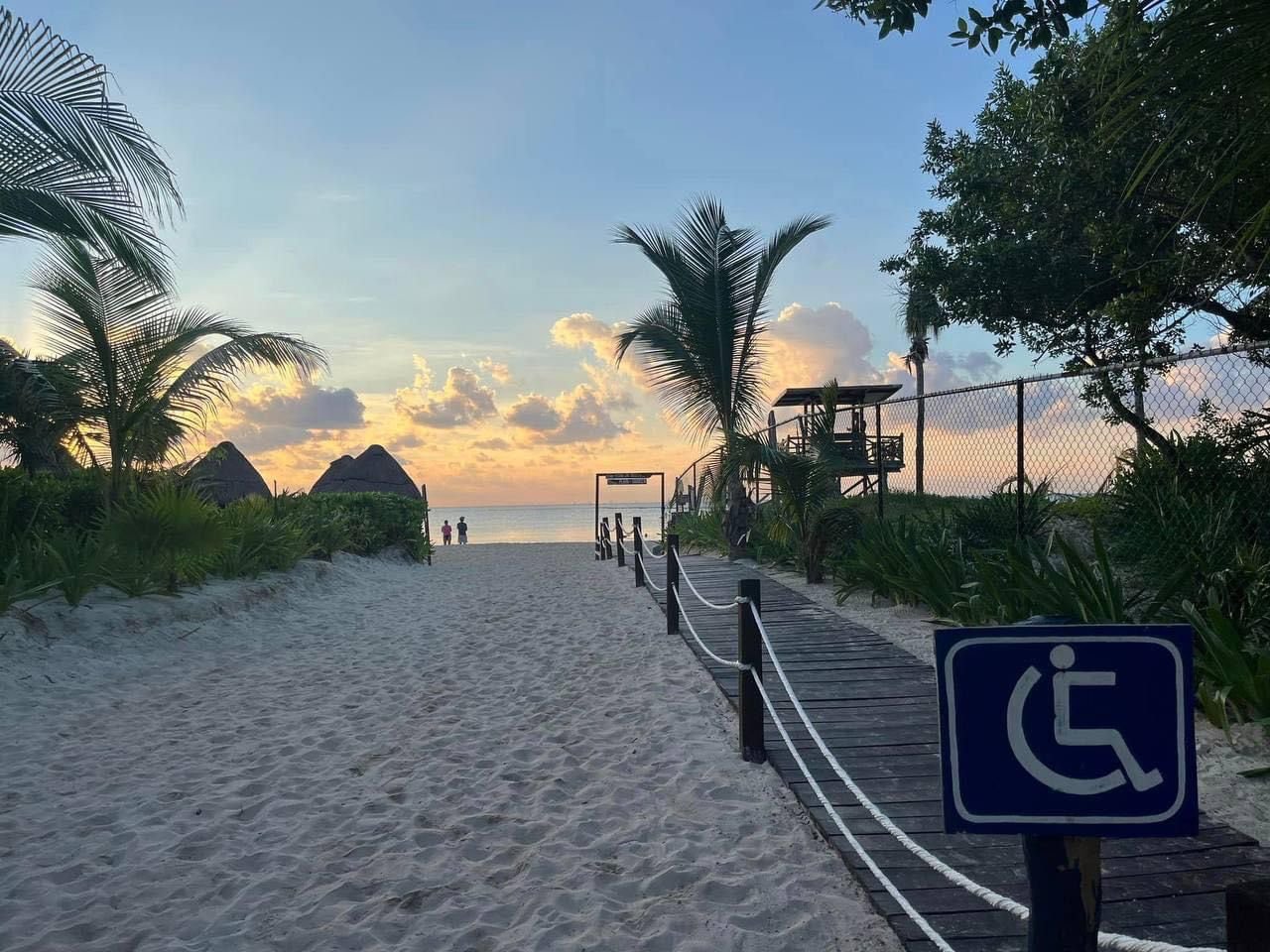
Playa del Carmen, Quintana Roo — Activists and environmental specialists are urging authorities to investigate after sediment with a likely sewage smell was discovered on the seabed off Playa 88, in a seagrass area that provides habitat for green turtles and sits close to the reef barrier.
Activist María Cos said she detected the sediment during a dive and also noticed floating particles in the water. “I was diving in the area and found sediment on the seafloor — particles that smell like drainage — and other floating particles, like fungi. It can be seen where the seagrass is, where the turtles live,” she said.
Cos said she was not certain of the contaminants’ origin, but she said their odor indicated sewage. “I don’t know where the wastewater comes from, but it is wastewater because it smells like a drain. This is worrying because the reef barrier is right in front of this Chen-Zubul polygon. It is a serious threat and must be addressed by the authorities,” she added.
Activist Roger Mendoza called the find a “red flag” and asked the environmental authorities to determine the source and makeup of the sediment. “I call on Profepa, the Federal Attorney for Environmental Protection, to launch a thorough investigation of these pollution samples, which represent a risk to marine species,” he said.
José Urbina Bravo, an activist and diver with Cenotes Urbanos of Playa del Carmen, pointed to the link between the city’s underground systems and the ocean, saying pollutants entering the subsoil can end up affecting marine ecosystems. He noted that observations in urban cenotes have turned up indicators of contamination linked to wastewater, which could also affect the reefs through the underground connection. “The red flags are lit, so it is urgent to address the problem at its source,” he said.
Guillermo DChristy, a researcher with Cenotes Urbanos, said contamination has recently been found in cenotes within Playa del Carmen’s urban footprint, with pollutants affecting water quality.
Biologist Aleyda Santos said wastewater can damage marine ecosystems because nutrients such as nitrogen and phosphorus fuel excessive algae growth. The algae can cover corals and block the sunlight they need, while fecal bacteria and other microorganisms in wastewater can weaken coral systems and promote disease, she said. Decomposing organic matter also depletes oxygen in the water, she added, which can disrupt conditions for fish, crustaceans and other species living on the reef.
The specialists and activists agreed that more work is needed to identify where the pollutants came from and to assess their impact on the seagrass, the turtles and the reef barrier off Playa del Carmen.
More Environment
- Greenpeace Finds Contamination at 17 Yucatán Wells and Cenotes as Maya Communities Demand Action
- Quintana Roo Tops 152,000 Metric Tons of Sargassum as Playa del Carmen and Cancún Lead
- Profepa Shuts Down Los Rápidos Swimming Spot in Xul-Ha Over Missing Environmental Permit
- Court Gives Profepa 72 Hours to Clarify Tren Maya Closure Order
- National Geographic Names Maya Ka’an Among Top Destinations to Visit in 2027
More Playa del Carmen
- Playa del Carmen Taps HR Directors to Boost Local Hiring
- Two Drivers Hurt in Playa del Carmen Crash at Wet Zazil-Há Intersection
- Influencer Discards 2,500-Peso SpongeBob Cake at Nickelodeon Riviera Maya, Citing Bad Taste
- Playa del Carmen Opens Registration for Audiovisual Workshops
- Playa del Carmen Businesses Seek Later Closing Hours for Bars and Restaurants
