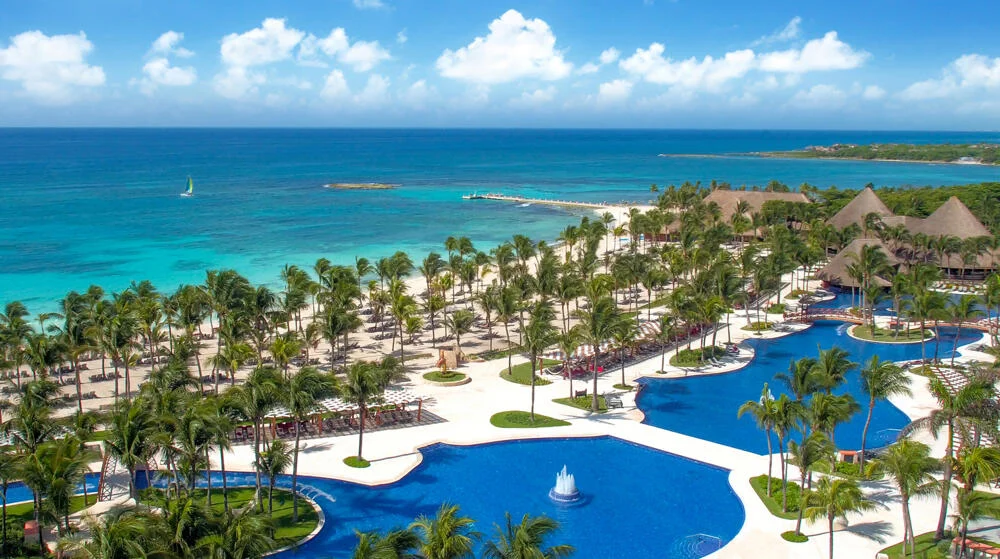
Playa del Carmen, Quintana Roo — Municipal tourism officials are developing new ways to encourage visitors staying at all-inclusive resorts to spend more time and money in Playa del Carmen’s communities, including Puerto Aventuras and rural areas participating in nature and cultural tourism programs.
Tourism Secretary Fabiana Briseño Suárez said working groups held in Playa del Carmen and Puerto Aventuras identified different needs within the municipality’s tourism sector. The findings will be used to design policies intended to spread more of the economic benefits generated by tourism among local producers, entrepreneurs and service providers.
Although Puerto Aventuras belongs to the municipality of Playa del Carmen, its tourism economy and community needs differ from those of the municipal seat. Officials said those differences will be considered rather than applying a single tourism plan across the municipality.
The working groups form part of a broader municipal consultation process connected to the update of the 2024–2027 Municipal Development Plan. The city’s 2026 Citizen Dialogues began June 19 at the Puerto Aventuras municipal office before continuing in La Guadalupana, Luis Donaldo Colosio, Ejido and Centro. The meetings collected proposals concerning economic development, public services, security, infrastructure and environmental management. The municipality said submissions gathered during the consultations could become action items in the updated development plan.
One of the tourism proposals focuses on guests staying at all-inclusive hotels, where accommodations, food, drinks and entertainment are generally bundled into the price of a vacation. Because much of a guest’s spending can remain inside the resort, municipal officials want hotels to help promote excursions and experiences operated by businesses and communities outside their properties.
The objective is to persuade more visitors to explore the municipality, purchase locally produced goods, eat at independent restaurants and book activities with local operators. Briseño said the municipal government will seek closer cooperation with hotels to make these options more visible and accessible to their guests.
The idea is part of the city government’s “From All-Inclusive to Everyone Included” tourism policy, which was presented internationally at FITUR 2026 in Madrid. The strategy aims to preserve Playa del Carmen’s large resort market while connecting it more directly with the municipality’s urban neighborhoods, rural communities and smaller tourism businesses.
Playa del Carmen has more than 48,000 hotel rooms, according to municipal figures released during the 2026 Tianguis Turístico in Acapulco. At that event, Briseño said the municipality was working to diversify its traditional beach-based tourism market through community routes, cenote excursions, gastronomy, sports and diving. She identified getting resort guests into local businesses and attractions as one of the strategy’s central goals.
Among the products expected to receive more promotion is the Ruta de la Miel y la Selva, or Honey and Jungle Route. The community tourism project connects Maya beekeeping, honey production, forest conservation and educational experiences.
Its first phase includes five planned stops: the Xunán Kab Meliponary in Emiliano Zapata; a honey-processing experience in Vida y Esperanza; a jungle apiary in Mezcalito; and two stops in Santa Cecilia focused on traditional apiculture and knowledge associated with the hive.
The route uses the Xunán Kab, the stingless melipona bee traditionally associated with Maya culture, as its central symbol. Visitors are expected to learn about meliponiculture, modern beekeeping, honey-producing plants and products made by local families.
The project received a 2025 Tourism Excellence Award during FITUR 2026 in January. Municipal representatives said it was designed to bring tourism income directly to honey producers and their families in Vida y Esperanza, Mezcalito and Santa Cecilia. The route combines apiaries, living forest, local production and low-impact cultural activities.
Officials also plan to promote a cenote corridor connecting natural attractions in and around the municipality. The proposal was introduced in Madrid as a regional initiative that could eventually link destinations in Quintana Roo and Yucatán. Details about participating cenotes, transportation, prices and operating arrangements have not yet been released.
The municipality has been adding other themed products to its tourism portfolio. In January, it introduced the Ruta del Mar, an educational and cultural route intended to explain Playa del Carmen’s historical and environmental relationship with the Caribbean. The first phase was presented at Playa Mamitas as an experience for residents and visitors. Municipal officials described it as part of their effort to broaden the destination beyond conventional beach tourism.
Briseño became municipal tourism secretary in March after previously leading Playa del Carmen’s delegation at FITUR. She replaced Estefanía Hernández, who moved to the Secretariat of Economic Development and Investment Attraction. Mayor Estefanía Mercado said the change was intended to accelerate the diversification of the municipality’s tourism offerings.
The latest meetings remain part of the planning process. The municipality has not announced a timetable for agreements with participating hotels or the launch of additional community excursions. Those details will depend on coordination among the Tourism and Planning departments, hotel operators, transportation providers and the communities responsible for receiving visitors.