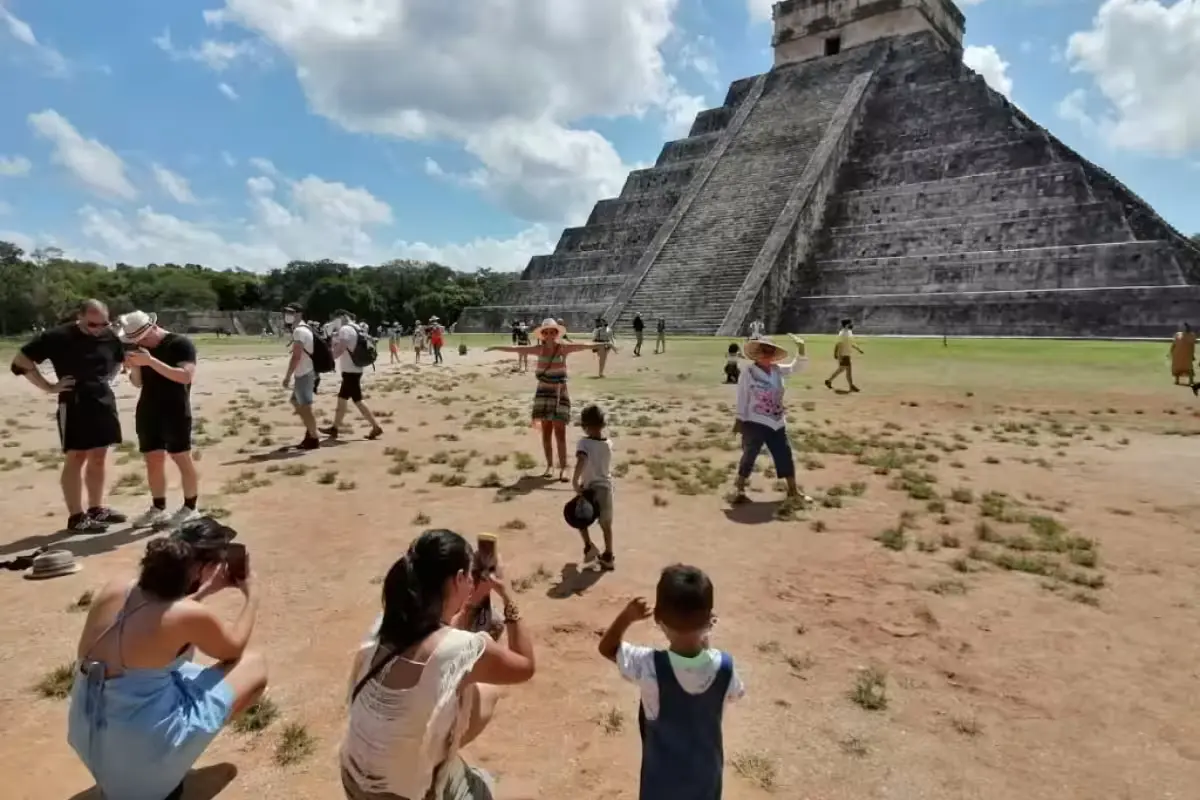
Pisté, Yucatán — The conflict over operations at Chichén Itzá escalated again after the National Institute of Anthropology and History (INAH) said the mandatory registration for artisans and vendors entering the archaeological site was agreed upon during dialogue with workers. The Indigenous Council of Government of Pisté Chichén Itzá rejected that claim, accusing the federal agency of lying and maintaining a policy of intimidation and discrimination against the Maya community.
In a statement released Wednesday night, INAH said that, in coordination with the Yucatán state government, it continues to require daily registration for artisans and vendors to work at the site, a measure it says ensures security, order, and proper functioning of the tourist complex.
According to the agency, the procedure was defined in negotiation meetings to verify that only people included in the official census of merchants and artisans enter. It also argued that after the site reopened on June 1, it detected people entering who were not part of the agreements, prompting additional controls.
Under the new mechanism, those seeking to enter through the old tourist stop must present their voter ID and proof of inclusion in the authorized registry. INAH warned that if noncompliance persists, it will close the so-called Puerta 1, the traditional entrance.
Council Accuses INAH of Lying, Publishes Meeting Minutes
The Indigenous Council responded quickly. In a statement released Thursday, the organization said it never accepted the mandatory registration and accused INAH of lying about it being consensual.
The council published the only two meeting minutes it said were signed by INAH officials during the dialogue. It also noted that there are no more documents because INAH itself suspended the negotiations, which were broadcast publicly to ensure transparency.
The council said its members and artisan organizations are the most interested in maintaining order and security at Chichén Itzá, which is why since 2014 they have had an internal registry and a badge system to identify those belonging to Pisté who conduct commercial activities at the site.
Allegations of Intimidation by Police Presence
One of the council’s main complaints is the permanent presence of state police and National Guard officers during the entry process, which it considers harassment and sends a negative image to visitors.
The council also said the procedure slows access to the site and reiterated that they have their own mechanisms to prevent outsiders from entering.
The council blamed INAH and the state government for breaking off dialogue and insisted that only the federal agency has tried to unilaterally modify the artisan registry to include people who, according to the council, are not part of traditional organizational structures.
It also accused the institute of maintaining a discriminatory attitude toward the Maya population of Pisté by disregarding their internal forms of organization and their ability to collaborate in managing the site.
Root of the Conflict
The dispute centers on the Visitor Center (Catvi), inaugurated on March 27, where a new artisan market was set up. A large group of merchants refuses to move there, arguing that sales are low. Their main demand is that both the Catvi and the old tourist stop, opened in 1987, operate simultaneously, allowing visitors to choose which entrance to use.
The conflict reached its peak on May 19, when a group of locals allowed tourists free entry to Chichén Itzá after learning during a dialogue meeting that the old entrance had been closed with bars, which they called a betrayal of agreements. The site reopened on June 1.
More Business
- Cancun’s Tourism Reset: Regenerative Travel Takes Center Stage
- Cinépolis at Plaza Las Américas in Cancún Closes Over Water Leaks
- Playa del Carmen Weighs Scooter Limits and Zoned Mototaxi Operations
- Mexican Lettuce Not to Blame for US Salmonella Outbreak, Cofepris Says
- Mayakoba Residents Cite Robberies as Playa del Carmen Announces New Park