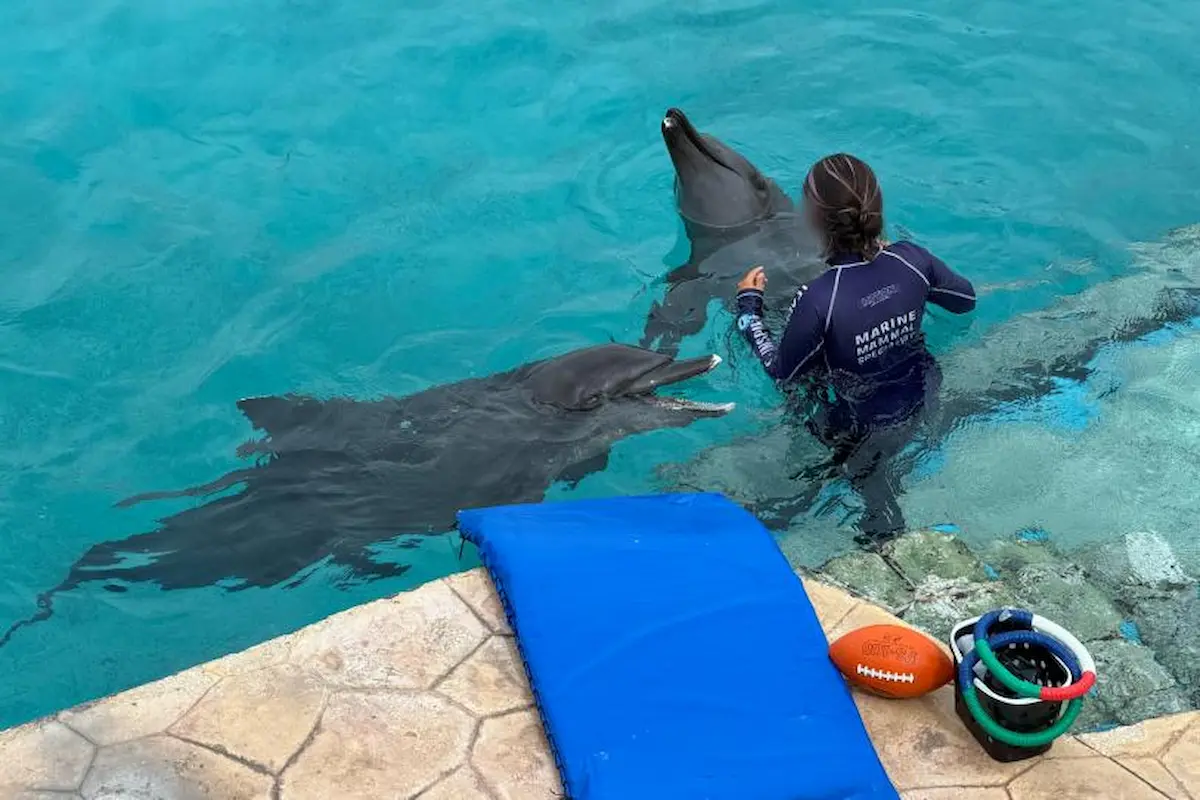
Cancún, Quintana Roo — More than 290 dolphins remain in captivity in the Mexican state of Quintana Roo, according to an animal welfare group that accuses dolphinariums of using legal appeals to dodge a federal ban on marine mammal shows.
Empty the Tanks Mexico, a leading advocate for the 2025 reform to the General Wildlife Law, says over 300 dolphins across the country have effectively been left in limbo as the law’s phase-in stalls.
“The big problem is this evasion of responsibility by dolphinariums, who are taking refuge in the courts and the Supreme Court because they don’t like the law, because it’s not convenient for them, and because they don’t want to make any kind of investment in infrastructure to improve the lives of these animals that have given them so much,” director Mariel Tejeda Bravo told Excelsior.
Tejeda, a biologist, said her group has documented at least six facilities protected under the new law. “The situation is still, to be honest, almost the same, except they can no longer put them in shows,” she said.
The group says the priority now is relocating the dolphins to sea enclosures before the April 2027 deadline set by the law. But the administration has yet to publish the law’s regulations, promised since January, and there is still no exact census of marine mammals in captivity. Under the law, dolphinariums were supposed to submit a photo-identification inventory to the Environment Ministry last October.
Empty the Tanks first obtained an estimate of about 300 dolphins through transparency requests in 2017. Based on sightings and visits to at least eight states, the group now puts the national figure at roughly 360, with around 290 in Quintana Roo and another 70 in other states:
- Quintana Roo: 290
- Guanajuato: 6
- Baja California Sur: 22
- Sonora: 6
- Veracruz: 6
- Jalisco: 8
- Guerrero: 20
- Nayarit: 33
The urgency is underscored by a report from the federal environmental prosecutor’s office (Profepa), dated August 14, describing the health of nine dolphins at a dolphinarium in Cancún as “critical.” Among them is Mincho, a 36-year-old dolphin who became the symbol of the reform dubbed the “Mincho Law.” Mincho injured his head on a concrete slab during an acrobatic show in November 2020. According to Profepa, he has a carcinoma affecting about 70% of his tongue and remains in a closed dolphinarium without shade. “To date, there are no authorized protocols for treating cancer in captive marine mammals,” the report says.
The other eight dolphins — Apolo, Flex, Diego, Oceanía, Satu, Squalo, Solei and Solomon — suffer from corneal inflammation, tongue ulcers, tooth wear and other conditions, according to the report. Tejada said drone images show dolphins with tongues “falling apart,” cancer, ulcers and missing teeth.
Profepa says the nine animals are monitored daily. But activists argue that more than 300 dolphins across Mexico should be moved promptly to sea corrals, where they can have shade and water depth closer to their natural habitat, instead of being left in concrete tanks.
More Environment
- Deer at Calle 88 Raises Alarm Over CFE Cozumel Cable Plan
- Yucatán Leads Mexico’s Octopus Production With More Than 28,000 Tons
- Xcalak Residents Warn of Dead Fish and Contaminated Water as Sargassum Piles Up
- Mexico Seizes Three Boats at Arrecife Alacranes Over Illegal Activities
- Pink Flamingos Find Refuge in Cancún’s Nichupté Lagoon, Officials Say
More Cancun
- Airline Seat Cuts Threaten US Connections to Mexico’s Caribbean Coast
- Cancún Mayor Tours Progress on Titan Police Complex
- Pacas Found Hanging in Cancún Home; Animal Cruelty Investigation Underway
- Business Leaders Urge Quintana Roo to Halt Non-Resident Fee Increase
- Cancún Raid Uncovers Arsenal of Rifles, Handguns and 1,000 Rounds at Suspected Safe House