
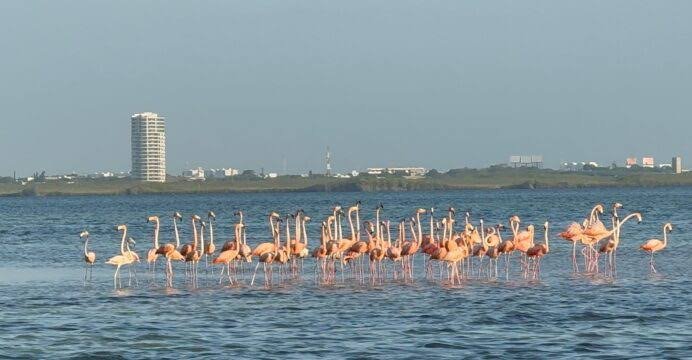
Cancún, Quintana Roo — At least 60 pink flamingos have found a temporary refuge in the Nichupté Lagoon in Cancún, a presence that confirms the importance of these wetlands within the corridor the birds use to travel across the Yucatan Peninsula and the Caribbean, Quintana Roo Secretary of Ecology and Environment Óscar Rébora said.
“Here they find food and rest before continuing their journey, even inside an urban environment like Cancún,” the official wrote on X.
The birds live in large colonies in shallow wetlands, coastal lagoons and saline or alkaline areas — conditions found in the Nichupté Lagoon, which runs parallel to the beach zone of the Benito Juárez municipality.
Previous Sightings in the Lagoon
A pair of the birds were also spotted in the lagoon’s mangroves in June of last year, according to a report by the Pedro y Elena Hernández Foundation’s Yucatan Peninsula Program. The Quintana Roo government also collected images taken by tourism service providers working in the area.
The foundation has led research into and protection of the Mexican Caribbean flamingo at the Ría Celestún Biosphere Reserve in neighboring Yucatán and the Ría Lagartos Reserve.
Officials Urge Visitors to Keep Their Distance
Rébora called on residents and visitors to leave the birds undisturbed.
“If you see the flamingos, let them be. Don’t approach them, don’t try to feed them and don’t chase them to take photographs,” he wrote. “We will do our part from the environmental authority to protect Nichupté and maintain the conditions that allow these birds to find food and rest here.”
Despite three years of construction on the Nichupté lagoon bridge, federal, state and municipal authorities have monitored the health of the area and how the environment has adapted to the new structure.
Rébora said his government has a responsibility to protect these spaces and preserve the conditions that allow wildlife to use them, and that it will continue to promote an environmental policy that makes urban development compatible with the conservation of the state’s ecosystems.
The Cozumel Parks and Museums Foundation (FPMC) also reported new sightings last year, including the return of a marked bird to the area known as Punta Sur on the island.
More Environment
- Hurricane Isaias Disrupts Water Sports Services in Playa del Carmen
- Playa del Carmen Drafts Rules to Curb Urban Tree Loss
- Sargassum Hits Southern Quintana Roo Hardest as 25 Beaches Report Excessive Levels
- Quintana Roo Environment Agency Accepts Federal Ruling in Alux 33 Case
- Screwworm Cases Detected in Two Dogs and a Horse in Tulum
More Cancun
- Cancún Raid Uncovers Arsenal of Rifles, Handguns and 1,000 Rounds at Suspected Safe House
- Missing Quintana Roo Education Official Found Alive in Cancún
- Cancún Charity Ciudad de la Alegría Expands Aid as Food Requests Double
- Cancún Moves to Reactivate Puerto Juárez Market for Hanal Pixán
- Cancún Dump Truck Operators Protest Hotel Haven Riviera Over ‘Pirate’ Cargo Trucks