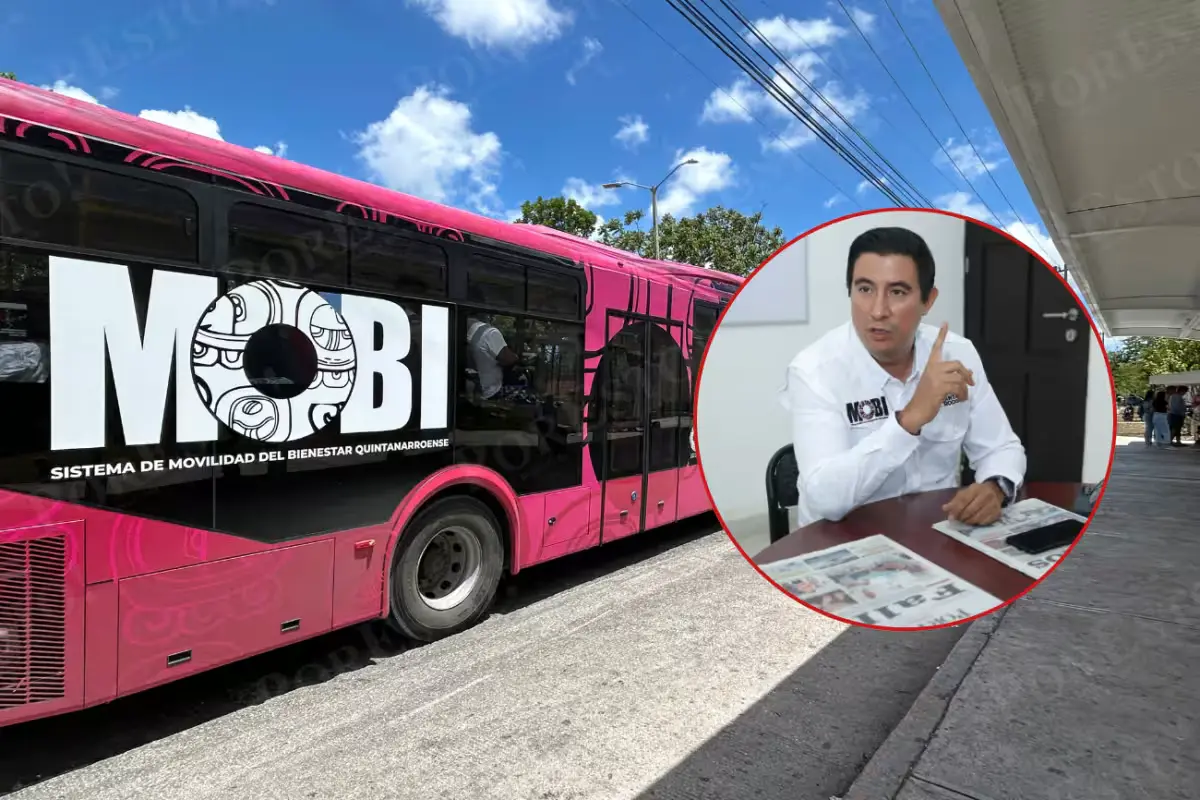
Cancún, Quintana Roo — The director of Quintana Roo’s Mobility Institute called on motorists to respect the boarding bays on the new MOBI bus routes and warned that passengers who damage vehicles will face administrative sanctions as the state pushes ahead with an overhaul of its public transit system.
Rafael Hernández Kotasek, head of the Quintana Roo Mobility Institute (Imoveqroo), said recently approved legal reforms will allow the agency to integrate routes, technology and public financing across the state. The first phase of MOBI will operate bus networks in Cancún, Chetumal, Playa del Carmen and Isla Mujeres, directly benefiting at least 500,000 residents in Cancún, 35,000 in Chetumal, 65,000 in Playa del Carmen and 10,000 in Isla Mujeres and its mainland zone.
“In cities we must prioritize moving people, not vehicles,” Hernández Kotasek said.
The system’s flagship Route 27, which crosses the Puente Nichupté between Cancún and the Hotel Zone, began formal operations this week. The 64.9-kilometer route connects 155 neighborhoods and is expected to save riders up to 50 minutes on trips into the Hotel Zone, benefiting more than 156,000 people. On its first full day, it carried 13,411 passengers, with service running from 4:50 a.m. to 1:00 a.m. — more than 20 hours a day. Rides are currently free.
Hernández Kotasek said the next route, from Cielo Nuevo to the Hotel Zone via Kilometer Zero, will start next week, with more lines to follow along Cancún’s main avenues. He also noted that the agency audited the state’s transit concessions and identified 33,000 existing permits.
The director warned that buses are equipped with security cameras and that anyone caught damaging a unit, inside or out, will be identified and penalized. “The buses have security cameras, route timers and, once electronic fare cards are in service, it will be easier to identify those responsible,” he said. He urged motorists to respect the boarding bays so that wheelchair ramps can be deployed.
The new buses will include air conditioning, wheelchair ramps, ergonomic seats, lower handrails for shorter passengers, internet access, security cameras and electronic payment systems, according to the specifications the institute is giving concessionaires.
The initial investment totals 290 million pesos (about $15 million), covering 38 buses, driver training and equipment for rechargeable smart cards. The agency expects to close this year with 138 buses and add 180 more by 2027.
In March 2026, the Quintana Roo Congress approved a sweeping reform to the Mobility Law that lets Imoveqroo take over municipal transit operations through agreements lasting 10 to 30 years, including the construction and operation of transfer centers and stops. The agency can also set fares and request credit for infrastructure and equipment. A companion constitutional reform guarantees that the state’s mobility budget cannot be less than the previous fiscal year’s allocation.
Hernández Kotasek said financing is one of the industry’s biggest challenges, but also an opportunity to rethink urban models. He noted that in Latin America, up to 70 percent of public transit is supported by subsidies tied to policies that discourage private car use.
The institute is also promoting integrated solutions such as exclusive bus corridors, safe pedestrian connections and municipally regulated micromobility systems, prioritizing active mobility and sustainable urban planning.
More Government
- Playa del Carmen Taps HR Directors to Boost Local Hiring
- Moderna COVID-19 Vaccine to Be Offered to Children in Cancún
- Trump Escalates Pressure on Mexico, Demands Action Against Cartel-Allied Officials
- Alleged Owner of Cancún Home Rented by Puerto Morelos Mayor Linked to Ultramar Fraud Case
- Paraguayan Tourists Challenge Asur Over $30 Exit Fee at Cancún Airport
More Cancun
- Mexico Hoteliers Warn of 1.1 Million Air Tourist Loss as U.S. Arrivals Slump
- Caribbean Poker Tour Closes 2026 Season in Sint Maarten With $125,000 Main Event
- Canine Unit Finds 10 Kilos of Cocaine Hidden in Suitcase at Cancún Airport
- Cancún’s Route 17 Leona Vicario Draws More Than 16,000 Riders on First Free Day
- Hanal Pixán 2026 in Puerto Juárez: Four Days of Maya Day of the Dead Traditions