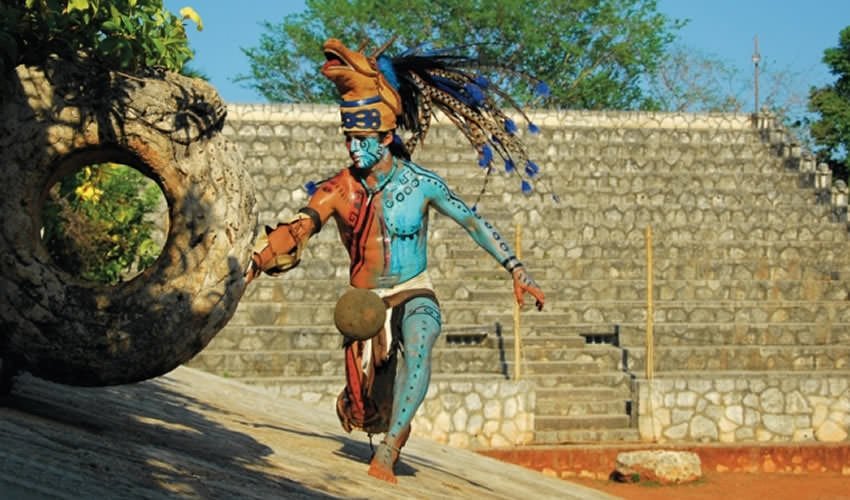
Mexico City — Mexico’s Supreme Court has denied Grupo Xcaret an injunction that had prevented authorities from blocking the company’s websites during a dispute over its use of Maya symbols.
The case stems from actions by the National Copyright Institute (INDAUTOR) against Grupo Xcaret over Maya imagery on the company’s digital platforms and promotional materials. In an amparo proceeding, a federal judge in Mexico City originally granted Xcaret a definitive suspension, keeping its websites active until the dispute was resolved.
Nearly six months after the Supreme Court’s full bench heard arguments in March, the court has published its ruling revoking that suspension.
In its decision, the high court focused on a contract between Xcaret and the Great Maya Council. Xcaret argued the contract gave it the legal right to use elements of Maya cultural heritage.
The justices found the contract does not meet the legal requirements to show that the Maya people, as collective holders of that heritage, granted their authorization. While the contract may create obligations between the parties that signed it, the court said, it is insufficient to establish a legally protected interest for the purposes of a preliminary injunction.
The ruling also notes that the Great Maya Council does not represent all Maya communities. Whether that body can legitimately speak for the Maya people is a question for the merits phase of the case, not for a provisional decision.
The court stressed that its decision is limited to the injunctive relief and does not resolve the underlying constitutionality of the challenged actions or the ultimate validity of the contract.
The case has drawn attention beyond Grupo Xcaret because Maya names, images, and symbols are used commercially by many companies across Mexico and Central America. Maya culture remains a living heritage in Quintana Roo, Yucatán, Campeche, Tabasco, and Chiapas, as well as in countries throughout Central America.
For now, the Supreme Court has made clear that a contract with an organization that does not prove it represents all Maya communities is not enough to secure judicial protection. The underlying litigation, however, remains open.
More Courts
- Court Gives Profepa 72 Hours to Clarify Tren Maya Closure Order
- Grupo Xcaret Revives Mayan Sea Crossing Under New Name La Travexia
- Prosecutors Detail Extortion Scheme Targeting Puerto Aventuras Street Vendors
- Man Sentenced to 108 Years for Raping and Sexually Abusing His Three Stepdaughters
- Mexico’s Federal Prosecutor Charges Former Chihuahua Attorney General With Treason Over CIA Role in Drug Lab Raid
More Playa del Carmen
- Playa del Carmen Taps HR Directors to Boost Local Hiring
- Two Drivers Hurt in Playa del Carmen Crash at Wet Zazil-Há Intersection
- Influencer Discards 2,500-Peso SpongeBob Cake at Nickelodeon Riviera Maya, Citing Bad Taste
- Quintana Roo Tops 152,000 Metric Tons of Sargassum as Playa del Carmen and Cancún Lead
- Playa del Carmen Opens Registration for Audiovisual Workshops