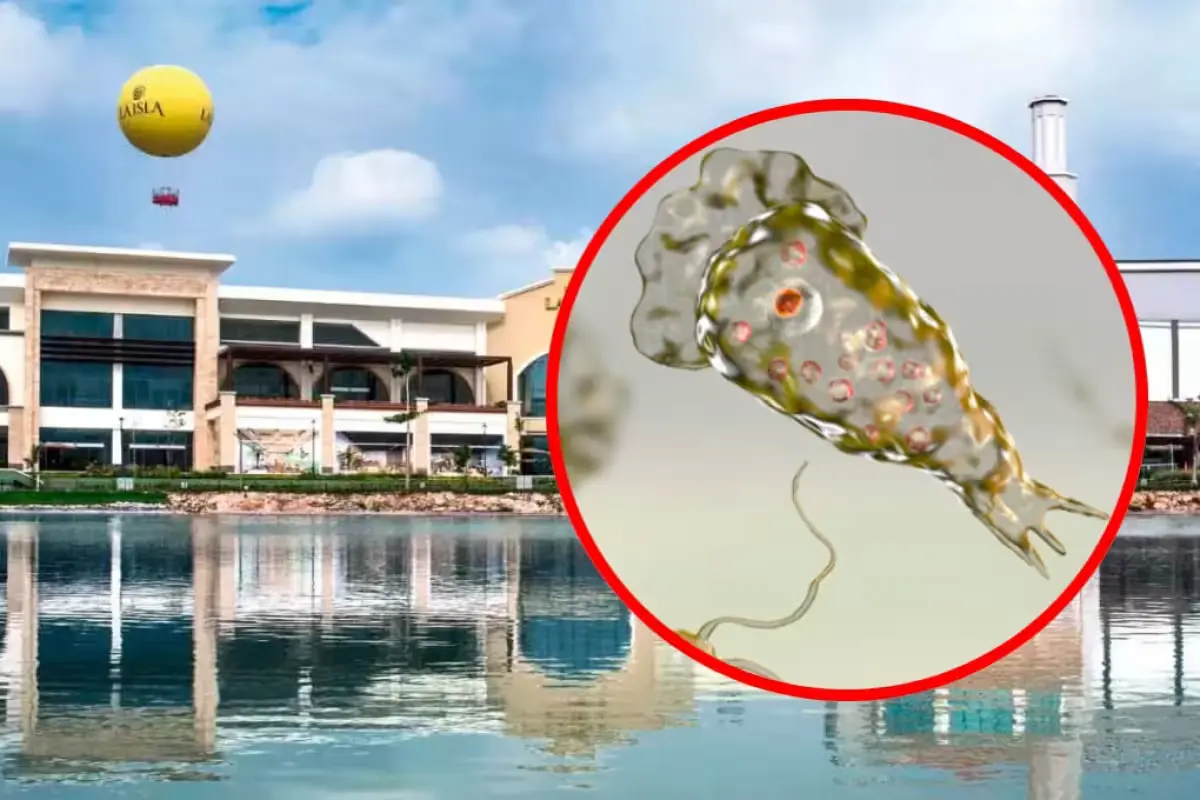
Mérida, Yucatán — A 34-year-old man died in Mérida after being hospitalized with a probable diagnosis of primary amebic meningoencephalitis, the Yucatán Health Department reported. Clinical studies are still underway, so the case has not been confirmed.
The patient was admitted on September 2 to the IMSS (Mexican Social Security Institute) Regional General Hospital No. 12, where he remained in the intensive care unit because of the severity of his condition.
During his hospitalization he suffered neurological deterioration and severe cerebral edema, requiring mechanical ventilation, medication to maintain his vital functions, and antiparasitic, antibiotic and antifungal treatments. He died on September 8 despite the care he received.
Water Samples Sent to Hidalgo Laboratory
An epidemiological investigation found that the man had continuous contact with a recreational body of water where he worked. With that history in hand, health personnel went to the site on September 4, collected water samples and ordered it closed as a precaution while testing is carried out.
The environmental samples were sent to the State Public Health Laboratory in Hidalgo, which has the required analytical capacity. So far, officials have not confirmed the presence of the infectious agent or that the body of water was the source of the probable infection.
Authorities stressed that the closure is a preventive measure and does not mean there is a widespread risk to the public. The site will remain off-limits until official laboratory results are available.
Although primary amebic meningoencephalitis is popularly associated with the so-called “brain-eating amoeba,” authorities have not yet confirmed the diagnosis, the microorganism responsible or the route of infection in this case.
More Environment
- Cancún to Open Glass Collection Center as Part of Circular Economy Push
- Cave Divers Push to Revive Jacinto Pat Museum in Tulum to Showcase Caves and Underground Rivers
- Snakes Account for Nearly Half of Cancún’s Wildlife Reports, Firefighters Say
- Screwworm Still Dominates Playa del Carmen Vet Visits Despite Falling Cases
- Playa del Carmen Mayor Leads Coastal Cleanup With More Than 2,000 Volunteers