
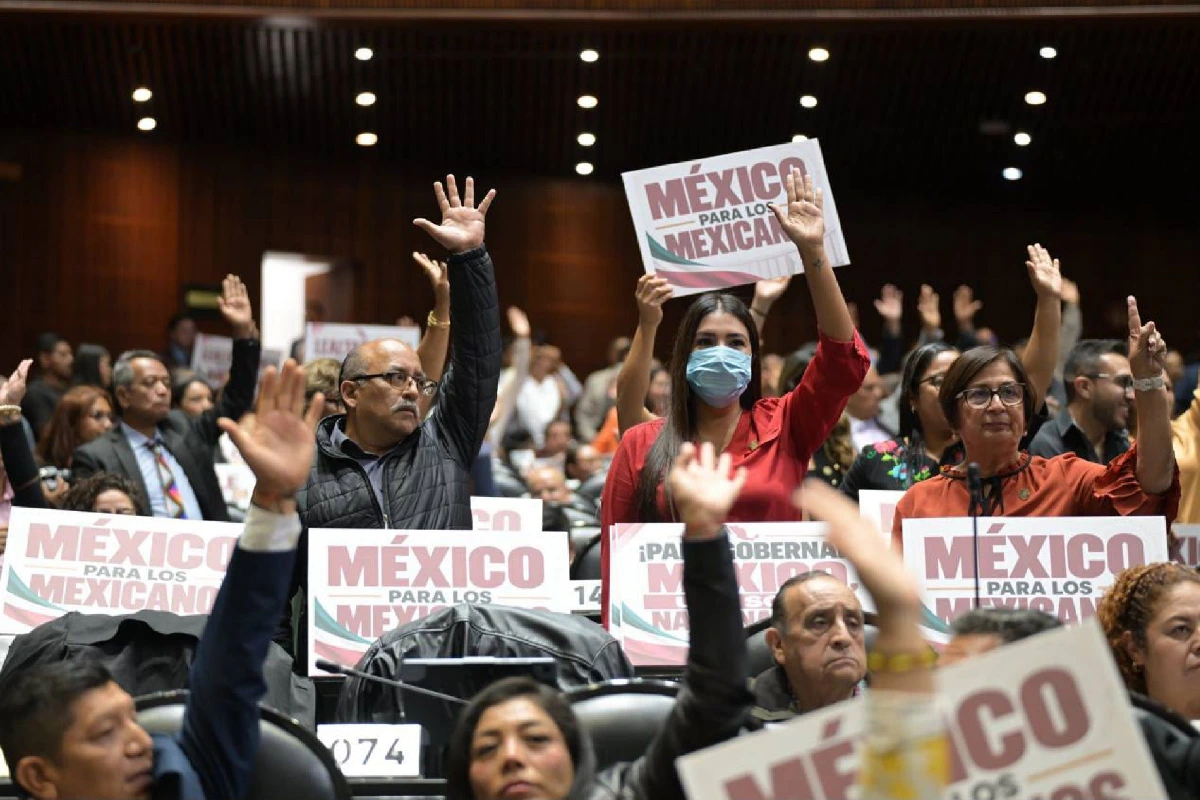
Mexico City — Mexico’s Chamber of Deputies approved a constitutional reform that would require anyone seeking the presidency, a governorship or the top post in Mexico City to hold Mexican nationality alone. The bill, championed by President Claudia Sheinbaum, was sent to the Senate, which opened a new round of debate on Wednesday.
The reform amends Articles 82, 116 and 122 of the Constitution and stipulates that people holding those offices may neither keep nor acquire any nationality other than Mexican.
The vote exposed the split between the country’s political forces. In general terms, the bill drew 344 votes in favor, 116 against and one abstention. After lawmakers debated reservations, the specific articles passed with 334 in favor, 109 against and one abstention. The result cleared the way for the proposal to advance to the upper chamber, though it remains far from becoming an enforceable constitutional rule.
Dual Nationality Excluded From Top Offices
Under the proposal, holding the presidency, a governorship or Mexico City’s Head of Government would require being Mexican by birth and neither holding nor acquiring another nationality. The restriction does not eliminate the general right of Mexicans to hold dual nationality; it applies specifically to those seeking the offices covered by the reform.
The bill also sets obligations for officeholders while they serve. They could not request or obtain another nationality, invoke a nationality other than Mexican before foreign authorities, use foreign passports or identity documents in the cases covered, exercise political rights tied to another citizenship, or seek diplomatic protection from another state.
One notable change came during debate in the Chamber of Deputies. The original proposal required people with a second nationality to renounce it before registering as candidates. The approved version shifts that timing for the presidential election: the person elected must prove they do not hold and have not acquired another nationality before the election’s validity is formally declared.
The adjustment changes when the requirement is verified but keeps the single-nationality mandate for whoever ultimately takes the presidency. The restrictions on governorships and the Mexico City post remain as drafted.
Senate to Decide Next Step
The Senate received the bill and referred it to the joint committees on Constitutional Points and First Legislative Studies. Those panels will review the text approved by the lower house and determine whether to keep it as is or propose changes before sending it to the floor.
The proposal calls for the new rules to apply beginning with the 2028 electoral process. That timetable, however, still depends on the reform completing the stages required for a constitutional amendment.
After the Senate, the measure would need backing from a majority of state legislatures and Mexico City’s legislature. Only then could the corresponding declaration be issued and the decree published in the Official Gazette.
The Senate debate will also show whether the text approved in the lower house survives intact, particularly the change to when single nationality must be proven for the presidential election. If the upper chamber amends the bill, it would return to the Chamber of Deputies.
For now, the reform has cleared its first chamber, but single nationality is not yet a binding constitutional requirement. Its implementation will hinge on the Senate’s decision and the remaining stages of the amendment process. If the proposal takes effect as approved, the new rules would begin applying to contenders for the country’s top executive offices in 2028.
More Courts
- Mexico’s Supreme Court Blocks Telmex Bid for Automatic Pay TV Access
- Trafficking Cases Keep Quintana Roo on Alert With 159 Reported in 2026
- Mexico Moves to Bar Dual Nationals From Top Offices
- Activist Searching for Missing Brother Sentenced to 80 Years for Cancún Kidnapping
- Fraud Suspect Captured in Miami Returned to Quintana Roo After Two Escapes