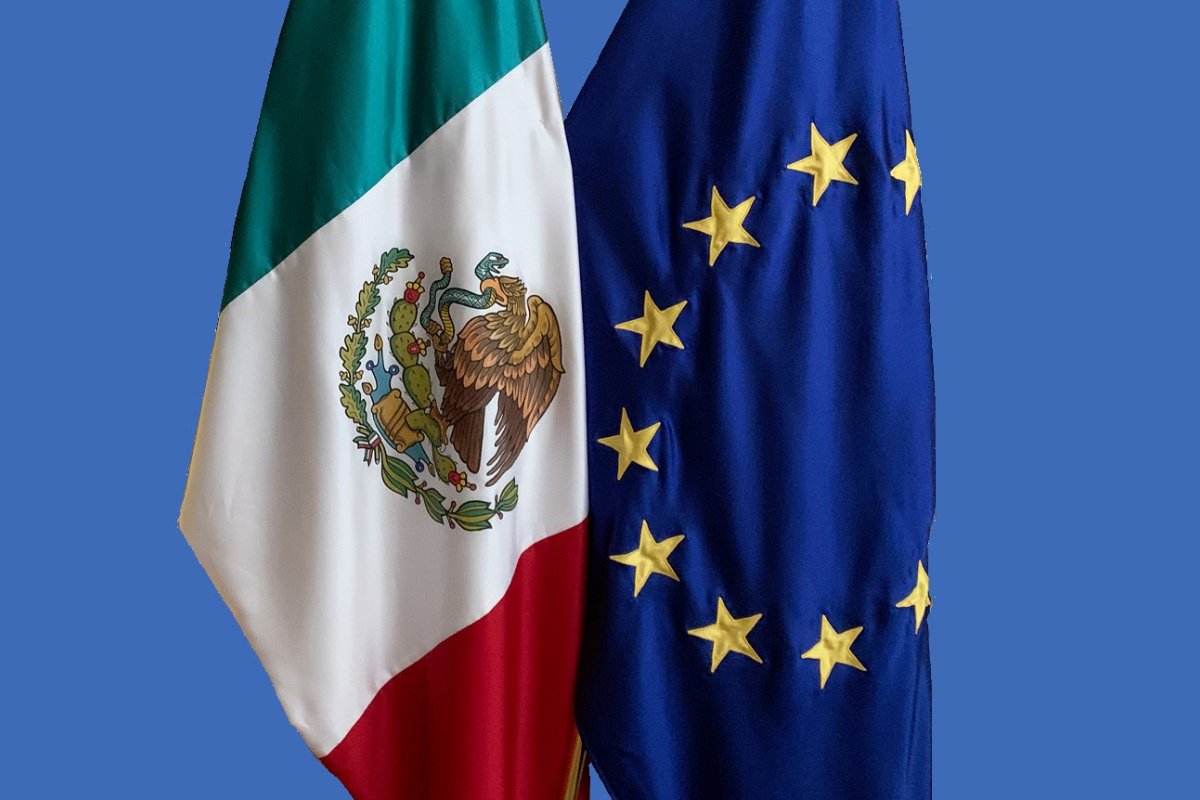
Mexico City — Mexican legislators and members of the European Parliament gathered in Mexico City this week for the 33rd meeting of the Mexico-European Union Joint Parliamentary Committee, with the future of the newly signed Modernized Global Agreement at the top of the agenda.
The session, which wraps up Sept. 23, brings together 15 Mexican legislators and 14 MEPs under the leadership of Senator Beatriz Robles Gutiérrez and MEP Antonio López-Istúriz, the committee’s co-chairs. It follows the European Parliament’s approval of the new agreement in July and comes as Mexico prepares the file that will be sent to the Senate for ratification.
Signed in May, the agreement would replace the framework in place since 2000 and update the rules governing political, economic and cooperation ties between Mexico and the European bloc. Its scope covers trade, investment, sustainable development and cooperation mechanisms in areas that have gained weight in the bilateral relationship.
Ratification Still Pending in Mexico
The parliamentary discussion carries weight because signing the deal does not mean it is in force. Mexico’s Senate must still review the instrument and decide whether to ratify it. Deputy Foreign Minister María Teresa Mercado said the Foreign Ministry and the Economy Ministry are assembling the file that will be presented to the upper chamber.
An Agenda That Goes Beyond Trade
Trade is one of the main interests at stake, but the talks cover a broader agenda. Legislators from both sides have raised issues including value chains, the energy transition, artificial intelligence, digital governance, migration and human rights.
The new framework also includes provisions on sustainable development and cooperation on climate change and anti-corruption efforts. On the economic side, it seeks to ease market access and expand opportunities for companies in both regions, including greater access for European firms to Mexican public procurement contracts.
The European Parliament approved the Modernized Global Agreement in July with 479 votes in favor, 119 against and 65 abstentions. It also greenlit an interim trade agreement that will allow certain trade provisions falling under the European Union’s exclusive competence to take effect before full ratification is completed.
The Next Move Belongs to Mexico’s Senate
The parliamentary meeting therefore arrives at a stage when debate has shifted from negotiating the treaty to implementing and ratifying it. In the Mexican Congress, calls have grown to speed up delivery of the file to the Senate, where formal review will begin.
For the Joint Parliamentary Committee, the process is also an opportunity to keep political dialogue open while legal procedures advance. The body was created to maintain permanent contact between Mexico’s Congress and the European Parliament and to discuss issues of shared interest.
Economic ties give the discussion its context. Bilateral trade has made the European Union one of Mexico’s main economic partners, and the new agreement aims to modernize a framework that has been in operation for more than two decades.
For now, Mexican ratification remains pending. The parliamentary work leaves on the table the issues that will accompany that review: trade, economic cooperation, human rights, the energy transition, technology and governance. The next step depends on how the Senate handles the file once it receives it.
More Economy
- Tren Maya Freight Complex in Chetumal to Break Ground in 2027
- 40-Hour Workweek in 2027 Will Speed Up Robots and AI in Hotels, IMEF Says
- Mexico’s Supreme Court Blocks Telmex Bid for Automatic Pay TV Access
- Moody’s Warns Mexico Faces Negative Fiscal Trend on Rising Debt and Weak Growth
- INEGI Confirms Quintana Roo Surpasses 2 Million Residents