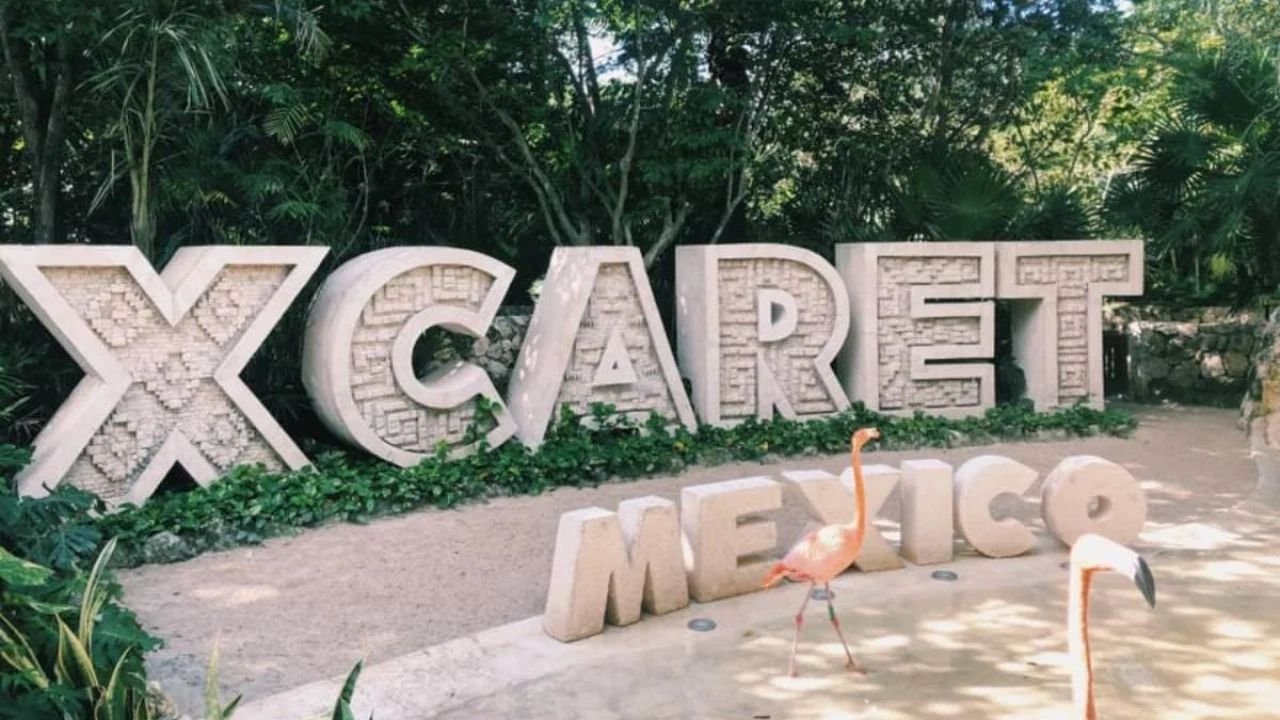
Cancún, Quintana Roo — Mexico’s Supreme Court has dealt a legal setback to Grupo Xcaret, revoking the definitive suspension that allowed the tourism company to keep imagery drawn from Maya symbols, ceremonies and cultural heritage active on its websites and advertising materials.
The court ruled that the contract the company submitted to prove a supposed formal authorization — signed with the so-called Gran Consejo Maya de Quintana Roo — does not meet the legal or representativeness requirements needed to count as legitimate consent from the Maya people as a whole, the collective holder of that tangible and intangible heritage.
While the ruling does not resolve the underlying amparo lawsuit, it immediately strips Xcaret of the judicial protection that had prevented its promotional platforms from being blocked or modified.
The court’s position sets a regulatory benchmark that aligns with current rules from the Environment and Natural Resources Department (Semarnat), which has conditioned new Grupo Xcaret construction projects in Quintana Roo on prior, informed consultations with Indigenous communities.
Why the Court Revoked the Suspension
At the heart of the debate before the court’s full bench was whether a private company can claim a legitimate right to commercially exploit the symbols of an Indigenous culture on the basis of a private agreement.
Reviewing the appeal filed against the suspension previously granted to Xcaret, the justices found that a contract signed with a local organization such as the Gran Consejo Maya does not amount to the informed, legal consent of the collective Maya community.
The ruling stated that while the contract “may create obligations between the parties that signed it, it does not meet the legal requirements to prove authorization from the Maya People as the collective holder of their cultural heritage, and therefore is insufficient to support a right legally protected through a suspension.”
On that basis, the court held that the company’s hotel, restaurant and theme park business does not depend on the advertising use of Indigenous iconography online in order to operate, giving precedence to the public interest and the safeguarding of cultural rights over a brand’s private interest.
What the Ruling Means for Xcaret’s Websites and Advertising
The immediate effect is the loss of precautionary protection. For as long as the main case continues:
- Removal of content: Grupo Xcaret can no longer rely on the suspension to halt administrative procedures issued by cultural or intellectual property authorities seeking the removal or blocking of elements alluding to Maya culture on its official websites.
- Park operations: The ruling concerns commercial promotion and the exploitation of intangible symbols in digital and advertising media. Public access and the physical operation of the company’s hotel complexes and parks are not suspended.
- Status of the litigation: The amparo case remains open. The Supreme Court only resolved the review of the provisional precautionary measure, so the competent courts must still issue a final ruling on the merits of the dispute.
The decision rests on the Federal Law for the Protection of the Cultural Heritage of Indigenous and Afro-Mexican Peoples and Communities, which penalizes unauthorized appropriation and the for-profit exploitation of intangible heritage when no formal agreement has been reached through community assemblies and state-regulated consultations.
How the Ruling Ties to Semarnat’s Requirements
The court’s decision comes alongside administrative determinations imposed by the federal government through Semarnat.
The department granted environmental approval for infrastructure projects within Grupo Xcaret’s flagship park in Solidaridad, Quintana Roo — with construction projections spanning 10 years and operating validity of 70 years — but set binding Indigenous consultations as an indispensable condition.
Environmental authorities recalled that Mexican law and Convention 169 of the International Labor Organization (ILO) require that any real estate, extractive or tourism development affecting Indigenous territories or cultural practices have the consent of local assemblies, and prohibit unilateral negotiations or deals with groups lacking the authority to grant it.
Impact on Tourists, Consumers and the Tourism Sector
For visitors and the tourism industry, the precedent sets clear criteria on responsible consumption and legal certainty:
- Guarantee for visitors: Tourists will retain regular access to the facilities, but the platforms where they buy tourism packages must be transparent about the origin and handling of the cultural representations they offer.
- End of private, individual deals: Hotel chains and tour operators in Quintana Roo and the rest of the country will not be able to use group signatures or agreements with isolated local leaders to justify the for-profit use of collective identities.
- Protection against purely commercial bias: The ruling promotes a tourism model in which the cultural dissemination of Indigenous peoples requires fair compensation and prior validation by their genuine community representatives.
A Precedent That Redefines Cultural Heritage Protection in Tourism
The Supreme Court’s decision marks a turning point in the relationship between corporate development and the rights of Mexico’s Indigenous peoples.
By declaring the contract signed by Xcaret insufficient, the court sent a blunt message to the business sector: cultural heritage is not merchandise that can be licensed through unilateral private negotiations.
In a global market focused on sustainability and respect for diversity, companies will have to restructure their marketing strategies and treat communities not as decorative promotional elements, but as central players with decision-making power and a shared share of the benefits.
More Courts
- FBI’s Ten Most Wanted: Five Caught Hiding in Mexico
- Appeals Court: Detained Migrants Have No Right to Bond Hearings
- Same-Sex Couples in Cancún Face Hurdles Certifying Concubinage
- Quintana Roo Human Rights Commission Closes 930 Complaints With Only 13 Recommendations
- Anti-Corruption Prosecutor’s Office Seizes House in Playa del Carmen
More Playa del Carmen
- Félix the Dog Rescued from Seized Villamar Home
- Two Women Arrested on Drug Dealing Charges in Playa del Carmen
- Prosecutors Seek Public’s Help to Find 24-Year-Old Missing Man in Playa del Carmen
- Facade Chunks Fall Onto Playa del Carmen’s Quinta Avenida, Prompting Closure
- Playa del Carmen New Urban Development Plan Approval Slated for Early 2027