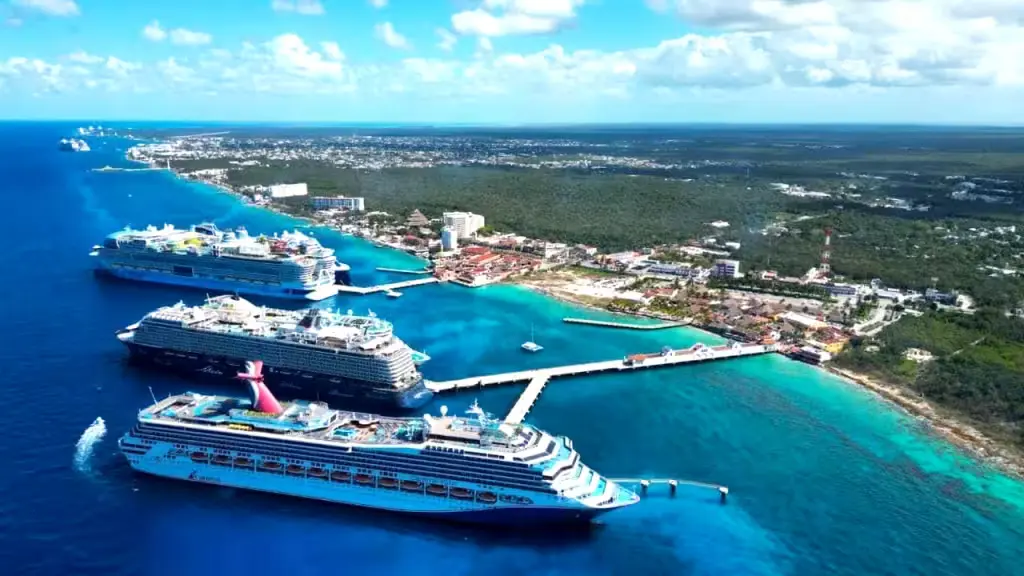
Cozumel, Quintana Roo — Mexico’s Secretariat of Environment and Natural Resources (Semarnat) has denied an environmental impact permit for the expansion of the SSA Mexico cruise terminal in Cozumel, citing severe risks to the Villa Blanca coral reef system.
The decision, published in the official Ecological Gazette, blocks a project that included a second cruise pier, a new commercial center, a terminal building, and a crew club, with an estimated investment of 882 million pesos (about $44 million).
Semarnat concluded that the project was not environmentally viable, as it could cause severe ecological imbalances in the marine ecosystem. The agency’s resolution noted that the expansion would permanently alter the seabed morphology and generate urban waste that could contaminate the ocean floor.
The denial was welcomed by the Citizen Collective Isla, which had argued that the company’s environmental impact statement omitted the presence of coral patches and species listed under Mexico’s endangered species standard NOM-059 within the project’s direct influence area. The collective also pointed out that the expansion would overlap with the buffer zone of a fourth terminal, directly affecting the Villa Blanca reef barrier.
SSA Mexico’s Cozumel International Cruise Terminal is one of three piers operating on the island. In 2025, it handled nearly 40% of all cruise ships and passengers arriving in Cozumel.
The proposed L-shaped pier would have covered 1.16 hectares, allowing vessels up to 362 meters in length to dock. It was to be built on steel piles and prefabricated concrete slabs, with an access bridge and docking platform starting from the Federal Maritime Terrestrial Zone, an area devoid of coastal vegetation.
This is not the first time a cruise pier project in Cozumel has faced rejection. Last year, authorities canceled a separate fourth pier project after activists raised concerns about environmental damage.
More Business
- China Expands Drug Precursor Export Curbs Before Trump-Xi Talks
- Cancún Airport ‘Pirate’ Transporters Accused of Intimidating Tourists Over Uber and Didi
- Cozumel Submarine Power Cable to Be Installed Oct. 5 After 40-Year Wait
- Isla Mujeres Fishermen Face Grouper Shortage as Catch Barely Covers Local Demand
- Tulum Adds Artisan Market and Caribbean Culture Festival to Its Tourism Lineup
More Cozumel
- Cozumel Reports Alcohol and Drug Use Starting at Age 11
- Cozumel Lifeguards Keep Watch Over Playa Caleta After Crocodile Sighting
- Cozumel Launches Rabies Vaccination Drive With 3,000 Free Doses for Pets
- Ultramar Ferry Collides With Xcaret Xailing Vessel at Cozumel’s Muelle Fiscal
- Marc Dubrick Dominates Ironman 70.3 Cozumel, Wins Wire-to-Wire