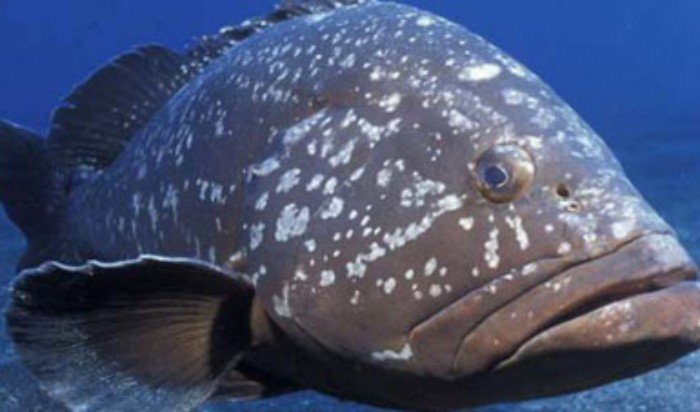
Mérida, Yucatán — After more than a decade without revisions, the grouper fishery management plan for Yucatán — originally published in 2014 — is being updated with a comprehensive approach that incorporates biological, social, economic and environmental factors.
The process, launched in 2024 and now in its final institutional review stage, has involved researchers, fisheries authorities, civil organizations and the fishing industry itself.
María del Carmen Monroy García, a researcher at the Yucalpetén Fisheries Research Center of the Mexican Institute for Sustainable Fisheries and Aquaculture Research (Imipas), emphasized that the update is a collective effort.
“The update is not just Imipas’s work, it’s everyone’s work,” she said.
A technical and participatory process
The new plan was built through stages that included internal reviews, expert working groups, outreach workshops with fishers and academics, and the reinstatement of the fishery’s Advisory Committee.
Claudia Febles Gutiérrez, coordinator of the Resilient Communities project at the Environmental Defense Fund (EDF), said the process strengthened the initial proposal through dialogue among sectors.
“First we worked with experts who know the resource, then with the sector to hear their opinions, and later with researchers in general. That’s how it was built,” she explained.
This methodology produced a more robust, consensus-based document adapted to changes in the resource’s status and the fishing context.
A more comprehensive and operational plan
The updated management plan includes four objectives, 11 strategies and 56 actions aimed at recovering the grouper population and ensuring the fishery’s sustainability. Unlike previous versions, the document seeks to be more operational and realistic, reducing the number of actions and focusing on feasible measures.
Priority areas include: resource recovery and fishery sustainability, economic strengthening of the activity, social well-being of communities, and habitat restoration.
The plan also incorporates actions across the entire production chain, from resource assessment and updated studies on reproductive biology to promoting complementary economic activities, improving social security, and environmental education programs.
It does not establish immediate changes to regulatory measures such as catch sizes or fishing bans, but it does outline research lines that could lead to future adjustments.
A fishery in decline
The update comes amid growing concern. Over the past decade, the grouper fishery in Yucatán has moved into a critical situation.
The state government acknowledges a 17% drop in fishery production linked to this species, with direct impacts on fishers, filleting plants, cooperatives and businesses. The National Fisheries Charter notes that this activity has historically supported about 12,000 fishers and their families.
“Here in Celestún it’s already very hard to find grouper; catching it is just a memory,” said fisherman Carlos Andrés Gómez, who recalls that a decade ago he could catch up to 100 kilograms in a day, while today he barely finds a single specimen.
Red grouper is one of the most studied species in the region, which has allowed for science-based regulations and management instruments.
Among the emerging proposals in the update is the inclusion of aquaculture as a complementary strategy for species restoration.
“The fact that aquaculture is seen as an activity that can contribute to restoration is positive,” said Claudia Durruty Lagunes, an academic at the National Autonomous University of Mexico (UNAM).
This approach joins the need to strengthen knowledge about the reproductive cycle of grouper and associated species, as well as to improve understanding of the fishery’s structure.
Despite the technical and participatory progress the new plan represents, specialists agree that the main challenge will be its implementation.
“The challenge is that it gets applied. We have the plan, but the important thing is to execute the actions,” warned Monroy García.
Febles Gutiérrez emphasized the shared responsibility of different actors: “The idea is that it doesn’t stay just on paper. That all those involved can say: how can we help?”
While the document moves toward official publication, work has already begun with the Advisory Committee and the technical group to define implementation routes.
The update of the grouper management plan represents an opportunity to rethink the relationship between coastal communities, the fishery resource and the institutions responsible for its management. It is expected to be published in the Official Gazette of the Federation this year.
More Business
- 40-Hour Workweek in 2027 Will Speed Up Robots and AI in Hotels, IMEF Says
- Mexico’s Supreme Court Blocks Telmex Bid for Automatic Pay TV Access
- Mexico and EU Bring Modernized Global Agreement to Congress as Senate Ratification Looms
- Lawmakers Propose One Tree Every 15 Meters in New Quintana Roo Developments
- Moody’s Warns Mexico Faces Negative Fiscal Trend on Rising Debt and Weak Growth