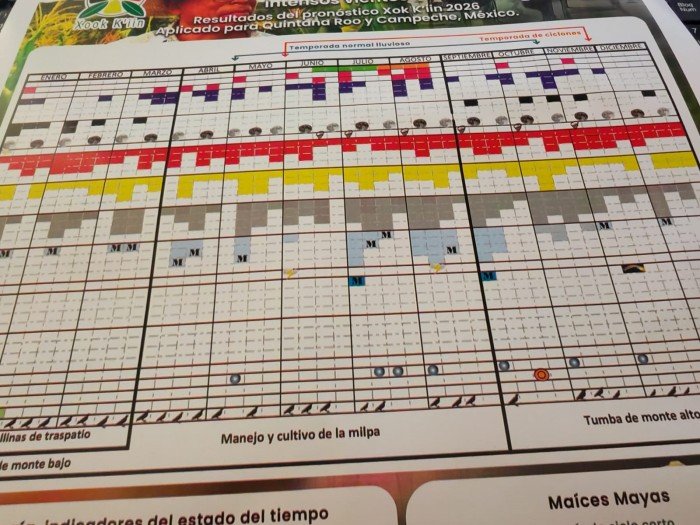
Jose Maria Morelos, Quintana Roo — Traditional environmental indicators used by Maya communities continue to provide valuable signals for anticipating weather patterns in the Yucatan Peninsula, according to Bernardo Caamal, coordinator of the Xok K’iin Collective.
Caamal said that various natural signs have matched the irregular rainfall pattern observed in recent weeks, characterized by heavy downpours in some areas and no rain in others.
“The bioindicators have not failed. The forecast is saying exactly that rains will be localized — they can cause flooding or there can be total scarcity,” he said.
One of the main indicators has been the behavior of cicadas, known locally as chonchelines. This year, their song started late and was intermittent, unlike previous seasons.
Caamal also noted that toads began croaking in mid-April, while plum trees showed abundant foliage — signs traditionally associated with an irregular rainy season.
“The first song came a few days ago, and it’s not a prolonged song, it’s a broken song. What it’s saying is that the situation is complex,” he explained.
He added that factors such as the constant presence of Saharan dust have helped limit the formation of larger clouds, favoring localized rains.
Caamal said these observations demonstrate the continued relevance of traditional Maya knowledge, which remains a reference for farmers and communities whose agricultural activities depend on the behavior of the rainy season.
More Environment
- Playa del Carmen to Review Legal Status of Chen Zubul Property
- Quintana Roo Braces for Four Days of Heavy Rain and Flooding
- Sheinbaum Allocates 2 Billion Pesos to Fight Sargassum in Quintana Roo
- Five Ejidos Seek Alliance to Protect Chichankanab Lagoon in José María Morelos
- Maya Frog and Toad Shell Pendants May Reveal Ancient Trade Routes
More Zona Maya
- Ten Rural Communities in Quintana Roo Form Community Conservation Territories
- Fonatur Doubles Maya Ka’an Budget to 20 Million Pesos
- Farmer Warns of Difficult Corn Season Ahead in José María Morelos
- Maya Women in Quintana Roo Turn Ancestral Knowledge Into Thriving Cooperative
- Quintana Roo Opens 2026 Poetry Contest for Indigenous and Afro-Mexican Girls