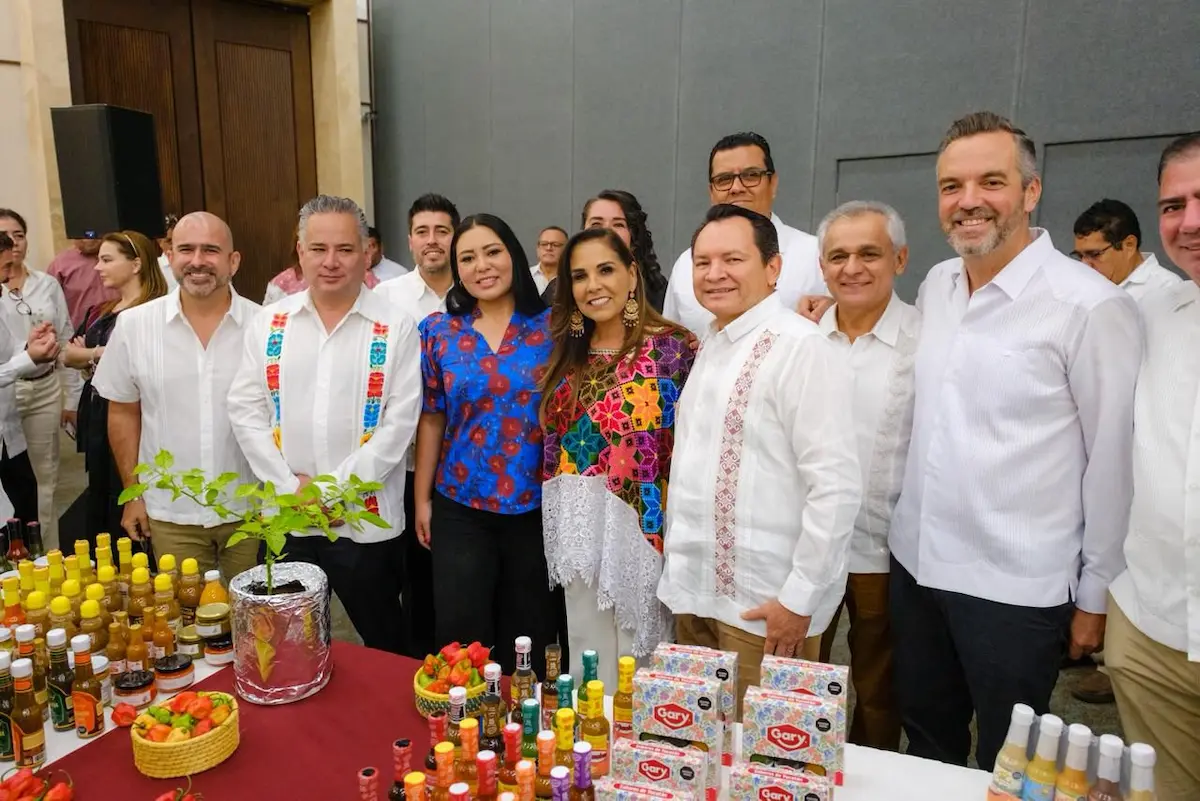
Mérida, Yucatán — After 16 years of delays, the governors of Quintana Roo, Yucatán, and Campeche have formally established the Peninsular Council for Habanero Regulation, a body tasked with certifying, monitoring, and promoting the denomination of origin for habanero peppers grown in the Yucatán Peninsula.
The council was installed during a ceremony in Mérida attended by Quintana Roo Governor Mara Lezama, Yucatán Governor Joaquín Díaz Mena, and Campeche’s economic development secretary Jorge Luis Lavalle Maury, representing Governor Layda Sansores. Santiago Nieto Castillo, director general of the Mexican Institute of Industrial Property (IMPI), also participated.
Governor Lezama said the long-awaited coordination among the three states and IMPI will create better conditions for producers and entrepreneurs to access new markets and achieve shared prosperity.
“We are establishing regulations so that shared prosperity and benefits reach the producers and companies that grow, package, and export this pepper, knowing it has a denomination of origin that gives it exclusivity and higher value,” Lezama said.
Quintana Roo produced 986 metric tons of habanero peppers in 2024, valued at over 26 million pesos (about $1.3 million), with growing output in the municipalities of José María Morelos, Felipe Carrillo Puerto, and Bacalar. The state also has 28 micro, small, and medium-sized enterprises with the “Made in Quintana Roo” label that use habanero peppers in their products.
Lezama noted that Quintana Roo has already secured geographical indications for honey, Mayan octopus, and Mayan chewing gum, and will continue working to boost incomes for rural families.
The habanero pepper from the Yucatán Peninsula has held denomination of origin status since 2010, but the council responsible for oversight had been inactive for more than 16 years. Its reactivation is seen as a key step to ensure traceability, certification, quality, and commercial protection for the product.
More Business
- Zamna Tulum 2027: Dates, Lineup and Ticket Details
- Cancun Tourism Slumps 7% as Industry Leaders Urge Marketing Overhaul
- Puerto Morelos Port Eyes New Guatemala Trade Route
- Cozumel Freezes New Street Vendor Permits as Review Committee Stalls
- Chetumal Entrepreneur Develops Automatic Hammock Rocker for Mexico
More Quintana Roo
- SCJN Orders Quintana Roo to Legislate Disability Representation
- Quintana Roo Braces for Four Days of Heavy Rain and Flooding
- Former Gubernatorial Candidate Laura Fernández Piña Loses Appeal Against 20-Year Public Office Ban
- Quintana Roo Prison System Scores Drop Sharply Over Overcrowding and Neglect
- Three Men Sentenced in Quintana Roo for Sexual Abuse of Minors, One Receives 120 Years