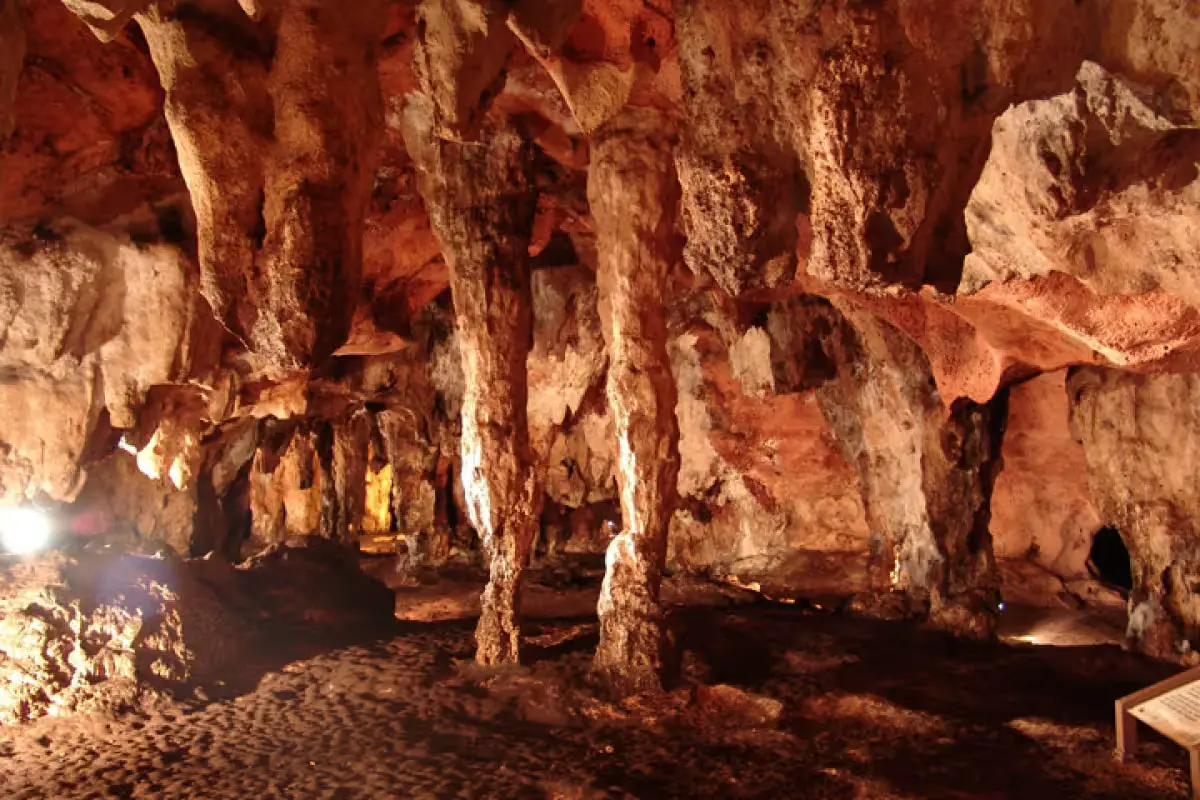
Oxkutzcab, Yucatan — The Loltun Caves, one of Yucatan’s most important natural and archaeological attractions, could reopen to the public before the end of 2026 after nearly six years of closure, state authorities announced.
The caves, located in the municipality of Oxkutzcab, have been closed since 2020 due to the COVID-19 pandemic and subsequent rehabilitation work. The prolonged closure has drawn criticism over the deterioration and neglect of several state-run tourist stops.
David Escalante Lombard, director of the Patronato de las Unidades de Servicios Culturales y Turísticos del Estado de Yucatán (Cultur), said the rehabilitation project is in its final stages, with only administrative procedures and technical adjustments remaining.
“The Loltun Caves are quite advanced. We just need to finish the administrative parts and the installation,” Escalante said. “I can assure you it is a project planned for this year, and we will have it before the year ends.”
The cave system is renowned for its archaeological, geological, and cultural significance. It contains Mayan artifacts, cave paintings, natural formations, and evidence of human occupation dating back thousands of years, making it a key attraction on the Puuc Route in southern Yucatan.
Its closure has affected tourism in the region, limiting visits from both domestic and international tourists.
Escalante defended the administration’s reactivation strategy, noting that many tourist stops have been closed since 2020 without concrete recovery plans until now. “There was a long time when nobody cared, and now they ask us to open them urgently,” he said.
In addition to Loltun, work is progressing on other state-run tourist sites, including the Uaymitun stop, as part of a broader infrastructure recovery plan.
One of the remaining tasks is the installation of a specialized lighting system inside the caves, which requires final approval from the National Institute of Anthropology and History (INAH). “Loltun needs lamps. These are specialized installations that INAH must review and approve, and that is practically done,” Escalante explained.
If the timeline holds, the reopening would mark the return of one of Yucatan’s most iconic tourist sites, closed for nearly six years and considered crucial for boosting tourism in the southern part of the state.
More Business
- Zamna Tulum 2027: Dates, Lineup and Ticket Details
- Cancun Tourism Slumps 7% as Industry Leaders Urge Marketing Overhaul
- Puerto Morelos Port Eyes New Guatemala Trade Route
- Cozumel Freezes New Street Vendor Permits as Review Committee Stalls
- Chetumal Entrepreneur Develops Automatic Hammock Rocker for Mexico