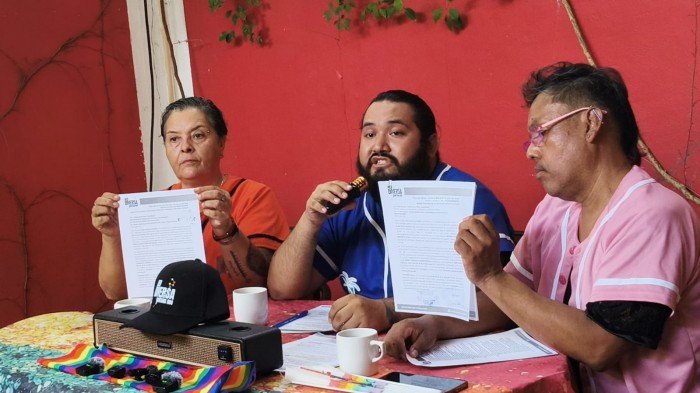
Playa del Carmen, Quintana Roo — Members of the Red Diversa Quintana Roo coalition have publicly opposed the elimination of the city’s rainbow-colored police patrol cars and accused the municipal Sexual Diversity Directorate of improperly taking credit for organizing the Pride March, which they say belongs to civil society.
At a press conference to announce the results of the latest Pride March, representatives Brenda, Iván, and Jimmy laid out the coalition’s position and presented two formal petitions to authorities — one on health and another on security and justice.
Among the key demands, the group called for the reinstatement of the rainbow patrols, special police units that previously operated in the tourist zone. Iván stated that the units provided a sense of safety for LGBTTTIQA+ residents and visitors because officers were fully trained to serve the community. The city had reportedly replaced the rainbow patrols with the GEAVIG (Specialized Attention Group for Gender Violence) unit.
Coalition members also denounced an irregularity in the Pride March permits: official documents were issued in the name of the Sexual Diversity Directorate instead of a civil society organization. As a result, the group filed two complaints — one with the Quintana Roo State Human Rights Commission (CDHEQROO) and another with the Internal Control Office — to investigate the matter and ensure it does not recur.
In the health petition, the coalition requested gender-sensitive health services, reform of the regulations for the Municipal Council on HIV (COMUSIDA), an end to shortages of antiretroviral drugs, and the creation of a shelter for LGBTTTIQA+ individuals who have suffered physical or systemic violence.
On security and justice, they demanded a municipal registry of violence cases against the LGBTTTIQA+ population and a dedicated, multiyear budget for community initiatives that would be maintained across future administrations.
More Government
- Playa del Carmen Launches ‘Parquemanía’ to Revive Public Parks
- Playa del Carmen Council Approves New Unit for Older Adults
- Quintana Roo Expands Tourist Police Force With Specialized Training Programs
- CURP Digital vs CURP Biométrica: What Mexico’s New ID Means for Online Bank Accounts
- Playa del Carmen Mayor ‘Very Upset’ With Parking Meter Operator Playaparq
More Playa del Carmen
- Cuban Man Arrested in Playa del Carmen Over Cancún Fatal Shooting
- Playa del Carmen Vacation Rentals Still Lag Far Behind Hotel Tax Obligations
- Calica Loses Zofemat Concession as Federal Tribunal Sides With Semarnat
- Business Leaders Urge Playa del Carmen to Diversify Economy as Tourism Slumps
- Playa del Carmen Inaugurates Plaza Punto Sur Under Public-Private Alliance