
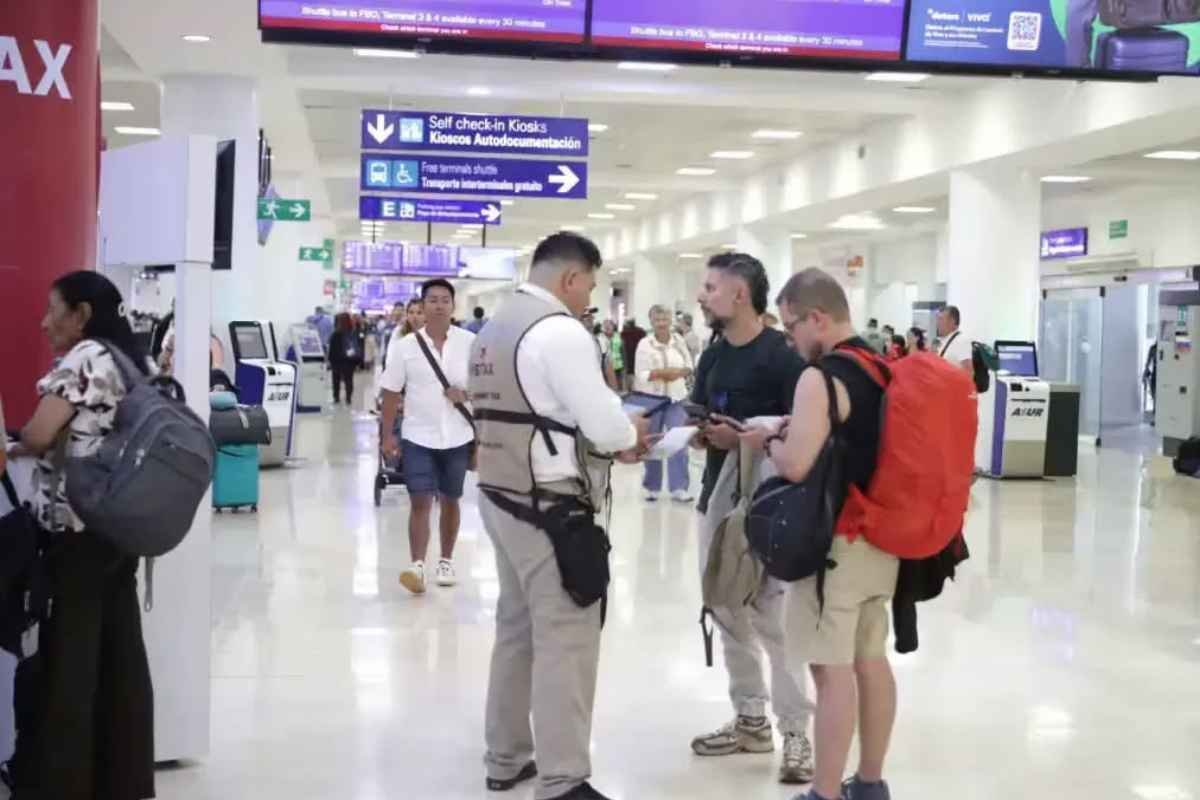
Cancún, Quintana Roo — A federal lawmaker is calling on Quintana Roo to eliminate Visitax, the state charge paid by foreign visitors, arguing that it adds to the cost of a vacation while tourism businesses face a difficult period. His proposal has also revived a question: how much does the state collect from the fee, and where does the money go?
Ernesto Sánchez Rodríguez, a federal deputy from the opposition National Action Party (PAN), said he plans to submit a punto de acuerdo asking the Quintana Roo government to end the charge. He also wants a special commission in the state Congress to examine the revenue. Sánchez described Visitax as an unfair burden amid what he called a decline in domestic and international tourism, and raised concerns about fraudulent websites seeking payments from travelers.
The proposal has not eliminated Visitax. A punto de acuerdo would be a request to the state government, not a change to state law. Foreign visitors should continue to follow the current rules unless Quintana Roo changes them.
What visitors currently pay
Visitax is the familiar name for the foreign visitor charge established in Article 51-Octies of Quintana Roo’s Law of Rights. The law sets it at 2.5 times the daily Unidad de Medida y Actualización (UMA), a measure updated annually. With the 2026 UMA set at 117.31 pesos, the calculated charge is 293.28 pesos per person from February 1, 2026.
Sánchez cited a figure of 285 pesos. That does not match the amount produced by the rate in the current law and the 2026 UMA. The charge rises when the UMA changes, even if legislators leave the 2.5-UMA rate untouched.
The law exempts foreign visitors who enter Quintana Roo through the state’s southern border. It also provides that cruise passengers who have paid the state’s separate cruise-passenger charge do not pay Visitax again. The official Visitax website says the charge is mandatory for foreign tourists and provides a payment portal and a way to recover a receipt. Given the fraudulent sites Sánchez cited, travelers should check that they are using the state’s official address or an authorized payment provider.
Visitax is also separate from Mexico’s federal non-resident fee, which is generally collected as part of an international air ticket. A comparison of the two charges puts the federal fee at 983 pesos in 2026. Scrapping the state charge would not remove that federal fee.
Where does the money go?
The transparency question is distinct from whether visitors should pay. An examination of the state law and 2026 budget documents found that Article 51-Octies specifies who pays Visitax and how its rate is calculated, but does not earmark the revenue for tourism promotion, beach maintenance, sargassum response or another named program. The analysis also found no separately identified Visitax revenue figure in the state’s published 2026 income law.
That does not establish that the money has been misused or that it funds no public services. Revenue without a specific legal earmark can be allocated through the ordinary state budget. It does mean the documents examined do not let readers readily determine how much Visitax brings in or trace that amount to a particular project. Riviera Maya Economic Pulse says it has filed information requests seeking a breakdown of the collections.
There is a notable contrast within the same state law: its separate cruise-passenger charge has a specified allocation between a fund for disasters and health emergencies and one for infrastructure, tourism development and public safety. Visitax has no comparable allocation in Article 51-Octies.
For travelers, the immediate answer is straightforward: the call for repeal changes nothing yet. For the state and the tourism industry, the debate poses two questions that need separate answers—whether the charge is worth keeping, and whether the government should make its collections and spending easier for the public to follow.
More Tourism
- Isla Mujeres Oil Spill: Abandoned Ferry Under Scrutiny
- Cancún Plans Cuban Cultural Corridor on Avenida Yaxchilán to Turn Migration Into Tourism
- Viva Aerobus Trims Frequencies as New Pratt & Whitney Engine Inspections Cut Aircraft Availability
- Tulum Hotel Occupancy Reaches 58.3% in First Week of November
- Playa del Carmen Reviews Playaparq Parking Meter Concession After Complaints
More Cancun
- Japan to Back Mexico With Technology and Funding to Fight Sargassum and Clean Up the Caribbean Coast
- Cancún Medical Tourism Generates $340 Million a Year as Spending per Patient Climbs
- Feminist Collectives File Criminal Complaint Over Truck Attack on Cancún Protest Camp
- Cancún Deploys Six Brigades to Clean and Maintain Parque de la Equidad
- Bishop of Cancún-Chetumal Visits 73 of 78 Parishes in First Eight Months