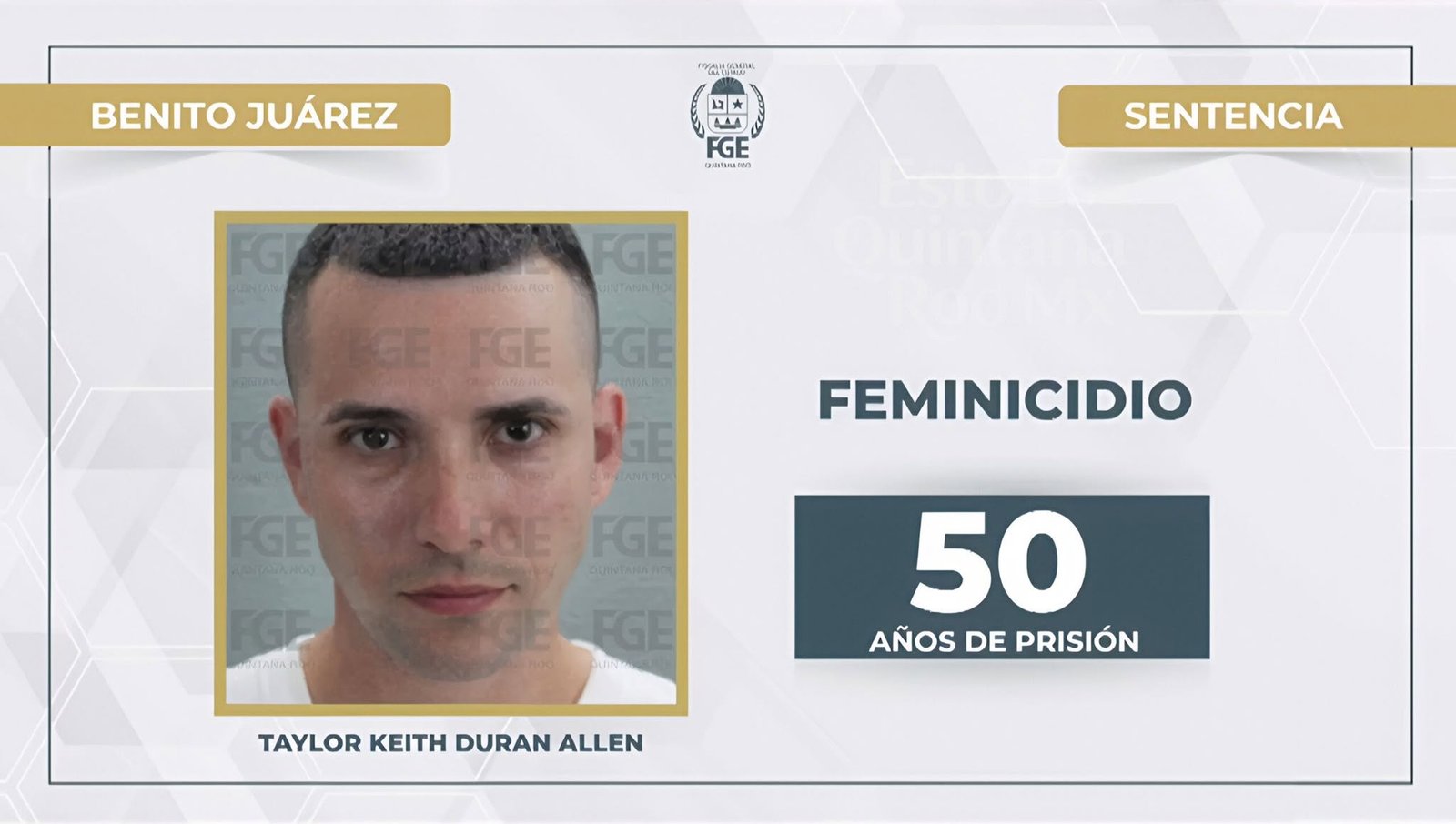
Cancún, Quintana Roo — A U.S. citizen has been sentenced to 50 years in prison in Mexico for the femicide of Sativa Nichelle Transue, a 26-year-old woman from Washington state who was killed while vacationing in Cancún in 2021.
Taylor Keith Duran Allen, also identified in some reports as Taylor Allen-Duran and “Tee Allen,” was found responsible for Transue’s death after a judicial process that lasted nearly five years. The sentence was announced by Quintana Roo Attorney General Raciel López Salazar during a press conference, bringing a long-running international case to a legal turning point.
Transue and Allen had traveled to Cancún over the Thanksgiving holiday weekend in November 2021. She was later found dead inside a room at the All Ritmo Resort and Waterpark in Puerto Juárez, where the couple had been staying.
According to reports from the investigation, witnesses at the hotel had heard shouting, disturbances, and arguments coming from the room during the night. Forensic findings determined that Transue died by strangulation and had multiple injuries on her body, including signs indicating she had tried to defend herself.
The case drew attention in both Mexico and the United States, not only because the victim and the convicted man were U.S. citizens, but because Transue’s family kept public pressure on the case for years. Her relatives repeatedly shared her story online, raised awareness about domestic violence, and pushed for Mexican authorities to continue the prosecution.
Transue was from Cheney, Washington. She graduated from Cheney High School and later earned a degree in exercise science from Eastern Washington University. Family members have described her as kind, funny, compassionate, and deeply loved by friends, relatives, and the community around her.
Her family has said the relationship had been abusive before the trip to Cancún, and that what happened in Mexico was the final escalation of that violence. In statements shared by relatives, they emphasized that Sativa was not simply a crime statistic, but a daughter, sister, friend, graduate, and young woman whose life was taken at 26.
The sentence was received by the family as a measure of justice, though not closure. Relatives in Washington told local media that the ruling brought relief after years of uncertainty, but also acknowledged that no sentence can bring Sativa back. They have also indicated they expect Allen may appeal.
Under Mexican law, femicide is a specific criminal classification involving the killing of a woman under circumstances tied to gender-based violence. It is treated differently from general homicide and can carry severe penalties. In Quintana Roo, as in the rest of Mexico, femicide cases have drawn increased scrutiny amid broader national concern over violence against women and the need for consistent prosecution.
For Cancún, the case was also a reminder that violence against women can follow victims anywhere, even into spaces marketed as carefree vacation destinations. The circumstances surrounding Transue’s death challenged the familiar image of tourist safety by showing how domestic violence can remain hidden until it turns fatal.
After almost five years of legal proceedings, the 50-year sentence marks the strongest official acknowledgment yet of what Sativa’s family has said from the beginning: she deserved justice, and her name deserved to be remembered.
More Courts
- Supreme Court Reopens Mahahual Case Against Royal Caribbean
- Why Mexico’s Treason Charge Over a U.S. Raid Matters
- Mexico’s Lower House Approves ‘Anti-Meme’ Law as Opposition Warns Over Free Speech
- Senate to Review Legality of IMSS Changes to Modality 40 Pension Scheme
- Quintana Roo Prosecutor’s Office Releases Seized Playa del Carmen Property, Leaving Two Dogs Locked Inside for Three Days
More Cancun
- Hells Angels Leader Arrested in Cancun Over Cartel Drug Trade
- Tourist Boat Traffic Slumps Across Quintana Roo Ports in September
- Cancún Waives 100% of Fines and Surcharges to Help Businesses Get Licensed
- Puerto Morelos Mayor Says Cancún Mansion Raided by Federal Agents Was ‘Lent’ to Her
- Mothers Keep Up Protest at Cancún Middle School Over Alleged Attack on Student