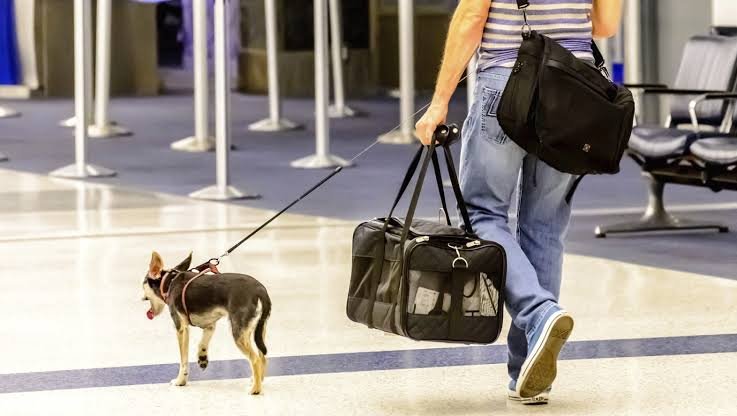
Cancun, Quintana Roo — Traveling with dogs or cats during vacations requires more than just buying a ticket. Health authorities remind travelers that both international and some domestic trips involve meeting health and documentation requirements to protect animals and prevent the spread of diseases.
For international travel, rules depend on the destination country. Mexico’s National Service of Health, Safety and Agri-Food Quality (Senasica) recommends checking each country’s health regulations in advance, as they may require a certificate of good health issued by a veterinarian, proof of current rabies vaccination, deworming, and in some cases, a microchip or additional tests. Airlines also have specific policies for transporting pets in the cabin or as cargo.
For pets entering Mexico, Senasica conducts physical inspections at ports, airports, and borders to verify that animals are healthy and free of parasites. Pets from the United States or Canada generally do not need a health certificate, while those from other countries must meet additional documentary requirements.
For domestic travel, although no mandatory health certificate is required to move between states, specialists recommend keeping vaccinations up to date, carrying the veterinary record, using appropriate carriers, and checking the policies of the airline, bus company, or ferry in advance, as each company sets its own rules on weight, size, documentation, and handling of companion animals.
In addition to meeting health requirements, travelers should verify the transport company’s policies. Airlines typically require dogs and cats to travel in a rigid or flexible carrier that allows the animal to stand, turn, and lie down comfortably. Depending on size and weight, they may travel in the cabin or as cargo. On buses, ferries, and other transport, rules vary, so it is advisable to check them in advance to avoid problems on travel day.
Senasica also recommends acclimating the pet to the carrier days before the trip, keeping it hydrated, avoiding overfeeding before travel, and always carrying its vaccination record, identification, leash, and any documents that may be required during the journey or when entering another country.
More Tourism
- Aeromexico Eyes New U.S. Routes After Mexico City Limits End
- Meliá Invests €50 Million in Paradisus Cancún Renovation
- Tourism Slump Forces 35% of Skål México Businesses to Borrow to Cover Payroll
- Tulum Records Over 6,000 Sea Turtle Nests as Beach Furniture Threatens Hatchlings
- Playa del Carmen Mayor Pitches Atlético Dallas on Preseason Camp and Youth Sports Alliance
More Quintana Roo
- Quintana Roo Youth Sailors Join Mexico’s Team for Optimist Championship in Uruguay
- Mara Lezama Hands Out 100 Sewing Machines in Chetumal to Boost Women’s Self-Employment
- Crystal Meth Addiction Surges in Quintana Roo, Fuels Nearly 90% of Homicides
- Quintana Roo Leads Yucatan Peninsula in Rape and Sexual Abuse Cases
- Orionid Meteor Shower to Peak Over Mexico on Oct. 21-22