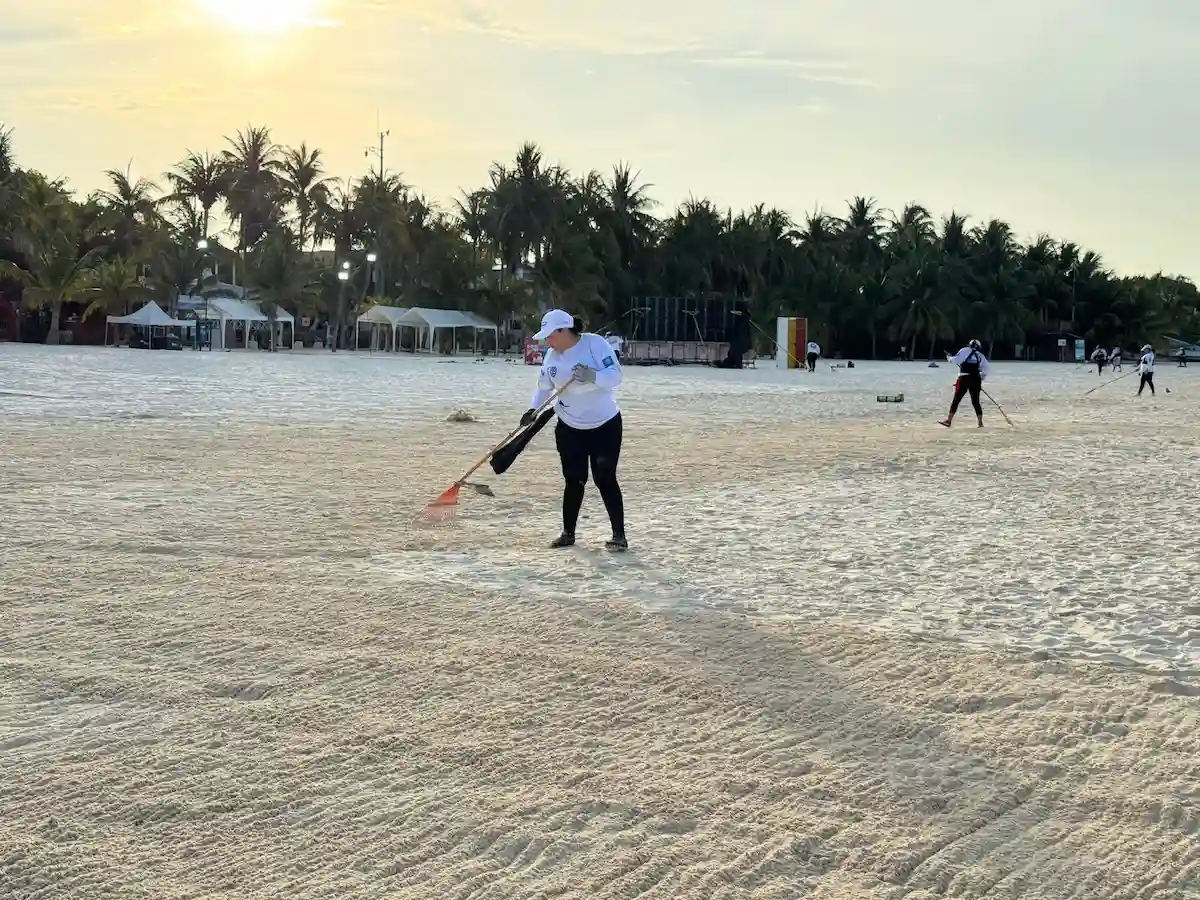
Isla Mujeres, Quintana Roo — More than 2,600 tons of sargassum have been removed from the shores of Isla Mujeres since the start of the year, as crews from the Federal Maritime Terrestrial Zone (ZOFEMAT) work to keep the beaches in top condition. Some days the sands are nearly pristine; others, thick mats of algae test the efficiency of the cleanup brigades.
Now, Playa Centro and Playa Norte are preparing to raise the Blue Flag for the fifth consecutive year. The international certification recognizes beaches that meet the highest standards of quality, safety, services, and environmental education.
To earn the flag, beaches must comply with 33 criteria, including cleanliness, water quality, safety, services, and environmental education. However, despite the requirement that Blue Flag beaches offer free restrooms, showers, loungers, and umbrellas, neither Playa Centro nor Playa Norte provides these amenities. Tourists often end up paying what the article describes as abusive rates.
On water quality, the article notes the irony that both beaches pass the rigorous tests year after year, even though dozens of boats — most without toilets — anchor just offshore and pollute the environment daily.
More Environment
- Sargassum Barrier Reaches Puerto Aventuras as Navy Support Takes Shape
- Why Quintana Roo’s Sewer Gap Is Polluting Cenotes and Coasts
- Hotels in Cancún and Puerto Morelos Restore Coastal Dunes With Native Plants
- Dolphin Swims Continue in Puerto Aventuras as Cancún Dolphin Debate Simmers
- Punta Allen Lobster Fishermen Report 40 Tons Three Months Into Season