
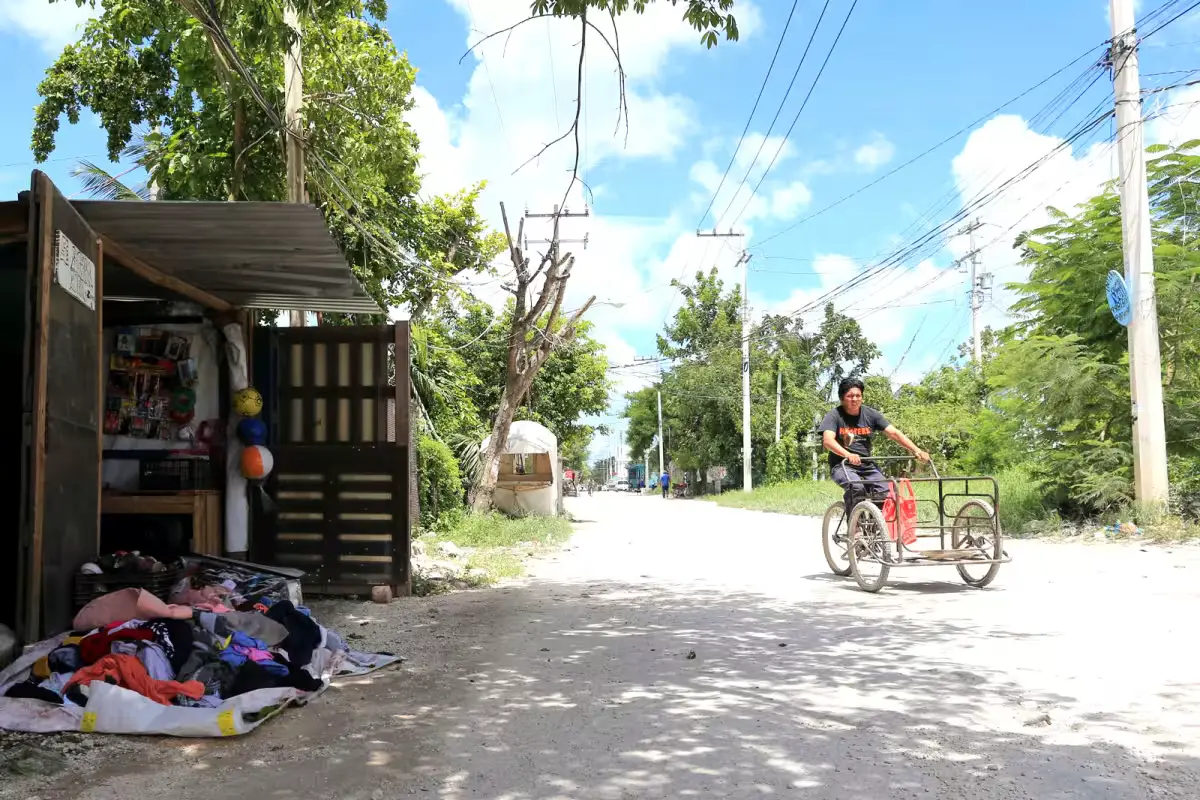
Cancún, Quintana Roo — Residents of at least 50 irregular settlements in Quintana Roo are protesting excessive electricity bills generated by collective “totalizer” meters, with some families paying up to 5,500 pesos bimonthly for power.
Community groups including “Unidad y Fuerza Ciudadana Siglo XXI,” the Frente Sindical de Obreros y Vecinos del Estado, and activists Andrés Castillejos and Rafael Quintanar say the system, which measures consumption collectively for entire settlements before dividing charges among households, lacks transparency and leads to inequitable billing.
They argue the current rates in Quintana Roo—ranging from 1.07 to 1.30 pesos per kilowatt-hour—are unfairly high for a state where constant air conditioning and refrigeration are necessities due to extreme heat. They are demanding the elimination of totalizer meters and the harmonization of electricity tariffs with neighboring states like Tabasco, Yucatán, and Campeche, where rates are lower despite similar climates.
José Salvador Arauz Arredondo, secretary general of Fesoc, stated that many workers “practically labor just to pay the electricity bill,” receiving insufficient subsidies or effective solutions despite appeals to the Federal Electricity Commission (CFE) and the Energy Secretariat.
Beyond cost, the region faces energy capacity issues leading to voltage fluctuations and frequent power outages in cities like Cancún, Playa del Carmen, Tulum, and Chetumal, as well as Maya communities. These disruptions have damaged appliances and further strained household budgets.
Alfredo Gutiérrez emphasized that rising temperatures have spiked domestic electricity use and called for the National Water Commission to update temperature records used for CFE’s tariff classification, arguing current rates do not reflect the state’s climate reality.
As a proposed solution, affected residents plan to establish a working group in March with federal housing agencies, the Trust Fund for Electricity Savings (FIDE), and the Energy Secretariat to design financing schemes for installing solar panels in homes under programs like Viviendas del Bienestar.
“Promoting clean energy is an alternative to reduce dependence on the traditional system and ease the economic impact on households,” said Arauz Arredondo, suggesting a transition to renewables could alleviate financial pressure on thousands of families.
The organizations will hold a public conference tomorrow at 12:00 p.m. in Cancún to detail their efforts and rally more citizens to demand fairer, more transparent electricity rates suited to Quintana Roo’s conditions.
More Lifestyle
- Playa del Carmen Council Approves New Unit for Older Adults
- Mexican Winemakers Allege Foreign Bulk Wine Sold as ‘Made in Mexico’
- Sheinbaum Bill Would End Cash Payments at Gas Stations and Toll Booths
- Leonardo Aguilar to Headline Free Cozumel Concert for Grito de Independencia 2026
- Mexico’s Treasury Seeks Power to Ban Cash Payments Sector by Sector
More Quintana Roo
- Quintana Roo Expands Tourist Police Force With Specialized Training Programs
- Quintana Roo Bets on Luxury, Diving and Gastronomy Tourism for 2027
- Cancún’s Ruta Mar Beach Shuttle to Suspend Service Until Mid-December
- Quintana Roo Leads Dengue Cases on the Yucatan Peninsula With 232 Infections
- Low-Pressure System in Central Atlantic Raises Cyclonic Development Odds to 30%
