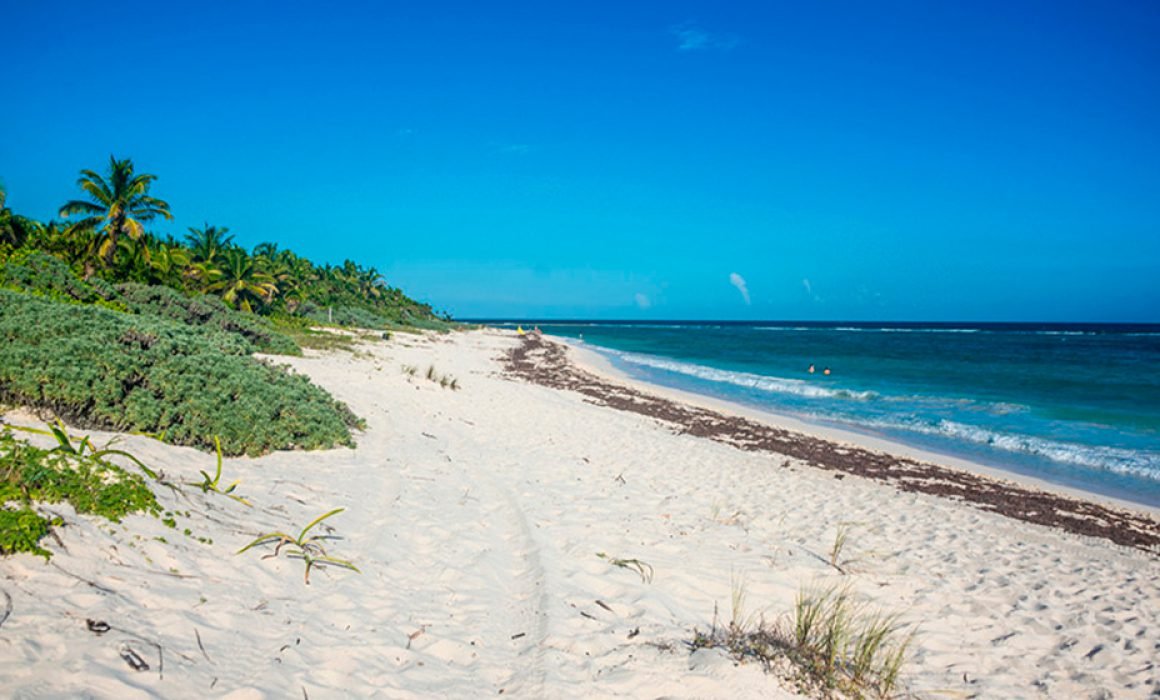
Mexico City — Environmental groups, coastal communities, and civil organizations are questioning the appointment of Alfredo Arellano Guillermo as director general of the Federal Maritime Terrestrial Zone and Coastal Environments at the Secretariat of Environment and Natural Resources (Semarnat), citing unresolved complaints related to the management of funds allocated to combat sargassum during the administration of former Quintana Roo Governor Carlos Joaquín González.
Among the groups that expressed concerns during Arellano’s tenure as Quintana Roo’s environment secretary are the civil association Más Selva A.C., tourism cooperatives from Akumal, residents and environmental defenders from the community of Chemuyil, as well as hoteliers, service providers, and social organizations from Tulum. Más Selva A.C. participated in meetings where the handling and final destination of sargassum funds were questioned, while Akumal cooperative members claimed they were excluded from emergency response programs.
Environmental organizations warned that the sargassum crisis has already caused serious social and economic consequences in the Mexican Caribbean. Beach pollution, impacts on tourism, and reservation cancellations have reduced income for hotels, restaurants, service providers, and workers who depend on visitor arrivals. The situation has left families without jobs or with insufficient income, while demands persist to clarify the use of public funds during the emergency.
Groups noted that the money was supposed to protect beaches, sustain tourism, and preserve jobs, but environmental problems continue and complaints remain unresolved.
Additionally, civil organizations, coastal communities, and productive sectors criticized the management of the Federal Maritime Terrestrial Zone during the International Tourism Fair, pointing to backlogs of over 40% in procedures and permits, as well as possible opacity and permissiveness toward irregular occupations on the coasts.
According to information gathered, in 2018 Quintana Roo spent 312 million pesos (about $17 million) to remove sargassum, while other projects involved investments of nearly 200 million pesos to install marine barriers that suffered delays, failures, and insufficient results given the volume of seaweed arrival.
Civil organizations also revived a complaint filed by businessman Roberto Palazuelos, who alleged a possible diversion of 240 million pesos through simulated leasing of vessels and equipment to combat sargassum. According to the complaint, invoices were issued for unsuitable boats and machinery that never reached the coasts, while actual spending was considerably lower.
Groups including Chemuyil residents and Akumal cooperatives also complained about the actions of the then-Secretariat of Ecology and Environment. The former cited irregularities in the administration of the Sea Turtle Sanctuary, while cooperatives claimed Akumal was not included in sargassum emergency programs.
Organizations maintain that the resources allocated to address the environmental emergency did not deliver promised results and that the strategy became a mechanism of opacity and possible misuse of public funds.
As a result, the Superior Audit Office of Quintana Roo opened investigation files to review contingency funds, federal contributions, and potential administrative responsibilities.
Years later, Arellano Guillermo was appointed head of the Directorate General of Federal Maritime Terrestrial Zone and Coastal Environments at Semarnat, the agency responsible for delimiting, administering, and regulating beaches, coastal zones, and land reclaimed from the sea nationwide.
For the complainants, the appointment represents a political reward, even though the accusations related to his management in Quintana Roo have not been clarified.
More Environment
- Activists Protest Pig Mega-Farms in Yucatán, Demand Crackdown on Pollution
- Quintana Roo to Pitch Sustainability in Reworked International Tourism Push
- Cancún Seaweed Firm Ensol Caribe Eyes Expansion Into Dominican Republic and Belize
- Environmentalists Warn Tulum Jungle Road Could Open Door to Real Estate Expansion
- Only Four Sargassum Fishing Permits Processed in Mexico, Imipas Says
More Quintana Roo
- Quintana Roo Names Winners of 2026 State Craft and Embroidery Prizes
- Santa Fe Klan Plays Nearly Four Hours at Expofer 2026 in Chetumal
- Quintana Roo Health Secretary Flavio Rosado Resigns to Seek Morena’s Isla Mujeres Candidacy
- Timeshare Exit Scams: 5 Traps Owners Must Avoid
- Quintana Roo Real Estate Sales Fall Up to 15%: What’s Next?