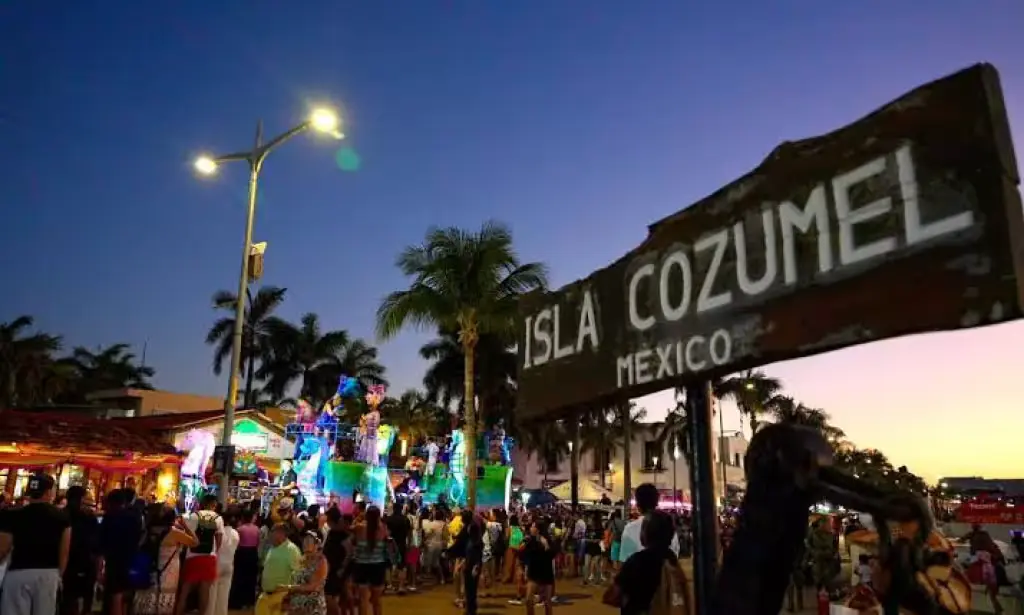
Cozumel, Quintana Roo — Service providers and business owners in Cozumel are calling for a night tourism strategy to boost the local economy, arguing that the island has significant untapped potential once cruise ship activity ends for the day.
The proposal aims to encourage visitors to spend more time outside their hotels, patronizing restaurants, bars, shops, artisan markets, and cultural venues in the city center.
According to tourism sector statistics, about 70.2% of tourists purchase vacation packages, and of those, 58.1% choose all-inclusive plans. This model significantly limits spending at independent businesses, especially at night.
Overnight tourists represent a greater opportunity for the local economy, with an average cumulative spending of over $416 per stay. However, much of that spending remains within hotel complexes, reducing the flow of visitors to the downtown area after dark.
“It’s not enough to attract more tourists; the challenge is to offer activities that motivate them to stay outside the hotels after sunset. A permanent events calendar would allow us to distribute the economic benefits better among hundreds of small businesses,” said Alexis Campos, a local tourism entrepreneur.
Teresa Estarda, a restaurant worker in the city center, noted that commercial activity drops sharply at night. “After seven or eight in the evening, business slows down a lot. If there were concerts, food festivals, or night markets, many visitors would stay longer in this area,” she explained.
Bruno Canto, another local business owner, said Cozumel has the conditions to develop a competitive night tourism corridor. “The island has gastronomy, culture, music, and public spaces that can become additional attractions. The key is to work in a coordinated manner between authorities and business owners to create a consistent and safe offering,” he said.
Business owners believe these actions would increase visitor stays, raise average spending, and distribute tourism benefits more equitably among restaurants, transporters, artisans, and small shops — sectors that continue to feel the effects of the low season despite the constant flow of travelers to the island.
More Business
- Mexico Clears Sonora of Foot-and-Mouth Disease, Exports Resume
- AI and New Travel Trends to Headline AFEET Trends 2026 Summit in Cancún
- Tulum Pivots to Luxury as Airlines Cut Flights, Occupancy Drops
- Yucatan Preps for Winter Season With More Flights From Canada
- Activists Protest Pig Mega-Farms in Yucatán, Demand Crackdown on Pollution
More Cozumel
- Quintana Roo Names Winners of 2026 State Craft and Embroidery Prizes
- Cruise Tourism Trust Fund Spends 1.27 Billion Pesos Across Quintana Roo
- CFE and Playa del Carmen to Review Plan for Submarine Power Line to Cozumel
- Cozumel’s Museum of the Island Opens Exhibition by Architect José Manuel Sáenz ‘Txepo’
- Mexican Caribbean Destinations and Resorts Win Across 2026 World Travel Awards