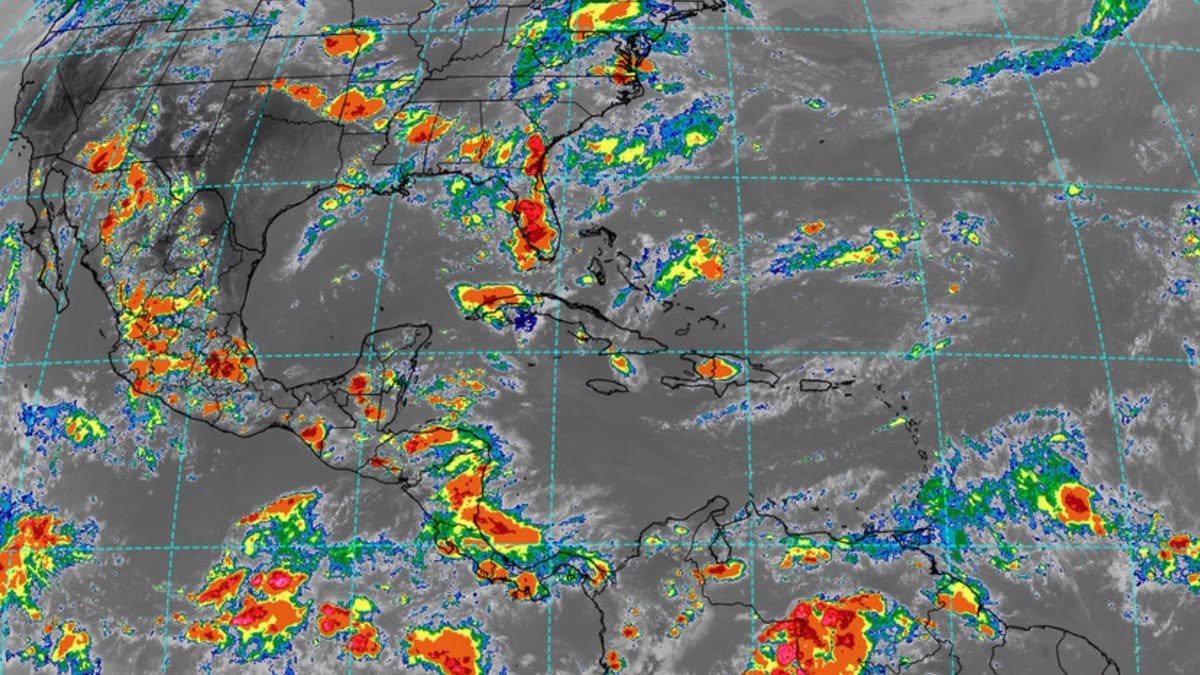
Cancún, Quintana Roo — The Atlantic Ocean reached Sept. 12 without producing a single hurricane in 2026, the longest wait for the season’s first hurricane since satellite-era record-keeping began, amid unusually low cyclone activity driven by an exceptionally strong El Niño.
The situation is especially unusual because Sept. 10 marks the climatological peak of the Atlantic hurricane season. Yet by Sept. 12, no cyclone had reached hurricane strength, making it the latest start on record.
Five Named Storms, No Hurricanes
According to the U.S. National Hurricane Center (NHC), five named storms had formed by Sept. 12: Arthur, Bertha, Cristóbal, Dolly and Edouard. None reached hurricane status.
The main explanation lies in the strengthening El Niño in the Pacific. According to the U.S. National Oceanic and Atmospheric Administration (NOAA), the phenomenon generates atmospheric conditions that increase vertical wind shear over the tropical Atlantic and the Caribbean, making it harder for storms to organize and intensify.
Wind shear occurs when wind speed or direction changes considerably with altitude. When it is too strong, it can disrupt the structure of tropical storms before they develop a core capable of becoming a hurricane.
Dry air and descending atmospheric motions are adding to the problem, further limiting the development of tropical systems in the main hurricane formation zone between Africa and the Caribbean.
El Niño Could Strengthen Further
The 2026 pattern fits the evolution of El Niño. NOAA’s Climate Prediction Center reported on Sept. 10 that there is a greater than 90% probability the phenomenon will reach very strong intensity during the fall and winter of 2026-2027, while some indicators already show anomalies above 3 degrees Celsius in the eastern equatorial Pacific.
The impact on the Atlantic is clear in cyclone activity metrics. As of Sept. 12, the NHC reported an Accumulated Cyclone Energy (ACE) total of just 4.4 units, roughly 93% below the climatological average for that point in the year.
Still, the absence of hurricanes so far does not mean the risk has disappeared for the Caribbean, the Gulf of Mexico or the U.S. East Coast.
Specialists warn that as fall progresses, a tropical system could develop near the Gulf of Mexico or the Caribbean, where conditions may differ from those in the Atlantic’s main development region.
Although 2026 has set a record for the late arrival of its first hurricane, the official season remains active until Nov. 30, and authorities say they are keeping watch on any area of disturbance that could organize in the coming weeks.
More Environment
- Semarnat Rejects 54-Hectare Real Estate Project in Punta Sam
- Advocates Urge Quintana Roo Governor to Expand Xcacel-Xcacelito Turtle Sanctuary
- Cueva Popotitos: New Underwater Cave System Found South of Cozumel
- Cenotes in Playa del Carmen Face Contamination Risk From Poor Sanitary Infrastructure
- Yacht Runs Aground on Mahahual Reef, Raising Alarm Over Coral Damage