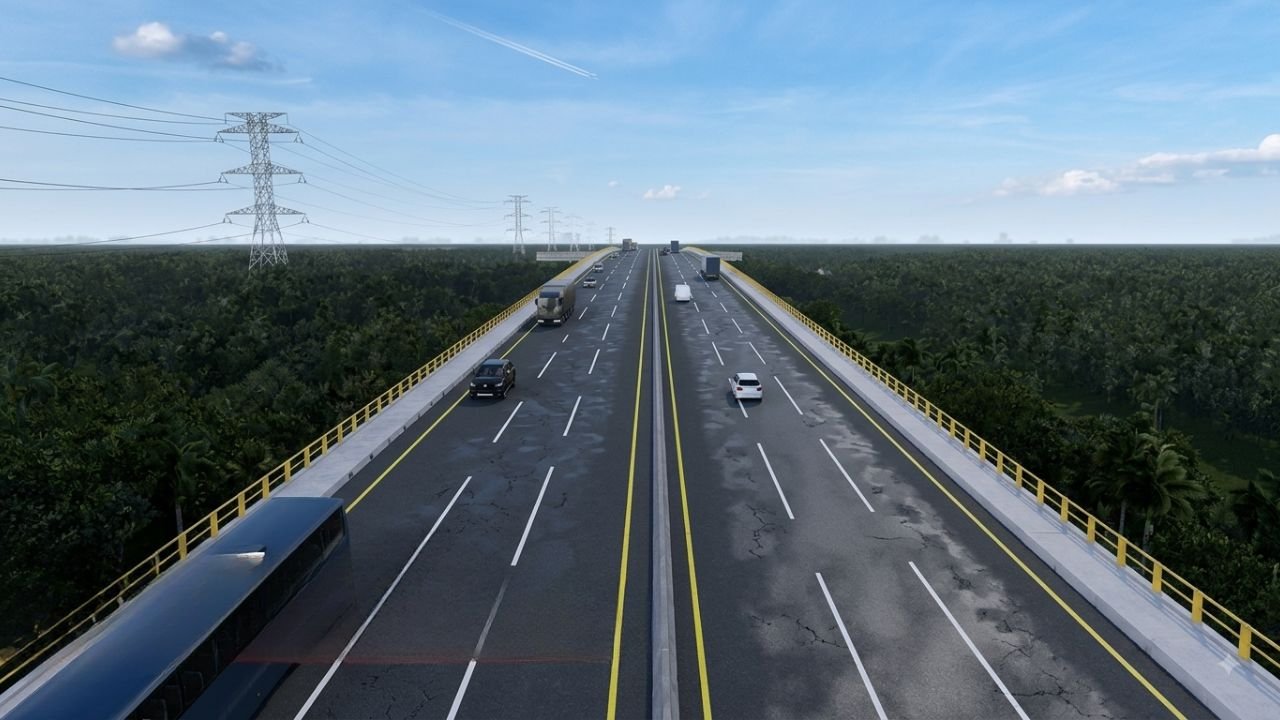
Cancún, Quintana Roo — A new bypass being built by the Mexican Army on Cancún’s southern edge is expected to draw up to 30% of traffic arriving from the Riviera Maya, giving motorists a third access point to the city and relieving congestion on Luis Donaldo Colosio Boulevard.
The Libramiento Carga Cancún Sur Guayacán, also known as the Guayacán cargo bypass, will provide a direct route for vehicles coming from Riviera Maya, Puerto Morelos and the southern part of the state.
Route and technical details
According to the project’s executive plan, the road will begin near the Moon Palace hotel, pass beneath an existing bridge, run alongside Plaza Outlet and connect to the new highway through a roundabout. It will then cross the Tren Maya railway tracks and lead to a direct exit near the service stations on José López Portillo Avenue.
The full route spans 14.85 kilometers: a 9.6-kilometer main section from Moon Palace to the López Portillo gas station area, plus a 5.25-kilometer branch heading to the cargo station and the Cancún Financial District. The roadway will have two lanes in each direction and a right-of-way of 60 meters, with 30 meters to be developed initially.
Engineers from the Secretariat of National Defense (Sedena) are carrying out the construction, which also includes the cargo station infrastructure. The project has already secured the necessary environmental and land-use permits.
Traffic relief and urban development
One of the project’s key features is a trumpet-style interchange designed to speed the movement of heavy vehicles entering and leaving the cargo station and financial district. Governor Mara Lezama is currently seeking federal funding for a complementary elevated bridge that would prevent new bottlenecks at the crossing.
Beyond improving mobility, the opening of the bypass is expected to spur urban growth across national and private land in Cancún’s southern zone, where officials plan to build housing, hospitals, schools and services.
Alonso Ovando highlighted the cooperation of property owners and the project’s strategic value: “The hardest part of any project is securing the right-of-way. Once that is done, the environmental process follows. Here we had good understanding from the business owners; this will be a high-development zone, and the advantage is that there is a lot of national land where the federal government can contribute significantly to Cancún’s development.”
More Development
- Isla Mujeres Approves Updated Development Plan With 185 Action Items
- UT-Chetumal Prepares Aeronautics Degree to Meet Labor Demand
- Mara Lezama Unveils Quintana Roo Sustainable Tourism Master Plan Through 2050
- Semarnat Denies Permit for Secrets Moxché Coastal Project in Playa del Carmen
- Cancún Airport Expansion to Continue Through 2028 With New Terminal 1 and Terminal 4 Upgrades
More Cancun
- Two Found Shot Dead in Cancún’s Polígono Sur Neighborhood
- Yacht Strikes and Lodges Under Calinda Bridge in Cancún Hotel Zone
- Deported Mexicans Flock to Quintana Roo as Support Services Strain
- Where to Buy the MOBI Card in Cancún and How Much It Costs
- Iván Mondragón Released From Prison in Cancún Child Abduction Case