
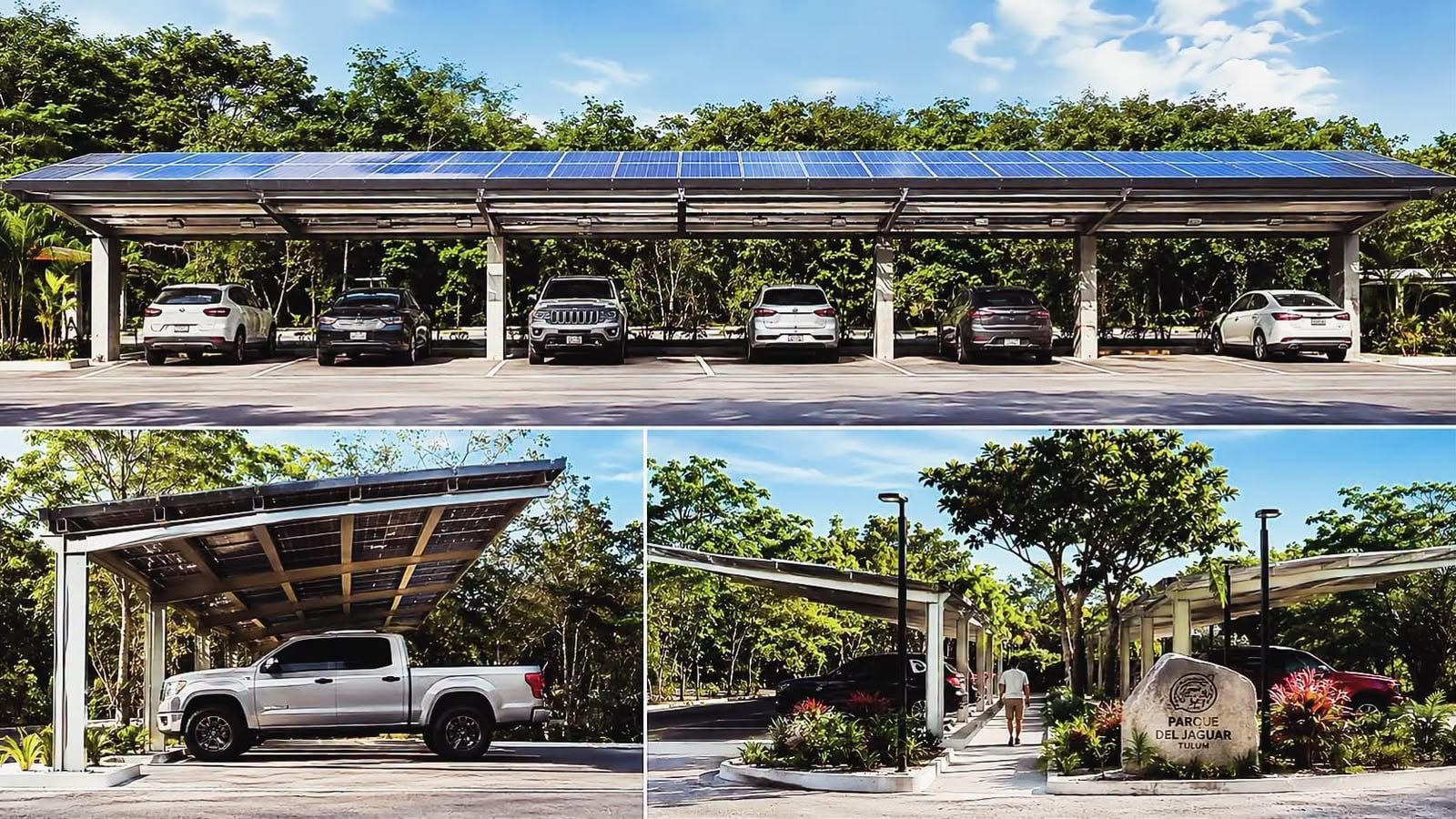
Tulum, Quintana Roo — The Mexican Army, acting through its Grupo Mundo Maya, has filed for environmental authorization to build a parking lot at the south entrance of Parque del Jaguar in Tulum, at an estimated cost of 48,390,461 pesos.
The application was submitted to Semarnat, Mexico’s Environment and Natural Resources Department. The project calls for 158 parking spaces: 146 standard spots, seven for people with reduced mobility and five for buses.
Seventy-five of the spaces would be covered by canopies fitted with solar panels, according to the proposal.
Officials said the lot is intended to bring order to vehicle traffic entering the park and to make it easier to move tourists and visitors to the beaches and other facilities inside the site.
Timeline and cost
The environmental study estimates construction would take about two and a half months, and that the infrastructure would remain in service for roughly 50 years.
The 48.3 million-peso figure is preliminary and does not represent a final contractual budget, the document states.
The request is now under review at Semarnat, and filing the paperwork does not mean the project has been cleared to begin construction.
If approved, the lot would add new infrastructure to the park’s southern access point, capable of handling both private vehicles and tour buses.
More Development
- Digitalization and Brokers Drive Mortgage Lending, Mexican Bankers Association Says
- Tulum’s Tourism Crisis Is Structural, Not Seasonal, Mexico’s Tourism Chief Says
- Playa del Carmen Weighs Early Payments on 500 Million Peso Debt
- Residents of Playa del Carmen’s Las Torres de Paz Demand School, Land Titles and Relocated Power Lines
- Playa del Carmen Aims to Approve New Urban Development Plan by Early 2027
More Tulum
- Tulum Residents Report Wave of Suspected Dog and Cat Poisonings in La Veleta
- Farmer Warns Climate Shifts Are Making Agriculture Unviable in Tulum’s Maya Zone
- Tulum Leaves Its Dive Tourism Gold Mine Unclaimed, Promoter Says
- Tulum Food Charity Los Frutos Sees Daily Demand Jump From 30 to 300 People
- Quintana Roo Judicial Branch Expands New Civil and Family Justice System Statewide