Xcalak, Quintana Roo — Authorities and local stakeholders have launched a participatory diagnostic to bolster sustainable tourism in the coastal community of Xcalak, located within the Manatee Sanctuary State Reserve.
The initiative, part of the project “Conservation of the Manatee Sanctuary State Reserve through strengthening sustainable tourism practices,” is led by the Quintana Roo Institute of Biodiversity and Natural Protected Areas (Ibanqroo) in coordination with the NGO Amigos de Sian Ka’an and the Chetumal Institute of Technology.
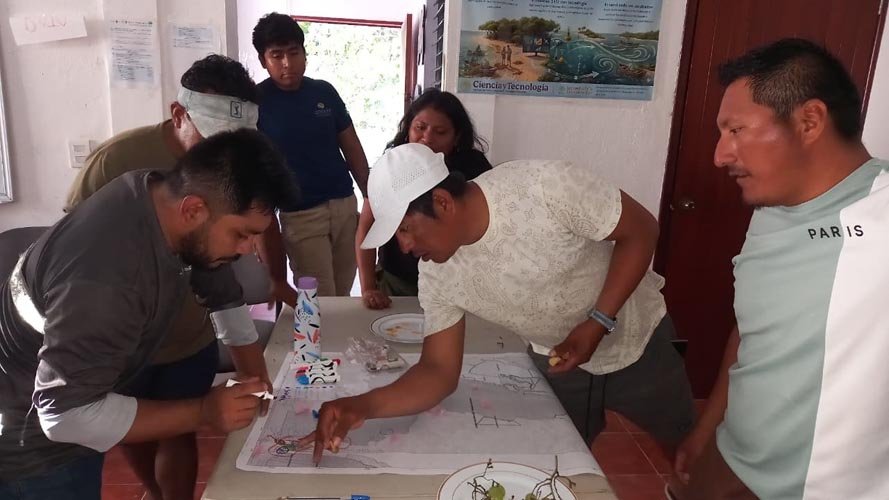
The second Participatory Tourism Diagnostic Workshop brought together tourism service providers and fly-fishing specialists who operate in Chetumal Bay. Participants shared their on-the-ground knowledge to identify challenges and opportunities for the sector.
The effort is backed by German cooperation through KfW and the Mesoamerican Reef Fund (MAR Fund). Its goal is to generate data on the current state of tourism in the reserve and to help plan productive activities that are compatible with ecosystem conservation.
Participatory Mapping
A central exercise of the workshop was participatory mapping, where attendees pinpointed existing tourism activities, development opportunities, and potential threats to the environment. The session was led by Alicia Herrera Yáñez, an academic from the Chetumal Institute of Technology.
Rosa María Loreto Viruel, project coordinator for Amigos de Sian Ka’an, said the results will serve as the foundation for the strategic planning of the reserve’s public-use program, aiming to consolidate responsible tourism aligned with conservation goals.
Ecological Value Highlighted
Miguel Mateo Sabido Itzá, director of Natural Protected Areas, Regulatory Improvement, and Archives at Ibanqroo, emphasized the ecological and social importance of the Manatee Sanctuary State Reserve, which marks its 30th anniversary this year. He underscored the need for collaboration among institutions, authorities, and communities to promote conservation, sustainable tourism, and local well-being.
The diagnostic findings will help define management and public-use strategies to balance tourism activity with the protection of one of southern Quintana Roo’s most significant natural areas.
More Tourism
- Polo strengthens to a Category 5 hurricane off Mexico’s Pacific coast in Record Time
- Culture Ministry to Inspect Ceremonial Pole Ahead of Voladores de Papantla Return to Tulum
- Erasmo Catarino Nearly Drowns at Cancún Beach, Rescued by Raúl Sandoval
- Sargassum Collection in Quintana Roo Tops 133,000 Tons, Setting New Record
- Quintana Roo Courts European Airlines to Boost Winter Flights to Cancún