
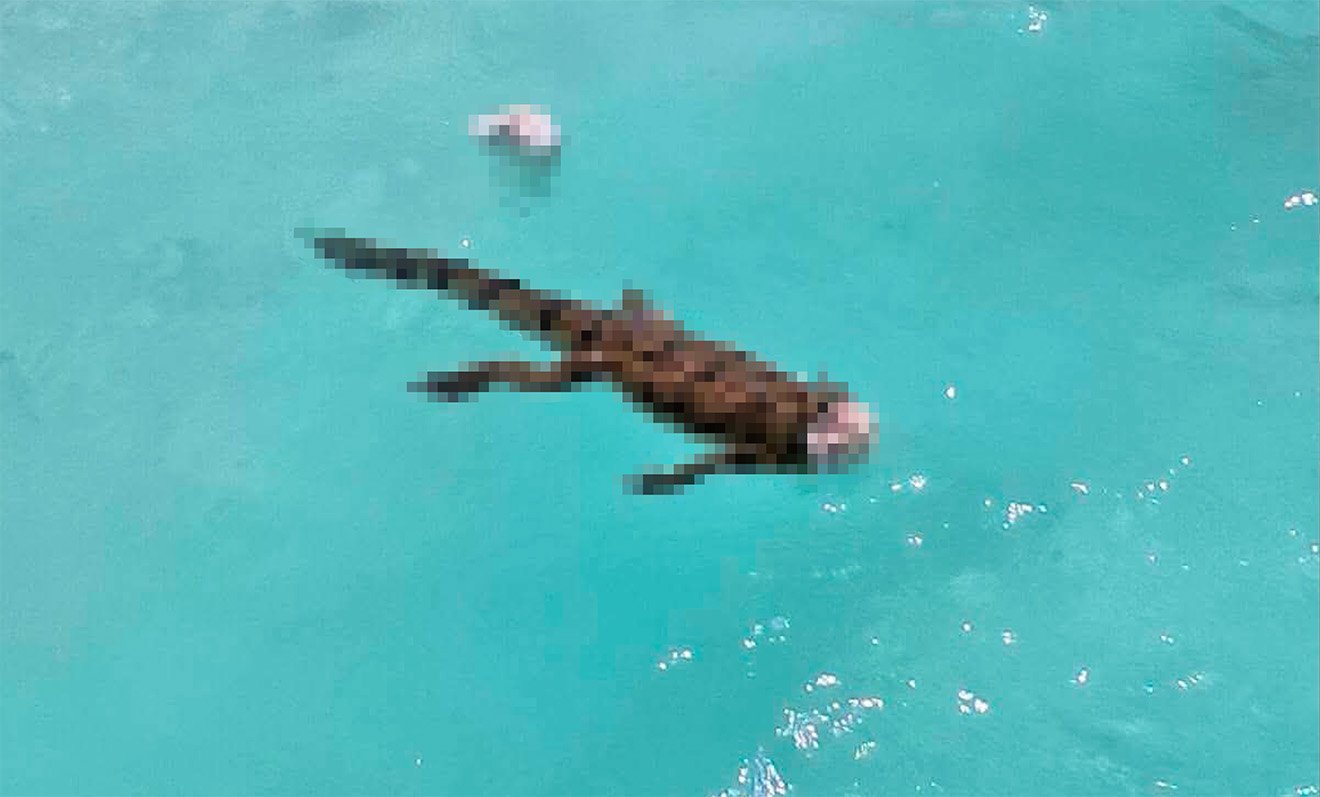
Othón P. Blanco, Quintana Roo — Environmental authorities are investigating the discovery of a decapitated Morelet’s crocodile in the Canal de los Piratas area of Bacalar Lagoon, after local residents reported the reptile’s body floating with clear signs of violence.
According to officials, the crocodile was spotted by people navigating the area, who alerted authorities after noticing the animal was missing its head and had visible injuries. The incident has sparked concern among residents, as the species is protected and plays a crucial role in the wetland’s ecological balance.
Although an official determination on the cause of death has not yet been issued, preliminary observations suggest the reptile suffered severe aggression, with the head forcibly removed. Environmental authorities will conduct forensic analyses to determine whether the act was carried out by humans or resulted from other circumstances.
The Morelet’s crocodile (Crocodylus moreletii) is native to Quintana Roo and plays a fundamental role in aquatic ecosystems by helping control other wildlife populations and maintaining biological balance in water bodies such as Bacalar Lagoon. Specialists emphasize that any harm to this species must be investigated in accordance with current environmental laws.
More Environment
- Mexican Caribbean Has Lost More Than 70% of Its Corals, UNAM Scientist Warns
- Sargassum Barrier Installation Begins in Puerto Aventuras
- Cancún to Open Glass Collection Center as Part of Circular Economy Push
- Cave Divers Push to Revive Jacinto Pat Museum in Tulum to Showcase Caves and Underground Rivers
- Snakes Account for Nearly Half of Cancún’s Wildlife Reports, Firefighters Say
