
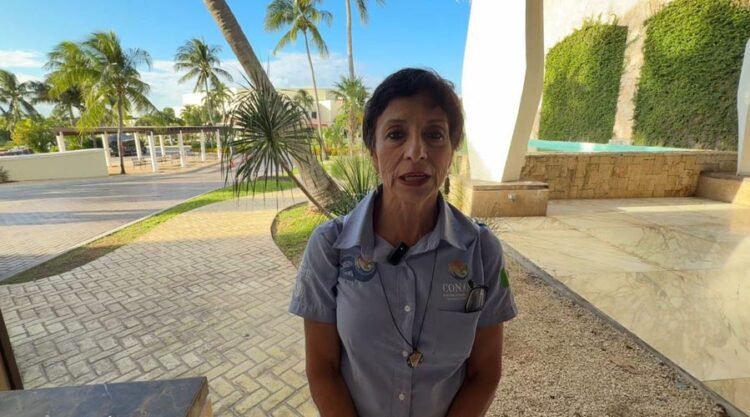
Cancún — The Yucatan Peninsula will have a new conservation figure focused on protecting its karst system and the underground rivers that form it, according to María del Carmen García Rivas, Director General of Conservation of the National Commission of Natural Protected Areas (CONANP).
The federal official explained that this territory possesses extraordinary geological richness, where cenotes and caverns are part of the same network that requires stricter measures to guarantee its future.
The new Underground Georeserve will span more than 3 million hectares with the objective of safeguarding its vital underground rivers and cenotes.
During her participation in the Second Sustainability Forum, she indicated that although divers and cave divers already operate under rigorous regulations to avoid damage to the system, the main challenge lies in preventing contamination and more precisely regulating the disposal of wastewater, as well as the constructions that occur on the surface.
TOWARDS COMPREHENSIVE REGULATION
García Rivas revealed to InZoomMX that an interdisciplinary group will be formed to establish management criteria, define areas suitable for development, and recommend where to build with the least possible impact. The objective is for infrastructure to also reduce its vulnerability considering what occurs underground.
Although the official category has not yet been defined, the proposal contemplates more than 3 million hectares that encompass underground rivers, cenotes, and surface areas related to aquifer recharge. The official highlighted that this would be the first georeserve of its kind worldwide due to its three-dimensional character and underground focus.
“We have to conserve these sites in relation to not being contaminated. It is necessary to establish stricter regulations on how we will dispose of our wastewater systems and, on the other hand, in relation to the constructions above, consider what is below,” emphasized García Rivas.
COMMUNITY PARTICIPATION
The initiative draws on experiences from already protected areas such as the Mexican Caribbean Biosphere Reserve and the Felipe Carrillo Puerto Reserve, where underground rivers form part of environmental management. However, the new project seeks to integrate the entire system with a broader vision.
García Rivas underscored that indigenous and rural communities will be central actors in the construction of this proposal. Their knowledge of the territory and of cultural sites linked to the Mayan underworld will allow working together with INAH and other institutions to identify environmental and heritage values.
The preliminary justification study is in process and is expected to be concluded this year or early January, to advance in the necessary procedures and consolidate a conservation figure that could set a precedent in the region.
More Environment
- Drought Crisis Forces Quintana Roo Wildlife to Seek Water Near Roads and Towns
- Dead Sea Turtle Hatchlings Found With Dog Bites at Playa del Carmen Beach
- Explorers Document New Underwater Cave System South of Cozumel
- Farm and Cattle Expansion in Quintana Roo Squeezes Native Wild Bees
- Activists Warn Playa del Carmen Real Estate Boom Is Driving Deforestation
More Zona Maya
- UIMQROO to Build Student Dormitories With 19 Million Peso Investment
- Tulum Delivers Free Medicines to Health Houses in Vulnerable Communities
- Tulum Tourism Slump Spreads to Inland Maya Communities as Businesses Close Along Cobá Route
- Mahahual Groups Build Reinforced Dog Shelters to Shield Pets From Jaguar Attacks
- Man Hospitalized After Apparent Crocodile Attack at Noh Bec Lagoon
