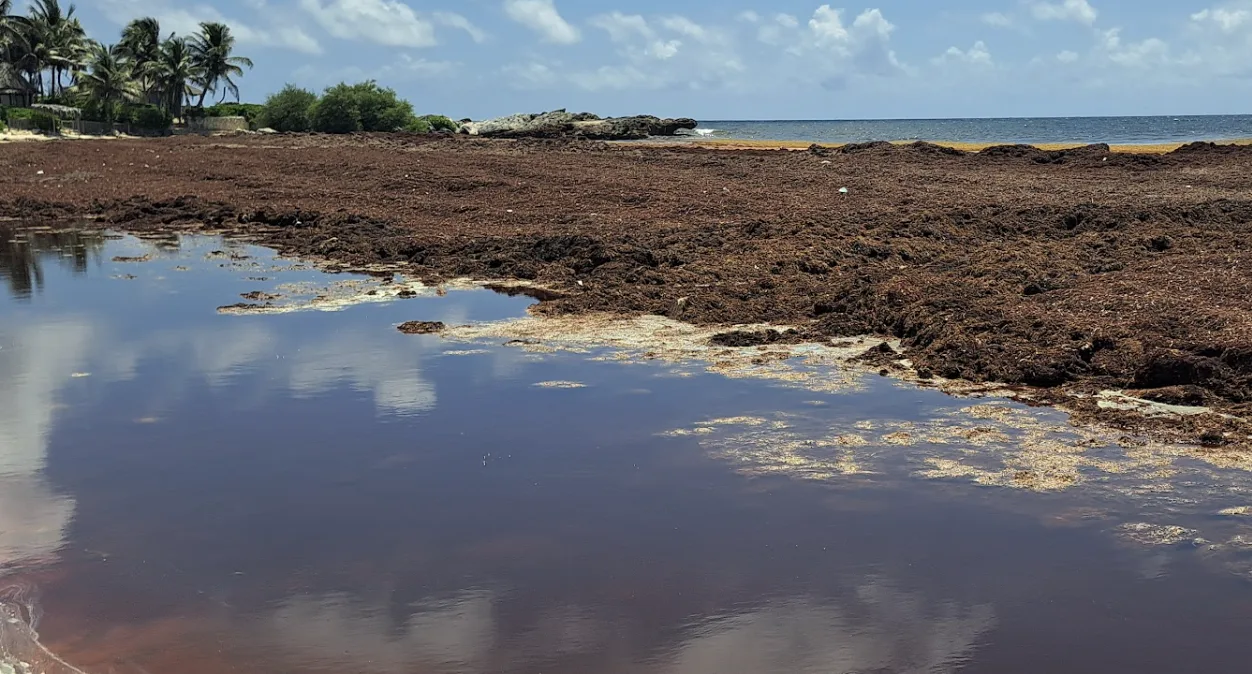
Tulum, Quintana Roo — Grupo Dakatso announced plans to open a plant between June 23 and 25 to produce Sargacreto, a concrete made from sargassum seaweed, and has proposed using the material to repave Avenida Siete Sur in Tulum.
Architect David Jauring, a partner at Grupo Dakatso and head of the plant’s design and launch, said the company recently presented the municipal government with a proposal to use Sargacreto for paving or repaving the avenue. The project could incorporate up to 1,800 tons of sargassum.
“We believe Avenida Siete Sur can become an emblematic project for Tulum. We left a proposal to use Sargacreto, with the possibility of incorporating up to 1,800 tons of sargassum in the construction of this roadway,” Jauring said. “The plant will be located on the Cancun-Tulum highway near the Dos Ojos cenote, and we expect to inaugurate it between June 23 and 25.”
Jauring noted that Grupo Dakatso has more than a decade of experience managing and utilizing sargassum. The company previously held public contracts for sargassum management in Playa del Carmen and Puerto Morelos and collaborated with the Mexican Navy on installing containment barriers. After five years of research, testing, and certification, Sargacreto has become commercially viable and was already used in projects such as the exterior areas of a Tren Maya station, where more than 15,000 tons of sargassum were used.
The plant will have a daily production capacity of up to 400 cubic meters of concrete and a fleet of 15 trucks to serve construction projects in the region. Although Sargacreto costs about 10% more than conventional concrete, Jauring highlighted its environmental benefits, including reduced cement consumption and carbon dioxide capture. Clients will also be able to obtain environmental impact certificates through the company’s partnership with international organizations.
More Environment
- Mexican Army Nears Completion of 16-Kilometer Jungle Road Over Tulum’s Sac Actún Cave System
- Akumal Halts Turtle Swim Tours Through September
- Mexico Assigns $110 Million Navy Budget to Fight Sargassum in Quintana Roo
- Mérida Opens First Green Corridor to Fight Climate Change
- El Niño Keeps Atlantic Hurricane-Free, Setting Record for Latest First Storm in Decades
More Tulum
- Five to Face Trial in Tulum Funeral Home Equipment Theft
- Advocates Urge Quintana Roo Governor to Expand Xcacel-Xcacelito Turtle Sanctuary
- Three Arrested in Tulum After Taxi Driver Beaten and Robbed for Refusing Extra Passengers
- Tren Maya Archaeological Finds Won’t Be Displayed in Chetumal, INAH Says
- Tulum Hotels Stay Open Through Renovations Ahead of High Season, Union Says