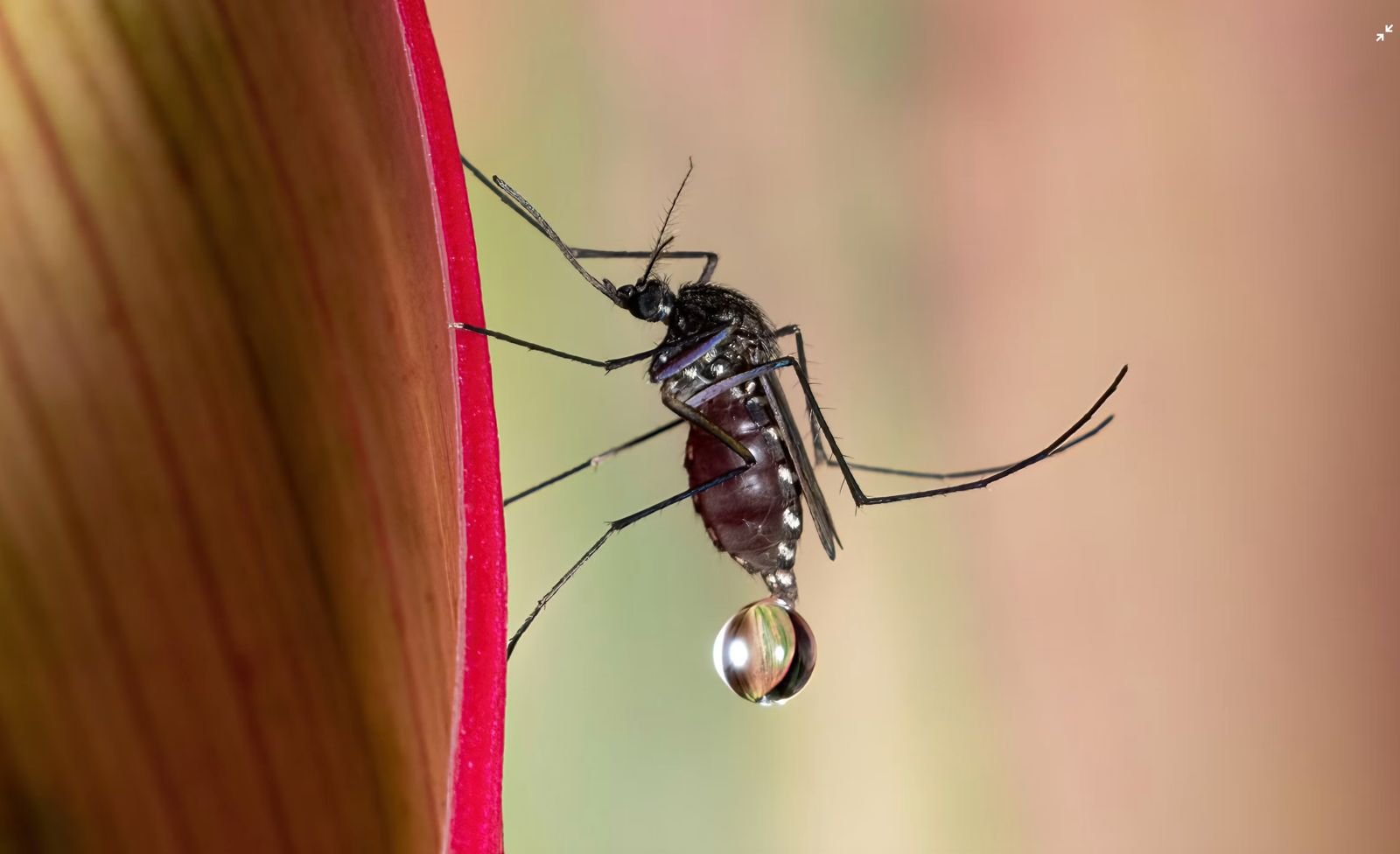
Cancún, Quintana Roo — Climate change is redrawing the map of where mosquitoes can survive, allowing disease-carrying species to establish themselves in regions once too cold or too dry for them.
Rising temperatures, shifting rainfall patterns and changing humidity are creating new habitats, but climate is not the only factor. Mosquitoes also travel as stowaways in boats, planes and trucks, and can hitch rides in used tires, plants and shipped goods. Once they arrive, even a small container of standing water can become a breeding ground.
A study published in Nature Communications by researchers from the universities of Lisbon and Vienna identified 45 mosquito species capable of transmitting diseases that already live outside their original ranges, and 28 of those species have established populations in at least one new territory. Among them are Aedes aegypti and Aedes albopictus, both vectors for dengue and other illnesses.
The expansion has already produced striking cases. In Iceland, a country long considered free of mosquitoes, researchers detected Culiseta annulata in 2025. The species survived the winter by sheltering in basements and sheds, though no disease transmission has been reported there.
Higher elevations are also being affected. Studies have documented dengue and malaria above 2,000 meters (about 6,500 feet) in Colombia, Ecuador, Peru and Bolivia, areas that previously offered less favorable conditions for these vectors.
For Quintana Roo, the trend is especially relevant. The state’s warm, humid climate and history of dengue outbreaks make it vulnerable, and accumulated water in patios, streets, tires and containers could provide new breeding sites.
A separate study in BMJ Global Health projects that between 2041 and 2060, the world could see up to 77 million dengue infections per year, a 57% increase over the 2000–2019 average.
Mosquitoes are not only finding new places to live; they are also taking advantage of the routes people build to reach them.
More Environment
- Cozumel’s Reefs Get a 3D Map Divers Can Explore Before Entering the Water
- Documentary Exposes 30 Years of Pollution in Cancún’s Chacmuchuch Lagoon
- Crocodile Surprises Tourists Swimming at Cozumel’s El Cielo Sandbar
- Playa del Carmen Calls Volunteers to Clean More Than 7 Kilometers of Beach
- Tulum Fishing Cooperative Seeks Funds to Expand Facilities and Sustain 70 Families