
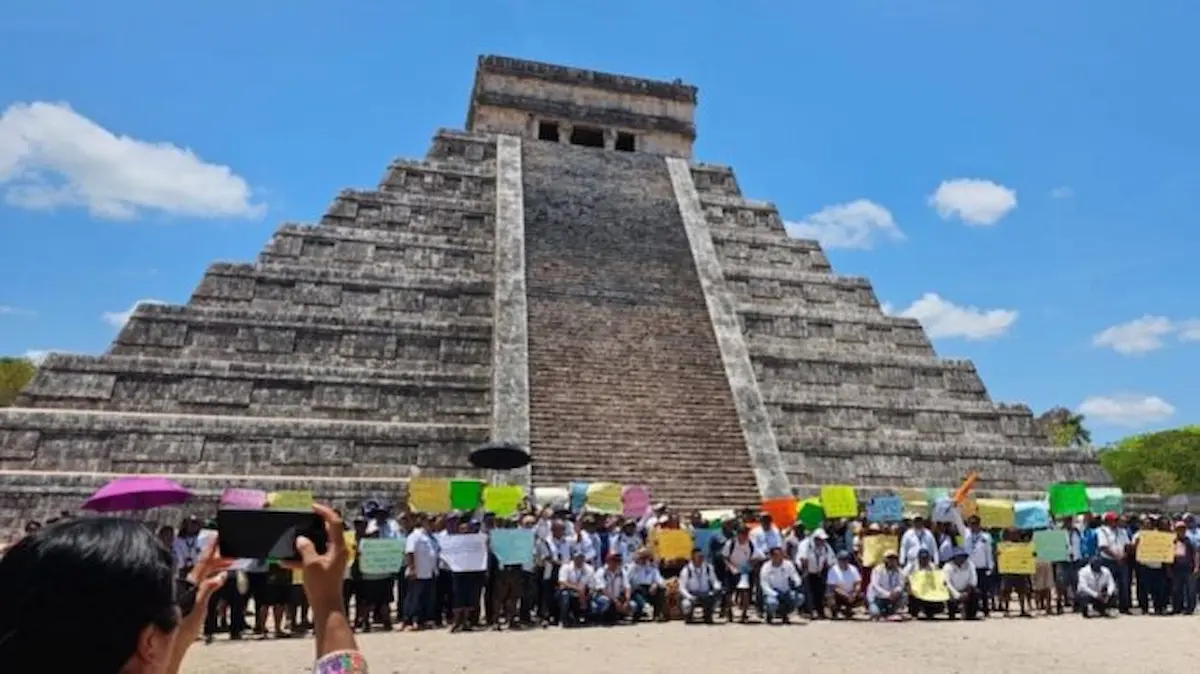
Mérida, Yucatán — A conflict over the closure of the old entrance to Chichén Itzá is causing severe economic losses, with officials estimating daily shortfalls of up to 4 million pesos (about $200,000) as some 9,000 tourists are unable to enter the iconic archaeological site.
The dispute centers on a group of street vendors who refuse to relocate to the new CATVI (Visitor Service Center) market, built as part of a broader reorganization of tourism and commerce at the site. While 262 of the 662 registered artisans — 39% — have accepted the move and signed on to the new facility, the remaining 400 vendors are holding out, demanding the old entrance be reopened and citing lost sales and disagreement with the new operating conditions.
The economic fallout is rippling across the region’s tourism industry. Travel agencies, certified guides, and tour operators in Mérida, Valladolid, Cancún, and the Riviera Maya report mass cancellations of pre-sold excursions, affecting not only the site but also hotels, restaurants, transport providers, and formal artisans.
INAH Yucatán director Joel Omar Vázquez Herrera and state government secretary Omar Pérez Avilés have stated that the closure of the old access is irreversible and that the relocation to CATVI will continue despite protests. Authorities also alleged that some protest leaders have been charging illegal fees and selling spaces within the archaeological zone for years.
State and federal officials warned that only vendors included in the official 2025 census will be granted spaces, and no new street vendors will be allowed into the zone under any circumstances. The conflict underscores a deep transformation of Chichén Itzá’s tourism model as the government seeks to centralize visitor flow and commercial activity.
As the standoff drags on, the economic damage continues to mount, threatening to become one of the most serious tourism and social conflicts in Yucatán this year, just as the region enters its peak season.
