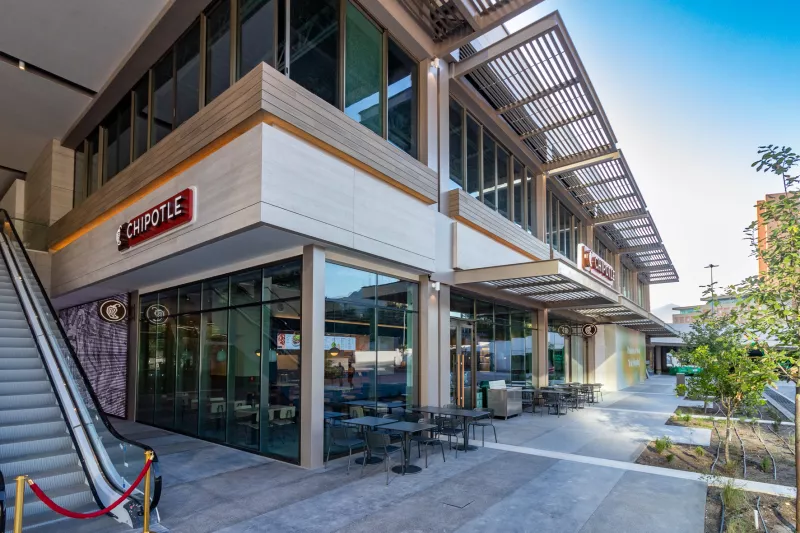
MONTERREY, Nuevo León — More than three decades after building a global business around burritos, bowls, tacos and guacamole inspired by Mexican cuisine, Chipotle Mexican Grill is finally opening a restaurant in Mexico itself.
The U.S.-based fast-casual chain will open its first Mexican location on Thursday, July 16, 2026, in San Pedro Garza García, an affluent municipality within the Monterrey metropolitan area. The opening marks Chipotle’s first entry into the Mexican market since the company was founded in Denver, Colorado, in 1993.
The new restaurant is being launched in partnership with Alsea, one of Latin America’s largest restaurant operators. The Mexican company already manages major international brands including Starbucks, Domino’s Pizza, Burger King and Chili’s across Latin America and Europe.
And this is not expected to be a one-off experiment. Chipotle and Alsea have already said they plan to open additional restaurants in Nuevo León before the end of 2026, followed by an expansion into Mexico City in 2027.
Chipotle’s Most Symbolic Expansion Yet
The move is unusual for obvious reasons. Chipotle has built its identity around a highly Americanized fast-casual interpretation of Mexican food, yet until now it had never operated a restaurant in the country whose cuisine inspired the brand.
The company was founded by Steve Ells in Denver in 1993 with a menu centered on oversized burritos assembled to order. Over the following three decades, it grew into an international chain with thousands of restaurants and operations in the United States, Canada, the United Kingdom, France, Germany and the Middle East.
Its arrival in Mexico therefore represents something of a culinary homecoming, although whether Mexican customers will embrace Chipotle’s interpretation of their own cuisine remains one of the most interesting questions surrounding the launch.
Chipotle CEO Scott Boatwright has said the company believes its emphasis on freshly prepared ingredients, customization and accessible pricing can appeal to Mexican consumers.
What Will Be on the Menu?
The Monterrey restaurant is expected to feature Chipotle’s familiar core menu, including: burritos, burrito bowls, tacos, salads, chips and guacamole, with customers choosing their own combinations of proteins, rice, beans, salsas and toppings.
The company has said it will also study local consumer preferences as it develops its expansion strategy in Mexico. That could prove important in a country where consumers have no shortage of inexpensive, authentic tacos, burritos and other regional specialties, often prepared by small independent restaurants and street vendors.
Chipotle will not simply be competing against other international fast-food chains. It will be entering one of the world’s richest and most diverse food cultures, where expectations around tortillas, salsas, meat, beans and guacamole are considerably higher than in many of its existing international markets.
Why Monterrey?
San Pedro Garza García was chosen as the site of the first restaurant within the Monterrey metropolitan area, one of Mexico’s largest and wealthiest urban markets. The city gives Chipotle access to consumers already familiar with U.S. brands and international restaurant concepts, while also allowing Alsea to test the chain outside Mexico City before a wider rollout.
The initial restaurant is only the beginning of the companies’ announced strategy. Additional locations are planned in Nuevo León later this year, with Mexico City targeted for 2027.
Not Every American Mexican-Food Chain Has Succeeded Here
Chipotle’s move into Mexico is not without precedent, or risk. Taco Bell famously tried to enter the Mexican market and ultimately withdrew, with its Americanized tacos failing to win over enough local consumers. The company’s most recent attempt ended in 2010.
That history has already fueled skepticism and humor on Mexican social media, where some users have questioned why consumers would choose an American chain selling Mexican-inspired food when authentic local alternatives are readily available.
Chipotle’s business model, however, is different from Taco Bell’s. The chain positions itself as fast-casual rather than traditional fast food and emphasizes fresh preparation, customizable meals and a relatively simple menu. Whether that distinction will matter to Mexican consumers remains to be seen.
Alsea Gives Chipotle a Major Local Advantage
One thing working in Chipotle’s favor is its partnership with Alsea. The Mexico-based restaurant operator has decades of experience adapting international brands to local markets and operates thousands of restaurants across Latin America and Europe. That gives Chipotle an established partner with knowledge of Mexican real estate, staffing, supply chains, marketing and consumer behavior.
Alsea CEO Armando Torrado has previously said the company sees significant potential in bringing Chipotle to Mexico and using its local market knowledge to support expansion.
A Bigger International Push
Mexico is also part of a wider international expansion strategy for Chipotle. The company has already entered the Middle East through a partnership with Alshaya Group and has announced plans to expand into additional markets, including South Korea and Singapore.
Still, Mexico may be its most culturally interesting test yet. Opening a Mexican-inspired restaurant chain in Mexico is not quite the same as taking burgers, coffee or pizza into a new international market. Mexican customers already know the ingredients, techniques and flavors that inspired Chipotle’s concept.
That means the company will not be introducing burritos and tacos to a new audience. It will be asking Mexican consumers to judge an American interpretation of food they already know very well. The first verdict begins July 16 in Monterrey.
More Business
- Starbucks Exits Tulum: Why the Hotel Zone Is Losing Its Buzz
- Canada Drives Mexican Caribbean Demand for Final Quarter of 2026
- Funeral Services in Cancún Can Top 100,000 Pesos, Workers Say
- Riviera Maya Forum Pushes Caribbean Mexico Toward Regenerative Tourism
- Xcaret Says It Will Abide by Any Supreme Court Ruling on Use of Maya Culture