Tulum, Quintana Roo — Amid growing concerns over water contamination and environmental degradation along Quintana Roo’s coast, Tulum business owners are beginning to implement ecological wastewater treatment systems with support from financing programs focused on protecting the Mesoamerican Reef.
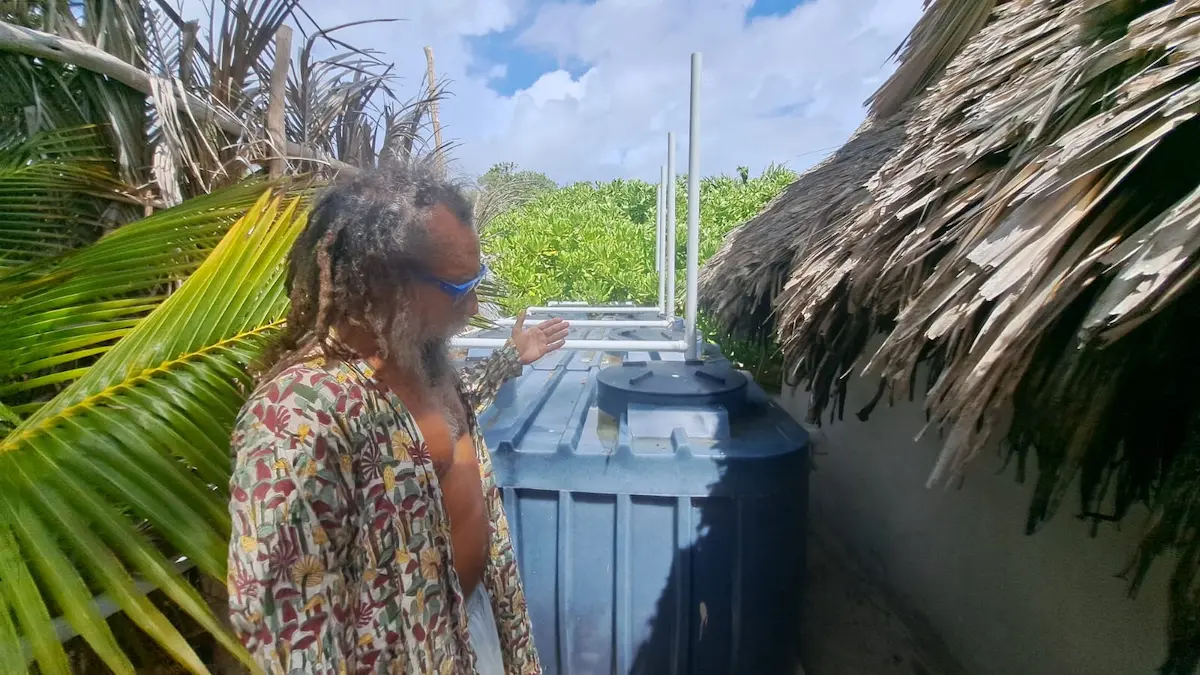
One such case is that of businessman Cesar Ortiz, who installed a micro-treatment plant system in the restrooms of a public beach linked to one of the restaurants he manages in Tulum. The project’s main goal is to prevent wastewater from seeping back into the aquifer, considered one of the region’s most sensitive natural resources.
Ortiz explained that the system operates by gravity and cleans the water before reusing it in planters with bamboo and banana trees. The treated liquid is absorbed by the plants and does not return to the subsoil.
Each micro-plant has a capacity of 1,100 liters and can process up to 600 liters of water per day. For this project, four units were installed, connected to a waterproofed planter specially designed to prevent leaks.
The system was purchased through Biotar Maya, a company specializing in such environmental solutions. The total investment, including installation and adjustments, ranged between 200,000 and 250,000 pesos (approximately $10,000 to $12,500).
Part of the financing came from the Mar + Invest program, an initiative that supports coastal business owners interested in implementing sustainable projects related to environmental protection and conservation of the Mesoamerican Reef.
According to information provided during the presentation, Mar + Invest is the first program that combines accessible financing with real reef conservation. The scheme is operated by Viwala, a debt fund specializing in providing credit to companies that generate positive social and environmental impact.
The program offers financing for hotels, restaurants, beach clubs, marinas, fishing cooperatives, and coastal businesses that develop projects focused on reducing pollution, improving waste management, or implementing sustainable water treatment systems.
Funding amounts range from 200,000 to 20 million pesos, with annual interest rates starting at 8% and repayment terms of 24 to 36 months.
Ortiz noted that many business owners are currently facing economic difficulties due to low tourist activity and other factors affecting the Mexican Caribbean, making accessible environmental financing mechanisms important for local businesses.
“The reef is the most important partner for all of us who live off tourism. If we don’t take care of the water and the environment, the problem will eventually affect everyone,” he said.
Data shared during the presentation indicate that 39% of assessed sites on the Mesoamerican Reef are in poor health, mainly due to global warming and water pollution — a situation that has begun to worry business owners and environmental organizations in the region.
More Business
More Tulum
- Tulum’s Mureco Museum Adds 53 Archaeological Pieces From Across Mesoamerica
- 23 Tulum Police Officers Complete Initial Training Course
- Tulum-Miami Flights to End as American Airlines Adjusts Routes
- Uber Opens Driver Registration in Playa del Carmen and Tulum for Taxi and Motorcycle Services
- Playa del Carmen Officials and Transport Firms Meet After Fatal Tulum Crash