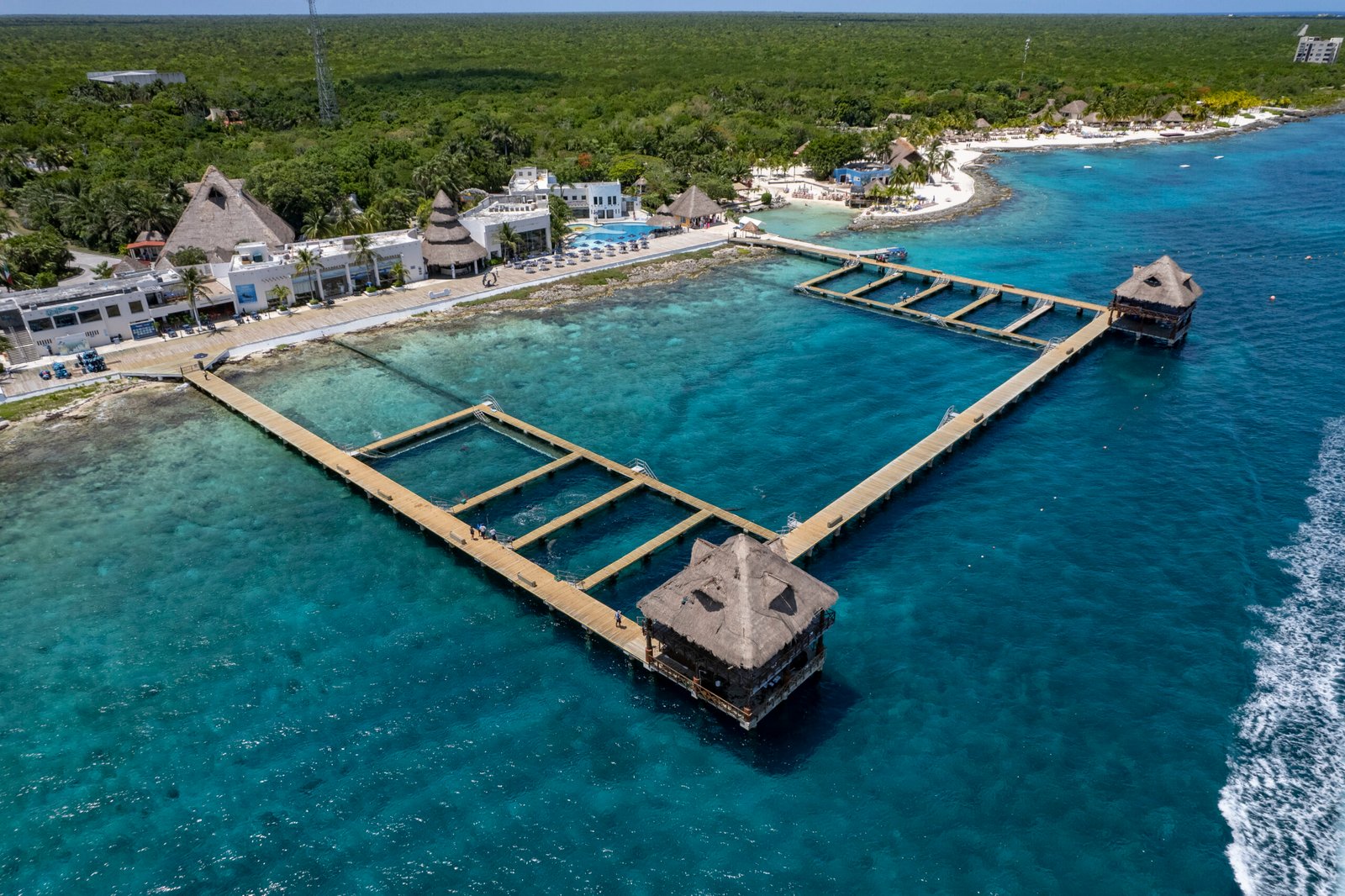
Cozumel, Quintana Roo — Chankanaab Park has emerged as the leading candidate for a proposed dolphin sanctuary on Cozumel, a project that could eventually provide a new home for dolphins as Mexico moves away from traditional captive-dolphin attractions.
Juanita Alonso Marrufo, director general of the Cozumel Parks and Museums Foundation (FPMC), said the proposal has already been discussed with Quintana Roo Environment Secretary Óscar Rébora Aguilera. However, she stressed that no final site has been approved and that environmental permits and technical feasibility studies must come first.
The proposal is particularly timely because of major changes to Mexico’s wildlife laws.
In July 2025, the federal government amended the General Wildlife Law to prohibit the use of marine mammals for activities outside narrowly defined conservation, research and rescue purposes. The legislation also prohibits breeding except for approved conservation programs. Importantly for existing dolphin facilities, owners and operators of cetaceans are required to eventually relocate the animals to sea pens or other facilities permitted under the revised law.
That creates a practical question: Where will dolphins already living under human care go?
A sanctuary on Cozumel could become part of the answer.
Rébora said in August that state environmental officials had begun preliminary technical studies for what they described as potentially the first dolphin sanctuary of its kind in Latin America. Several locations on Cozumel were being evaluated, including existing dolphin facilities and natural areas. The concept is centered on rehabilitation and care in semi-free conditions rather than the traditional entertainment model.
Chankanaab offers some obvious advantages. It already has infrastructure associated with marine mammals and is home to a Dolphin Discovery facility. The company currently advertises dolphin encounters and other interactive programs at the park.
But Alonso Marrufo said the proposed sanctuary would be separate from the existing dolphin habitat, with its own area dedicated to protection and care. Authorities still need to determine exactly where within Chankanaab such a facility could be located, how large it would need to be and what additional infrastructure would be required.
Several major questions also remain unanswered. Officials have not publicly announced how many dolphins the sanctuary could accommodate, which animals would be eligible to move there, how much the project would cost or when it might open.
Finding the right location within Chankanaab could be particularly sensitive.
The park isn’t simply a tourism attraction. Its lagoon is a coastal saltwater cenote containing reef formations and substantial marine biodiversity. The FPMC has an active coral restoration program there, including maintenance and cleaning intended to improve water quality and encourage the development of young coral colonies. Earlier this year, park conservation officials reported healthier juvenile coral growth following those efforts.
Any dolphin sanctuary would therefore have to be designed around an already environmentally sensitive marine ecosystem rather than simply carving out another section of waterfront.
The broader transition is already underway elsewhere in Quintana Roo. Federal environmental authorities are currently evaluating the possible relocation of nine dolphins at the former Dolphinaris Cancún facility after the property was closed over irregularities and the animals were placed under federal protection. Profepa said October 1 that the dolphins remain under veterinary monitoring while their individual suitability for eventual relocation is assessed.
For now, the Cozumel sanctuary remains a proposal rather than an approved project. But the combination of Mexico’s new restrictions on captive marine mammals and the need to determine the long-term future of dolphins already living in managed facilities gives the idea considerably more weight than a conventional new attraction.
If Chankanaab passes the environmental and technical tests, Cozumel could become an early test case for what comes after Mexico’s dolphinarium era.
More Environment
- Reported Snail Collection Raises New Concern for Bacalar Lagoon
- Heavy Rain Floods Streets and Catches Pedestrians Off Guard in Playa del Carmen
- Sargassum Eases on Northern Quintana Roo Beaches, but Southern Stretches Still Overwhelmed
- Fonatur Prepares Two-Stage, $108 Million Sargassum Plan for 2027
- Secrets Marina Seeks Semarnat Approval for 7,933-Square-Meter Beach Club in Puerto Morelos
More Cozumel
- Rafael Nadal and Meliá Open First Zel Hotel in Mexico on Cozumel
- CFE Submarine Cable to Boost Power Supply in Playa del Carmen and Cozumel
- Cozumel’s Central Hotel Association Seeks Tax Relief Under New Leader
- Cozumel Mayor Pledges No Increase in Property Tax or Municipal Fees
- Caribbean Mexico Takes Five of Top 10 Spots in Thanksgiving 2026 Destination Ranking