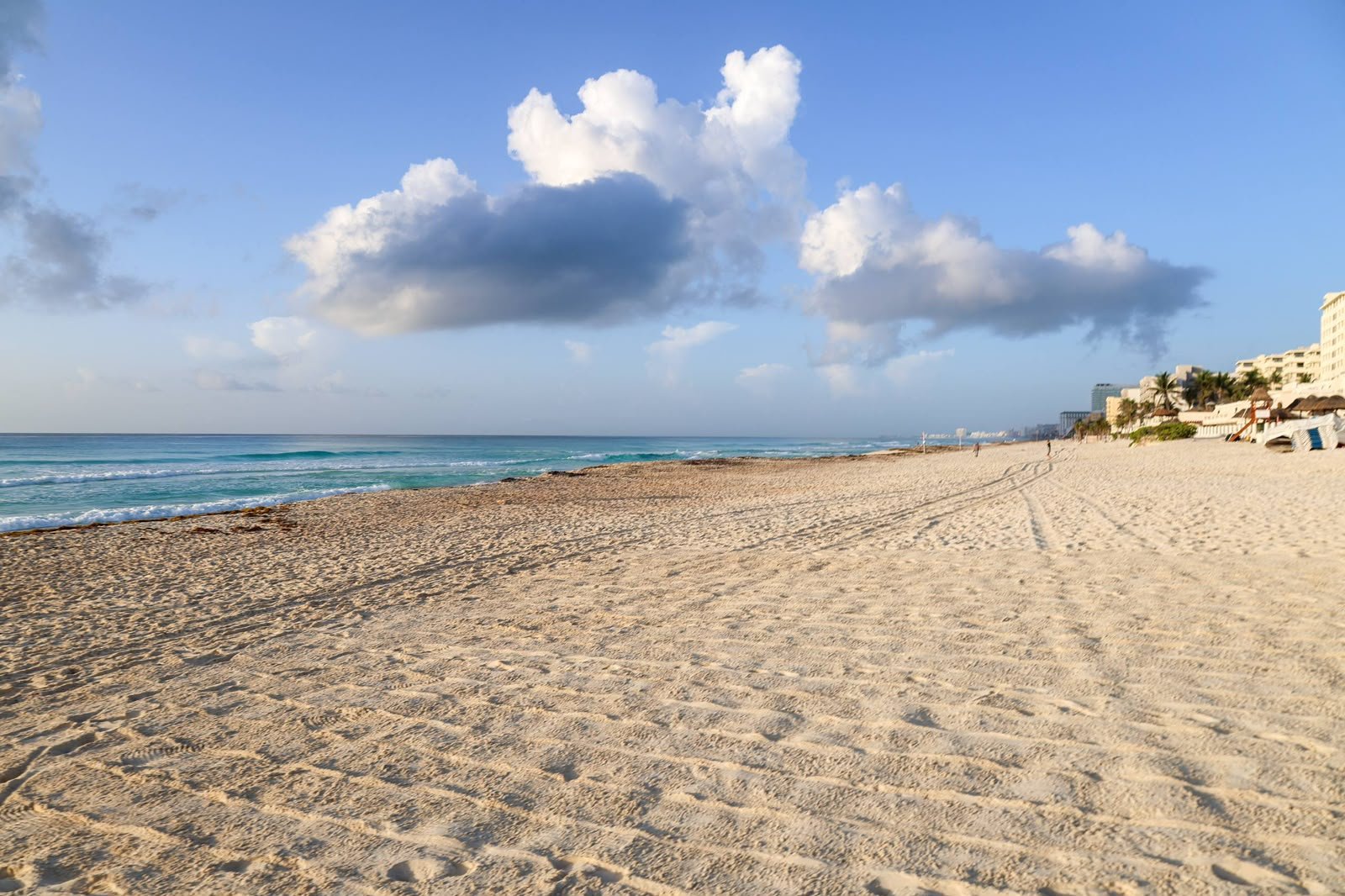
Cancún, Quintana Roo — The Benito Juárez municipal government announced that it has removed more than 37,133 tons of sargassum from Cancún’s public beaches since the start of the current administration, as part of ongoing efforts to keep the shorelines clean for residents and visitors.
In July alone, municipal crews collected 6,135.99 tons of the macroalgae, bringing the 2026 total to over 18,617 tons, according to the city’s Wells and Beach Cleaning Department, which operates under the Public Works and Services Secretariat.
Acting Mayor Landy Guadalupe Canché Pantoja toured Delfines and Coral beaches to oversee cleanup operations. Each day, 290 workers from the Public Services Department and the Federal Maritime Terrestrial Zone (Zofemat) remove sargassum, collect trash, rake sand, clean access points, and operate specialized machinery.
In addition to sargassum removal, the city reported that manual sand sifting has sanitized more than 803,404 square meters during the current administration, eliminating buried waste such as plastics, cigarette butts, and bottle caps.
With the start of summer vacation, efforts have intensified at beaches with Blue Flag certification: Las Perlas, Ballenas, Delfines, Marlín, Coral, Del Niño, and Chac Mool. This international designation recognizes water quality, cleanliness, safety, and services. Cancún maintains the highest number of Blue Flag awards in Mexico for the 2025-2026 season.
More Environment
- Activists Protest Pig Mega-Farms in Yucatán, Demand Crackdown on Pollution
- Quintana Roo to Pitch Sustainability in Reworked International Tourism Push
- Cancún Seaweed Firm Ensol Caribe Eyes Expansion Into Dominican Republic and Belize
- Environmentalists Warn Tulum Jungle Road Could Open Door to Real Estate Expansion
- Only Four Sargassum Fishing Permits Processed in Mexico, Imipas Says
More Cancun
- Cancún Looks to Promote Its Cultural Heritage to Tourists
- AI and New Travel Trends to Headline AFEET Trends 2026 Summit in Cancún
- Cancún Businesswomen Organize Charity Walk for Breast Cancer Survivors
- Isaías ‘N’ Sentenced to 140 Years for Murder of Teen William Hernández in Cancún
- Experts Warn of Cyberattacks on Tourism Sector as AI Advances