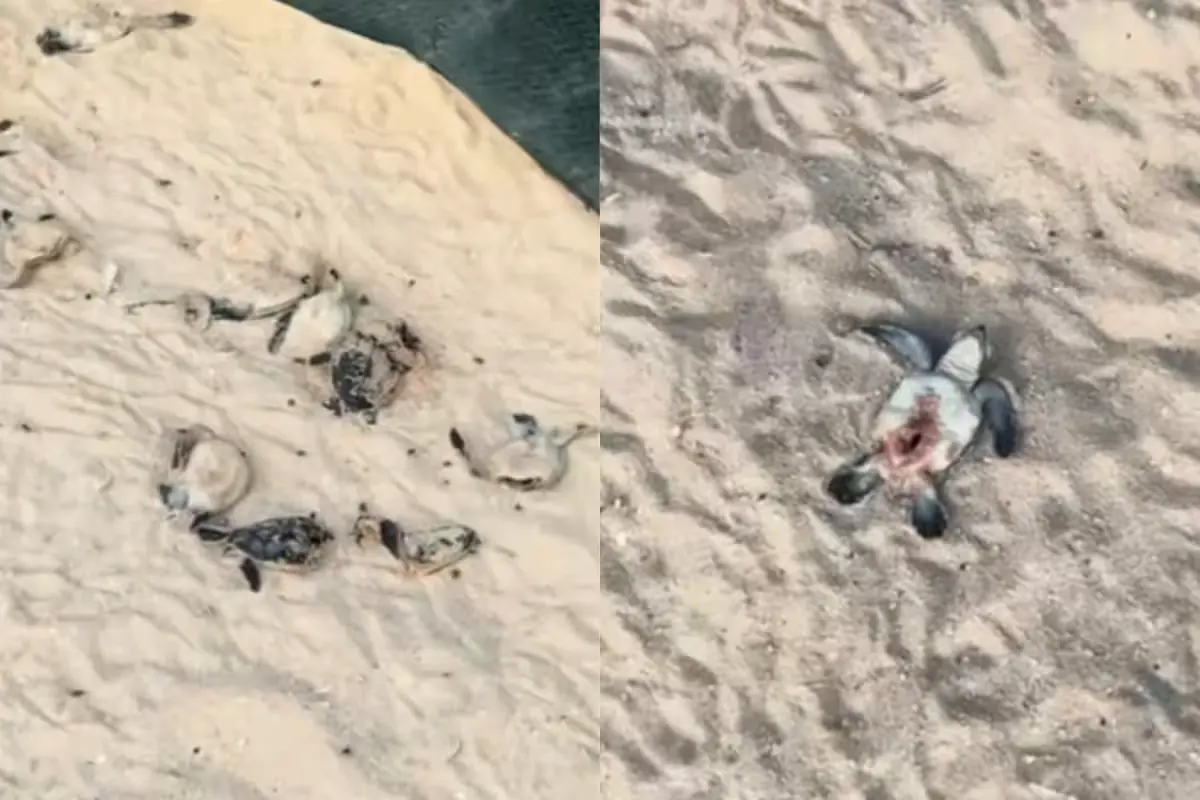
Cancún, Quintana Roo — Cancún’s Directorate General of Ecology has responded to social media reports of dead sea turtle hatchlings found on a beach near the Live Aqua Cancún hotel, saying the animals came from an “in situ” nest and that the hotel is among those that have maintained proper handling of its protected nesting corral during the 2026 nesting season.
Officials explained that as part of ongoing protection and surveillance work, a nest was recently identified “in situ” — meaning it was laid naturally by a sea turtle outside the protected corral.
According to the ecology department, after the hatchlings emerged, some were exposed to natural predators during the day, a situation that is part of the food chain and of normal wildlife processes.
Environmental authorities clarified that the presence of an in situ nest is not in itself an irregularity, since such nests remain in their natural location and are monitored under the protocols established for the protection of sea turtles.
Nevertheless, the Directorate General of Ecology said it is coordinating with the Federal Attorney’s Office for Environmental Protection (Profepa) to review the circumstances and determine any possible responsibility related to the handling of the corral.
More Environment
- Sargassum Leaves 60 Boats Damaged and Millions in Losses in Playa del Carmen
- Bird Populations Decline in Quintana Roo’s Maya Zone, Academics Warn
- Deer Trapped in Playacar Fence Rescued After Social Media Reports
- Tulum Beaches Recover as Sargassum Arrivals Ease, Cleanup Work Continues
- First Monarch Butterfly of the Season Sighted at Cozumel’s Kuzá Park
More Cancun
- Cancún Restaurant Owners Press for Tax Incentives to Revive Avenida Yaxchilán
- Hotel Occupancy in Quintana Roo Drops Below 60 Percent
- Mara Lezama Brings ‘La Voz del Pueblo’ Hearing to Cancún’s Villas Otoch Paraíso, Serving 1,200 Residents
- Crews Remove More Than 1.6 Tons of Trash From Cancún’s Nichupté Mangroves
- Visitax Collection Will Continue at Cancún Airport, Governor Mara Lezama Says